

When you feel unwell, the first question that often comes to mind is, “Which doctor should I visit?”
Many health issues, from fever and cough to diabetes and high blood pressure, do not require a specialist right away.
In these situations, a general physician is usually the best place to start.A general physician plays a vital role in preventing, diagnosing, and treating a wide range of medical conditions.
They provide comprehensive healthcare for adults, help manage chronic diseases, and guide patients toward specialist care whenever necessary.
Their broad medical knowledge allows them to evaluate symptoms, identify underlying health problems, and create personalized treatment plans.
Whether you are looking for the Best General Physician in Karachi, comparing a General physician vs general practitioner, or wondering if you need an internal medicine specialist, this guide covers everything you need to know.
By the end of this article, you will have a clear idea of when to visit a general physician, the conditions they treat, and how to choose the right doctor for your healthcare needs.
What is a General Physician?
A general physician is a medical doctor who specializes in diagnosing, treating, and preventing diseases affecting adults.
They provide comprehensive medical care for both short term illnesses and long term health conditions without performing surgery.
Unlike specialists who focus on a single organ or disease, a General physician Specialist has expertise across multiple areas of medicine.
This broad knowledge enables them to treat common illnesses while also identifying serious medical conditions at an early stage.
Featured Snippet Answer
A general physician is a licensed medical doctor who diagnoses, treats, and manages a wide variety of adult health conditions, including infections, chronic diseases, digestive problems, respiratory illnesses, and preventive healthcare.
They also refer patients to specialists when advanced treatment is needed.
A general physician commonly treats:
- Fever and viral infections
- Flu and seasonal illnesses
- High blood pressure
- Diabetes
- Asthma
- Allergies
- Thyroid disorders
- Stomach problems
- Kidney infections
- Chest infections
- Joint pain
- Skin infections
- Fatigue
- Vitamin deficiencies
In many cases, one visit to a physician can prevent a minor illness from becoming a serious health issue.
Who should visit a General Physician?
A general physician is suitable for almost every adult experiencing non-emergency health concerns.
They are often the first healthcare professional patients consult before seeing a specialist.
You should consider visiting a physician if you experience:
- Persistent fever lasting more than two days
- Frequent headaches
- Unexplained weight loss
- High blood pressure
- High blood sugar
- Chest discomfort
- Continuous cough
- Difficulty breathing
- Stomach pain
- Frequent vomiting
- Weakness or fatigue
- Joint pain
- Urinary problems
- Thyroid-related symptoms
They are also essential for routine health examinations, preventive care, and annual medical checkups.
Real Life Example
Imagine someone develops persistent fatigue and frequent thirst. They may think it is simply due to stress or lack of sleep.
However, a general physician can perform a blood sugar test and diagnose diabetes early.
Early treatment significantly reduces the risk of complications affecting the heart, kidneys, and eyes.
What conditions does a General Physician treat?
General physicians manage hundreds of medical conditions across different body systems.
Infectious Diseases
- Influenza
- COVID
- Dengue fever
- Typhoid
- Malaria
- Urinary tract infections
- Pneumonia
Respiratory Conditions
- Asthma
- Bronchitis
- Chronic cough
- Allergic rhinitis
- Sinus infections
Heart Related Conditions
- Hypertension
- High cholesterol
- Early heart disease risk assessment
Digestive Disorders
- Gastritis
- Acid reflux
- Peptic ulcers
- Constipation
- Irritable bowel syndrome
Hormonal and Metabolic Disorders
- Diabetes
- Thyroid disease
- Obesity
- Vitamin deficiencies
Kidney and Urinary Problems
- Kidney infections
- Urinary tract infections
- Kidney stone symptoms
Lifestyle Related Diseases
Modern lifestyles have increased the number of people suffering from:
- Obesity
- High blood pressure
- Fatty liver disease
- High cholesterol
- Stress related illnesses
A physician helps patients control these conditions through medication, dietary advice, exercise recommendations, and regular monitoring.
What qualifications does a General Physician have?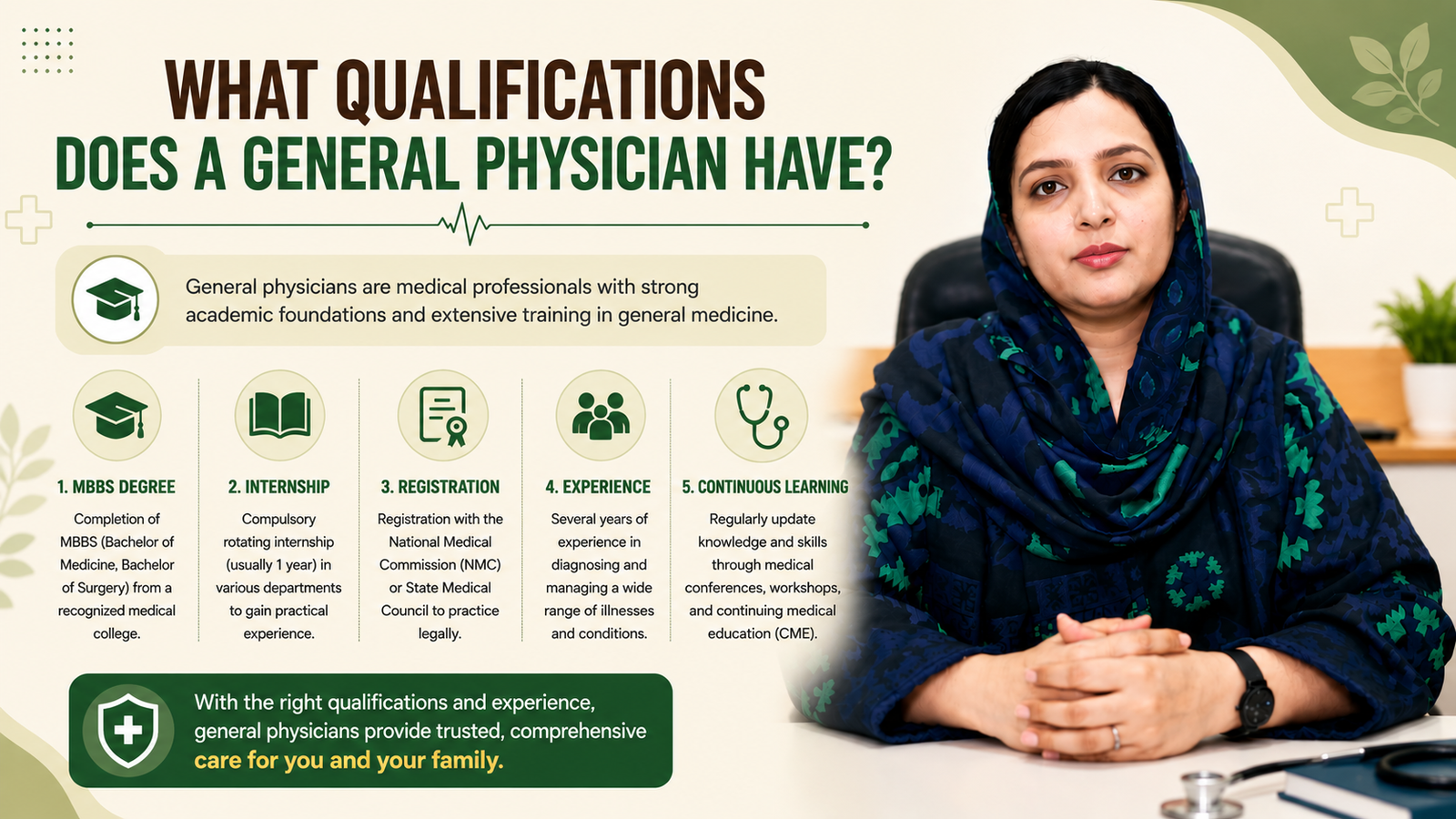
Many people ask about the General physician degree before choosing a doctor.
A qualified physician typically completes several years of medical education and clinical training.
The educational pathway generally includes:
- Medical degree such as MBBS or an equivalent qualification
- One year of internship or house job
- Medical licensing examination
- Clinical practice in hospitals or healthcare centers
- Continuous professional education through workshops and certifications
Some physicians also complete postgraduate training in Internal Medicine, Family Medicine, or related medical specialties to gain additional expertise.
Healthcare organizations such as the World Health Organization (WHO) and the American College of Physicians (ACP) encourage continuous medical education so physicians stay updated with the latest treatment guidelines and evidence based practices.
Patients should always verify that their doctor is registered with the relevant medical authority before seeking treatment.
General physician vs general practitioner: What is the difference?
These terms are often used interchangeably, but they may have different meanings depending on the country’s healthcare system.
Feature | General Physician | General Practitioner |
Main Focus | Adult internal diseases | Healthcare for all age groups |
Patients | Adults | Children and adults |
Chronic Disease Management | Extensive | Moderate |
Specialist Referrals | Frequently | Frequently |
Hospital Based Care | Common | Less common |
Preventive Care | Yes | Yes |
In countries like Pakistan and India, many people use both terms to describe doctors who provide primary healthcare.
However, physicians often focus more on adult internal medicine, while general practitioners may treat patients of every age.
For patients, the most important factor is the doctor’s qualifications, clinical experience, and ability to provide accurate diagnosis and appropriate treatment.
General physician vs internal medicine: Are they the same?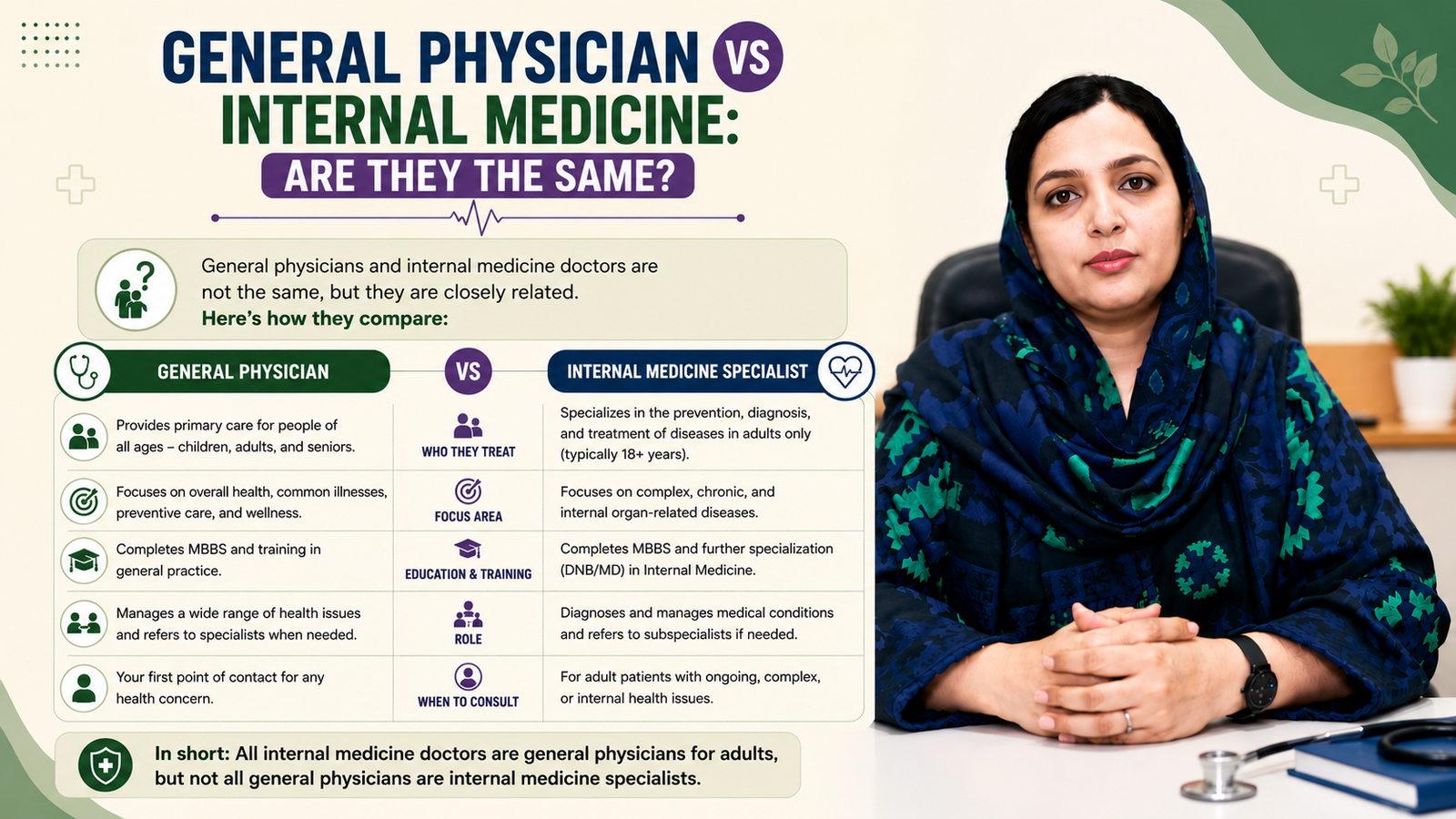
Many people believe these terms mean exactly the same thing.
While they are closely related, there are important differences depending on a doctor’s training and the healthcare system in a particular country.
In simple terms, internal medicine is a medical specialty that focuses on diagnosing and treating complex diseases in adults.
Doctors trained in this specialty are called internists. A general physician may have extensive experience in adult medicine, while an internist usually completes additional postgraduate training in internal medicine.
Quick Comparison
Feature | General Physician | Internal Medicine Specialist |
Patient Age | Adults | Adults |
Scope of Care | Common and chronic illnesses | Complex and multiple medical conditions |
Training | MBBS with clinical practice | MBBS plus postgraduate specialization |
Preventive Care | Yes | Yes |
Referral to Specialists | When required | Often manages complex cases before referral |
When should you choose an Internal Medicine specialist?
You may need an internal medicine specialist if you have:
- Multiple chronic diseases
- Difficult to control diabetes
- Complex heart conditions
- Autoimmune diseases
- Recurrent hospital admissions
- Unexplained symptoms requiring advanced evaluation
For routine healthcare, seasonal illnesses, hypertension, diabetes follow-up, and preventive checkups, a qualified general physician is usually the right choice.
When should you visit a general physician instead of a specialist?
Many people immediately book appointments with specialists for common health problems. In reality, visiting a physician first often saves both time and money.
A general physician can diagnose the most common medical conditions and determine whether specialist care is necessary.
Visit a physician if you have:
- Fever lasting more than two days
- Persistent cough
- Cold and flu symptoms
- Body aches
- Headaches
- High blood pressure
- High blood sugar
- Mild chest discomfort
- Fatigue
- Thyroid symptoms
- Digestive issues
- Allergies
- Skin infections
- Vitamin deficiencies
You may need a specialist if:
- Surgery is required.
- You have severe heart disease.
- Cancer is suspected.
- Neurological symptoms develop, such as seizures or paralysis.
- Kidney failure is diagnosed.
- A physician recommends advanced evaluation.
Practical Example
Suppose a patient experiences frequent headaches.
A physician will first check blood pressure, vision, hydration, medications, stress levels, and other common causes.
If warning signs appear, they may refer the patient to a neurologist for further investigation.
This stepwise approach avoids unnecessary tests while ensuring serious conditions are not overlooked.
Who is the best General Physician in Karachi?
There is no single doctor who is the “best” for every patient. The right physician depends on your medical condition, preferences, location, and the doctor’s experience.
When searching for the Best General Physician in Karachi, consider these factors:
- Recognized medical qualifications
- Registration with the Pakistan Medical and Dental Council (PMDC)
- Years of clinical experience
- Strong patient reviews
- Good communication skills
- Evidence based treatment approach
- Affiliation with reputable hospitals or clinics
- Availability for follow up visits
Instead of choosing a doctor based only on online ratings, evaluate their expertise, consultation style, and ability to explain your diagnosis and treatment plan clearly.
How can you find the Best Male General Physician in Karachi?
Some patients prefer consulting a male physician due to personal comfort or cultural preferences.
Choosing the Best Male General Physician in Karachi involves the same quality standards as selecting any healthcare provider.
Look for a doctor who:
- Listens carefully to your concerns
- Reviews your medical history thoroughly
- Performs a proper physical examination
- Orders only necessary for investigations
- Prescribes medicines responsibly
- Explains treatment options in simple language
- Encourages preventive healthcare
- Schedules appropriate follow up when needed
A skilled physician focuses on long term health rather than simply treating symptoms during a single visit.
How do general physicians diagnose diseases?
Accurate diagnosis begins with a detailed medical evaluation rather than relying only on laboratory tests.
Most physicians follow a structured process that includes:
1. Medical History
They ask about:
- Current symptoms
- Previous illnesses
- Family history
- Current medications
- Allergies
- Lifestyle habits
- Smoking or alcohol use
- Diet and physical activity
2. Physical Examination
This may include checking:
- Blood pressure
- Pulse
- Temperature
- Heart sounds
- Lung function
- Abdomen
- Joints
- Nervous system
3. Diagnostic Tests
If needed, your doctor may recommend:
- Complete blood count (CBC)
- Blood sugar tests
- Liver function tests
- Kidney function tests
- Lipid profile
- Thyroid function tests
- Urine examination
- ECG
- Chest X ray
- Ultrasound
The goal is to identify the root cause of symptoms and create an effective treatment plan.
Why is preventive healthcare important?
One of the most valuable roles of a general physician is preventing disease before it becomes serious.
Regular checkups can detect health problems at an early stage, when treatment is often more effective and less costly.
Preventive services include:
- Annual physical examinations
- Blood pressure screening
- Diabetes screening
- Cholesterol testing
- Weight management
- Vaccination guidance
- Lifestyle counseling
- Smoking cessation support
- Nutrition advice
- Exercise planning
According to the World Health Organization (WHO), preventive healthcare plays a key role in reducing the burden of chronic diseases worldwide through early detection and healthy lifestyle interventions.
What are the benefits of seeing the same physician regularly?
Building a long term relationship with one physician offers several advantages.
Benefits include:
- Better knowledge of your medical history
- More accurate diagnosis over time
- Consistent management of chronic diseases
- Fewer unnecessary tests
- Better medication monitoring
- Improved preventive care
- Personalized treatment plans
- Greater trust and communication
Patients who receive continuous primary care often experience better health outcomes because their doctor can identify changes in their health more quickly and coordinate care effectively.
What mistakes should patients avoid when choosing a physician?
Selecting the right doctor is an important healthcare decision. Avoid these common mistakes:
- Choosing solely based on consultation fees
- Ignoring qualifications and licensing
- Self-diagnosing through internet searches
- Delaying medical consultation for persistent symptoms
- Switching doctors frequently without a valid reason
- Skipping follow-up appointments
- Not sharing your complete medical history
- Taking antibiotics without a prescription
Expert Tip
Prepare a list of your symptoms, medications, allergies, and previous medical reports before your appointment.
This helps your physician make a faster and more accurate diagnosis while ensuring nothing important is overlooked.
Frequently Asked Questions
What does a general physician treat?
A general physician diagnoses and treats a wide range of adult health conditions, including fever, infections, diabetes, high blood pressure, asthma, thyroid disorders, digestive problems, allergies, and other common medical issues.
They also provide preventive care and health screenings.
Can a general physician manage diabetes and high blood pressure?
Yes. General physicians routinely diagnose, treat, and monitor chronic conditions such as diabetes and hypertension.
They prescribe medications, recommend lifestyle changes, order follow up tests, and adjust treatment plans to help patients achieve better long term health outcomes.
When should I see a general physician instead of a specialist?
You should visit a general physician first if you have symptoms such as fever, cough, fatigue, stomach pain, headaches, high blood pressure, or other non emergency medical concerns.
If specialized care is needed, your physician will refer you to the appropriate specialist.
What is the difference between a general physician and an internal medicine specialist?
A general physician treats a broad range of common and chronic illnesses in adults.
An internal medicine specialist completes additional postgraduate training and often manages more complex or multiple medical conditions that require advanced expertise.
How can I choose the best general physician in Karachi?
Look for a physician with recognized medical qualifications, registration with the Pakistan Medical and Dental Council (PMDC), strong clinical experience, positive patient feedback, excellent communication skills, and affiliation with a reputable hospital or clinic.
Choosing a doctor who emphasizes preventive care and patient education can also improve your healthcare experience.
Conclusion
Choosing the right doctor can make a significant difference in your long term health.
From treating everyday illnesses to managing chronic conditions and promoting preventive care, a general physician serves as the foundation of quality healthcare.
If you have ever asked yourself, What is a General Physician?, the answer is simple: they are your first point of contact for most medical concerns.
They diagnose a wide range of diseases, provide personalized treatment plans, monitor ongoing health conditions, and refer you to specialists only when advanced care is necessary.
Whether you are searching for a trusted physician for routine checkups, diabetes management, high blood pressure, thyroid disorders, or preventive healthcare, selecting a qualified and experienced doctor ensures you receive accurate diagnosis and appropriate treatment.
Take charge of your health today. Schedule regular medical checkups, maintain a healthy lifestyle, and consult a qualified general physician whenever new symptoms appear.
Early diagnosis and timely treatment are among the most effective ways to protect your health and improve your quality of life.