

Cold and cough are among the most common health problems in Pakistan.
They can affect children and adults at any time, especially during seasonal changes, weather fluctuations, and periods when respiratory infections are spreading. In most cases, a common cold improves with rest, fluids, and supportive care.
However, a cough that becomes severe, lasts longer than expected, or occurs with breathing difficulty may require medical evaluation.
The right cold and cough treatment depends on the underlying cause, the person’s age, symptoms, and overall health.
A viral infection may only need supportive care, while bacterial infections or conditions such as asthma, pneumonia, allergies, or sinus problems may require specific medical treatment.
For adults and children, treatment should focus on relieving symptoms safely rather than taking unnecessary medicines. Infants require extra caution because many common cough and cold medicines are not appropriate for very young children.
What is the Best Treatment for a cold and a cough?
The best treatment for a cold and cough depends on what is causing the symptoms.
A simple viral cold usually gets better on its own, so treatment mainly focuses on rest, hydration, and symptom relief.
For adults, warm fluids, adequate sleep, saline nasal drops, humidified air, and appropriate over-the-counter medicines may help.
However, medicines should be selected according to the person’s age, existing medical conditions, and other medicines they may already be taking.
Antibiotics do not treat ordinary viral colds. Taking antibiotics without a doctor’s advice can cause unnecessary side effects and contribute to antibiotic resistance.
If the cough is persistent, severe, associated with fever, chest pain, wheezing, shortness of breath, or other concerning symptoms, a doctor should assess the patient rather than relying only on home remedies.
What Causes Cold and Cough?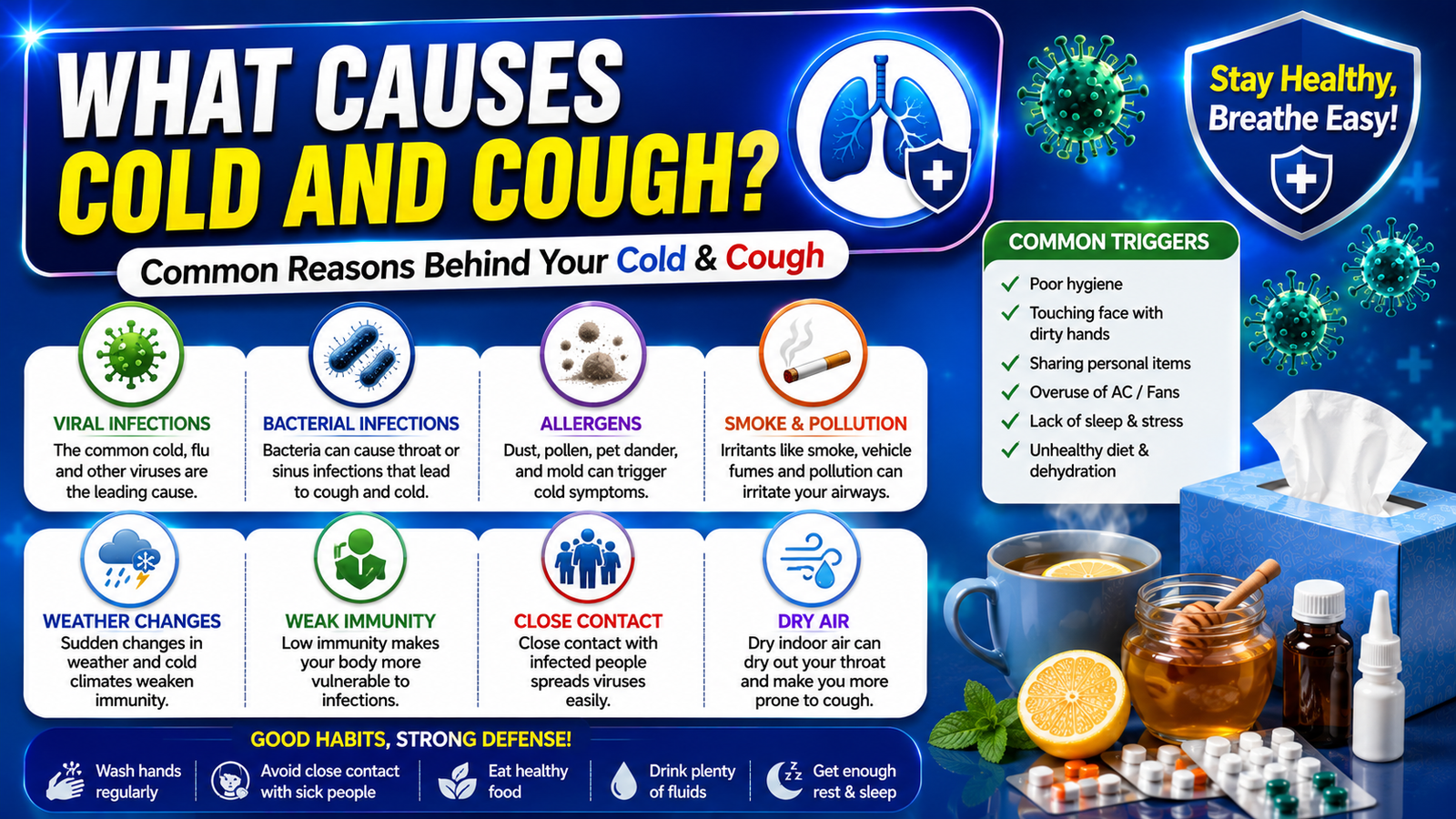
A cold is usually caused by a viral infection affecting the upper respiratory tract.
Many different viruses can cause cold symptoms, and infection can spread through respiratory droplets, close contact, or contaminated hands and surfaces.
A cough may develop because the respiratory tract becomes irritated or because mucus drains from the nose into the throat.
Although cold and cough frequently occur together, coughing can also result from other conditions.
Common causes include viral respiratory infections, influenza, allergies, asthma, sinus problems, acid reflux, and certain environmental irritants such as smoke and air pollution.
In Pakistan, exposure to dust, smoke, traffic pollution, and changing weather can also aggravate coughing in people with sensitive airways.
What Are the Common Symptoms of a Cold and Cough?
Cold symptoms can vary from one person to another.
Some people experience mild symptoms for a few days, while others may have more noticeable congestion and coughing.
Typical symptoms include:
- Runny or blocked nose
- Sneezing
- Sore throat
- Mild cough
- Headache
- Tiredness
- Mild body aches
- Watery eyes
- Low-grade fever in some cases
A cough may initially be dry and later become productive as mucus develops.
The color of mucus alone does not always indicate that a bacterial infection is present.
How Does Cough and Cold Treatment Work?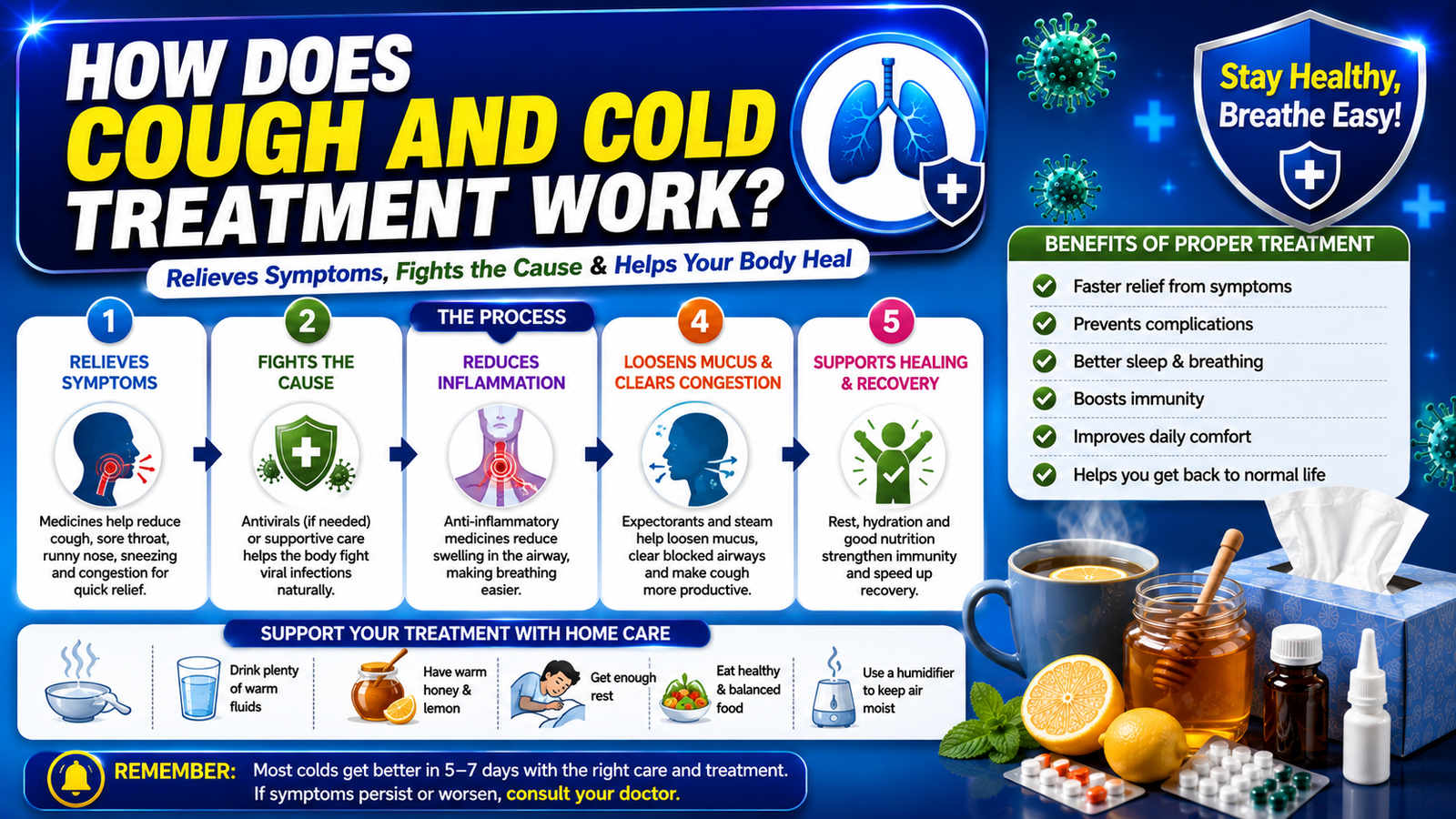
Treatment generally aims to make the patient more comfortable while the body recovers from the infection.
For a routine viral cold, supportive care is often sufficient. Drinking enough fluids can help prevent dehydration, while rest supports recovery.
Saline nasal drops or sprays can help relieve nasal congestion, and warm liquids may soothe an irritated throat.
Some adults may benefit from medicines for specific symptoms, such as fever or pain.
However, medicines should be taken according to the package instructions or a healthcare professional’s advice.
It is also important to avoid taking several combination cold medicines at the same time.
Different products may contain the same active ingredient, increasing the risk of accidental overdose.
Which Home Remedies Can Help With a Cold and Cough?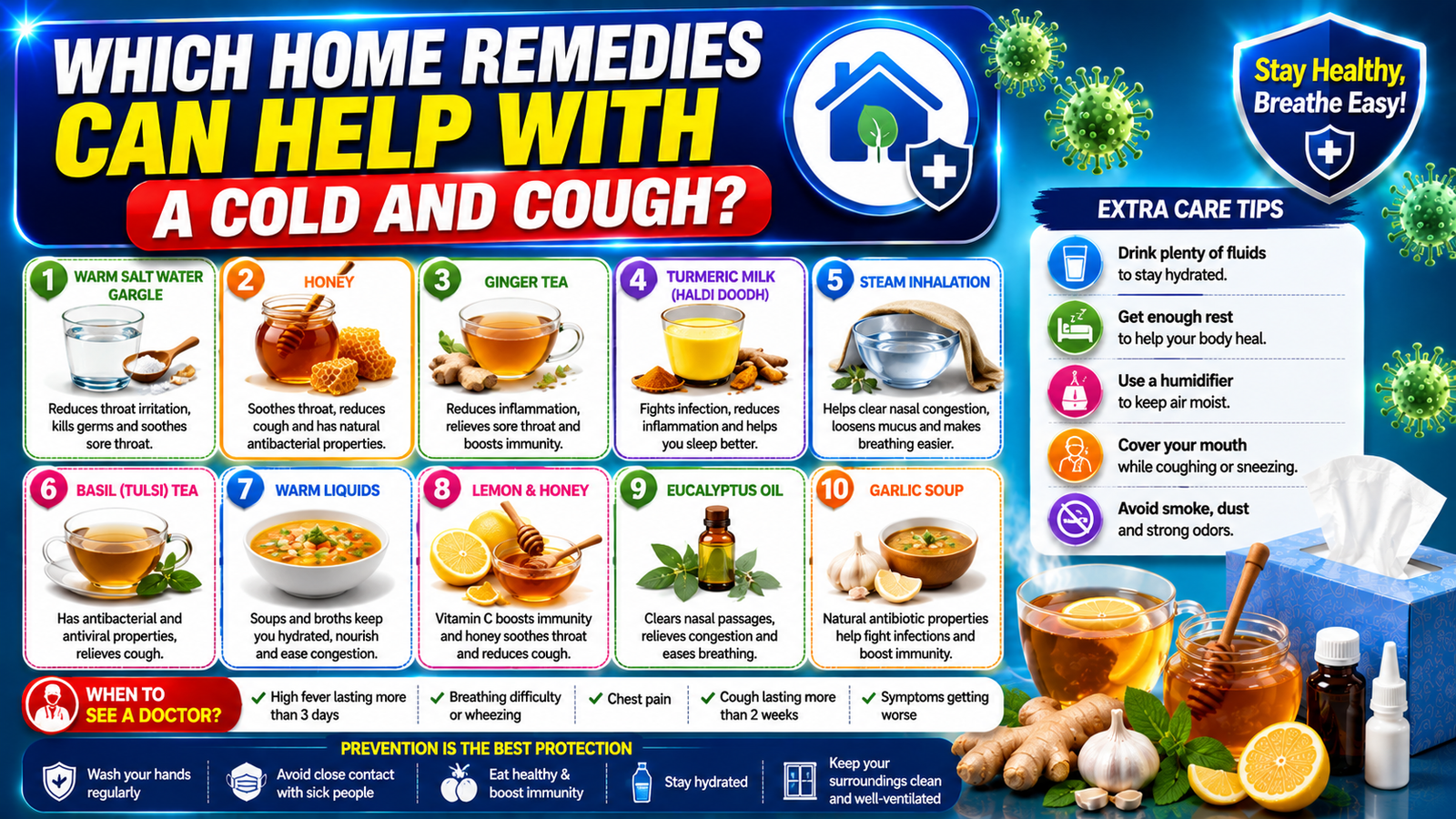
Simple home care can provide relief from many mild respiratory symptoms.
Warm water, soup, or other non alcoholic warm fluids can soothe the throat and help maintain hydration.
Rest is equally important, especially when fever and tiredness are present.
Honey may help reduce coughing in adults and children over one year of age. Honey should never be given to infants younger than 12 months because of the risk of infant botulism.
A clean humidifier may help some people who have dry nasal passages or throat irritation.
If a humidifier is used, it should be cleaned regularly to prevent the growth of microorganisms.
Avoiding cigarette smoke, strong fragrances, dust, and other known irritants can also reduce coughing.
Can You Treat a Cold and Cough Without Antibiotics?
Yes. Most uncomplicated colds are viral, meaning antibiotics are not useful against the infection.
Antibiotics work against certain bacteria, not viruses.
Taking them unnecessarily can lead to side effects and antibiotic resistance.
A doctor may prescribe an antibiotic when there is evidence of a bacterial infection that requires treatment.
For example, persistent or worsening symptoms may sometimes indicate another condition that needs evaluation.
The appropriate treatment should therefore be based on a clinical assessment rather than assuming that every cough requires an antibiotic.
Cold and Cough Treatment for Adults
Adults with mild symptoms can usually start with supportive measures.
Drink adequate fluids, rest, and avoid smoking and other respiratory irritants.
For nasal congestion, saline nasal sprays or drops can be useful. Warm fluids may soothe the throat.
If fever or body aches occur, an appropriate fever or pain medicine may be considered according to the label and individual health needs.
People with high blood pressure, diabetes, kidney disease, liver disease, pregnancy, or other chronic conditions should speak with a healthcare professional before using certain cold medicines.
Decongestants, for example, may not be suitable for everyone.
Similarly, some cough and cold products can interact with prescription medicines.
How Is Cold and Cough Treatment Different for Children?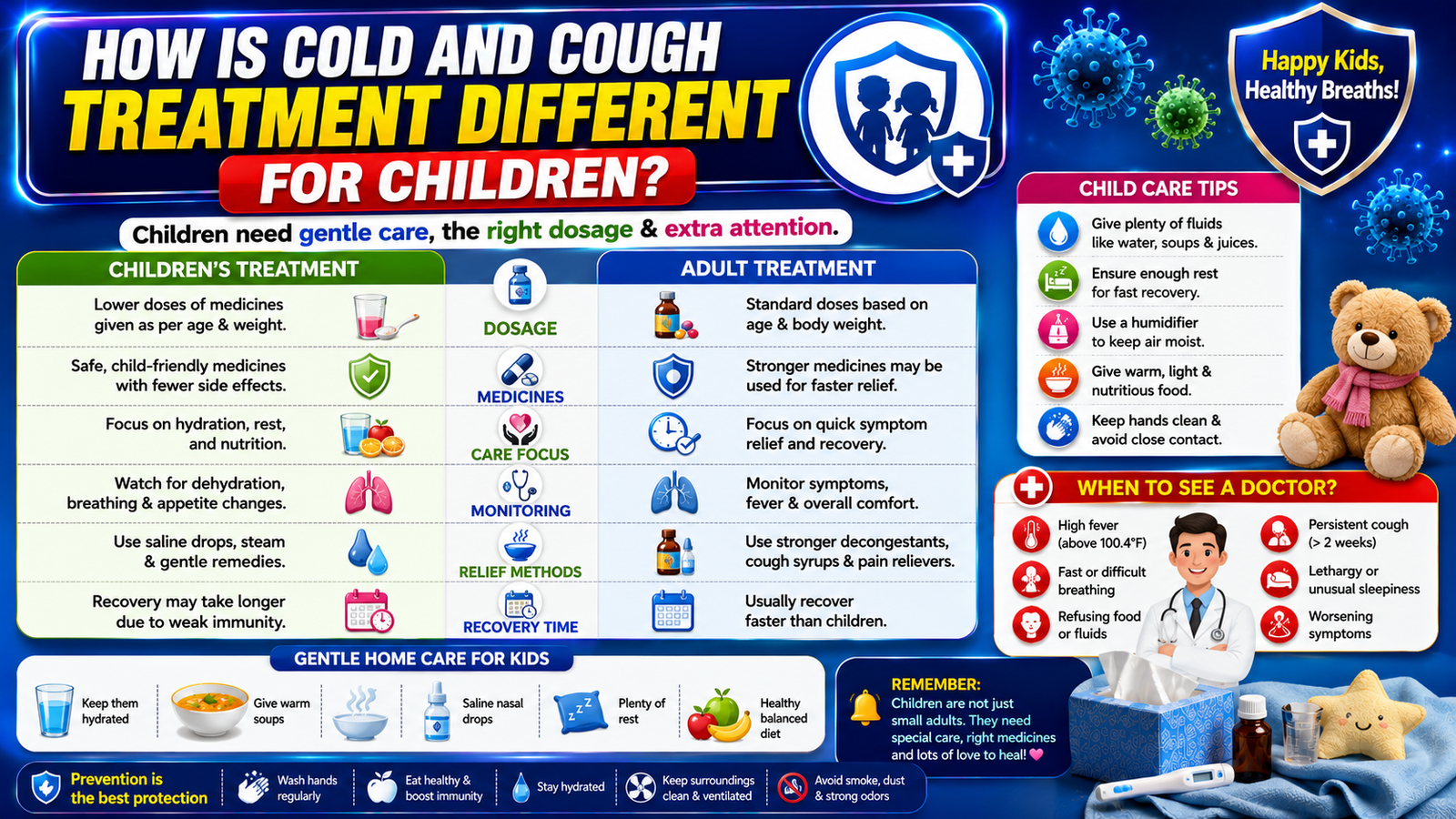
Children require more careful treatment because medicine doses are often based on age and sometimes weight.
A medicine that is appropriate for an adult may be unsafe for a child.
Parents should avoid giving children multiple cough and cold products without professional advice.
Always check the active ingredients to avoid accidentally giving the same medicine twice.
For younger children, supportive care such as fluids, rest, saline nasal drops, and appropriate environmental humidity may be more useful than unnecessary medication.
If a child has difficulty breathing, unusual sleepiness, dehydration, persistent high fever, blue or gray lips, or symptoms that are getting worse, medical attention should be sought promptly.
What Is Safe Cold and Cough Treatment for Infants?
Cough and cold treatment for infants requires special care. Infants have smaller airways and can become seriously unwell more quickly than older children and adults.
Parents should not give an infant over-the-counter cough or cold medicine unless a qualified healthcare professional specifically recommends it.
Many products intended for older children or adults can be dangerous for babies.
For mild congestion, parents may use saline nasal drops as recommended and gently clear nasal mucus.
Breastfeeding or formula feeding should continue as appropriate to maintain hydration.
Honey should not be given to babies under one year of age.
Infants who are having trouble breathing, feeding poorly, becoming unusually sleepy, showing signs of dehydration, or developing concerning symptoms should be assessed by a healthcare professional without delay.
Adult, Child, and Infant Cold and Cough Care Compared
Patient group | Common supportive care | Medicine considerations | When extra caution is needed |
Adults | Rest, fluids, warm drinks, saline spray | Some OTC medicines may be suitable | Chronic diseases, pregnancy, and medication interactions |
Older children | Fluids, rest, saline drops, comfortable room humidity | Dose must be age and weight-appropriate | High fever, breathing problems, dehydration |
Infants | Feeding, saline drops, and gentle mucus removal | Avoid routine OTC cough and cold medicines unless advised | Breathing difficulty, poor feeding, unusual sleepiness |
When Should You See a Doctor for a Cold and Cough?
A mild cold generally improves gradually. However, medical evaluation is important when symptoms are severe, persistent, recurrent, or unusual.
Adults should consider seeing a doctor when coughing continues for an extended period, symptoms are worsening instead of improving, or there is significant fever, chest pain, wheezing, breathing difficulty, or blood in the mucus.
Children and infants may require earlier assessment because respiratory infections can progress more quickly.
Seek urgent medical attention for severe breathing difficulty, blue or gray discoloration of the lips or face, confusion, severe dehydration, fainting, or a rapidly worsening condition.
Can a Cold and Cough Be a Sign of Something More Serious?
Sometimes, a cough that appears to be a simple cold symptom may actually be associated with another condition.
Asthma can cause recurrent coughing, wheezing, and chest tightness.
Pneumonia may cause cough along with fever, weakness, chest discomfort, and breathing difficulty.
Allergies can cause repeated sneezing, nasal congestion, throat irritation, and coughing.
A cough that repeatedly returns or lasts much longer than a normal cold should not simply be treated with cough syrup.
A doctor can review the patient’s history and symptoms and determine whether further evaluation is needed.
How Can You Prevent a Cold and a Cough?
Respiratory infections can spread easily from person to person. Good hygiene and healthy daily habits can reduce exposure.
Wash hands regularly with soap and water, especially after coughing, sneezing, using public transport, or touching frequently handled surfaces.
Avoid close contact with people who are actively sick when possible.
Cover your mouth and nose when coughing or sneezing. Avoid smoking and exposure to secondhand smoke because smoke can irritate the respiratory tract and make coughing worse.
Good ventilation in indoor spaces can also help reduce exposure to respiratory particles.
When Should You Consult a General Physician in Karachi?
A general physician can be a suitable first point of contact when an adult has a cold, cough, fever, sore throat, congestion, or other general respiratory symptoms.
A physician can assess the symptoms, review the patient’s medical history, identify warning signs, and decide whether additional tests or specialist care are needed.
In Karachi, Dr. Sarwat Asif is a Consultant Physician who provides general health care and manages a range of medical conditions.
Her official profile states that she has more than 17 years of clinical experience and provides care for general health and respiratory conditions including asthma and TB pneumonia.
For people searching online for a cold and cough treatment doctor in Karachi, Dr. Sarwat Asif can be considered among the physician options for consultation, particularly when symptoms require a proper clinical assessment instead of self-medication.
Her listed practice location is Taj Medical Complex in Karachi, and her official website provides appointment information.
What Should You Tell Your Doctor About a Cough?
When visiting a doctor, provide specific information about your symptoms.
This makes it easier to determine whether the problem is likely to be a simple respiratory infection or requires further evaluation.
Mention when the cough started, whether it is dry or produces mucus, whether you have fever, and whether symptoms are improving or getting worse.
Also, tell the doctor about breathing difficulty, wheezing, chest pain, allergies, smoking or smoke exposure, recent travel, existing medical conditions, and any medicines you are already taking.
For infants and children, parents should also mention changes in feeding, sleep, activity, urination, and breathing.
What Are the Most Important Cold and Cough Treatment Tips?
The following practical points can help with mild respiratory symptoms:
- Get adequate rest and drink enough fluids.
- Use saline nasal drops or spray for nasal congestion when appropriate.
- Avoid cigarette smoke, dust, and other respiratory irritants.
- Do not give honey to children younger than one year.
- Avoid giving infants or young children OTC cough and cold medicines without medical advice.
- Do not use antibiotics unless they have been prescribed for an appropriate bacterial infection.
- Seek medical care when symptoms become severe, persistent, or progressively worse.
Frequently Asked Questions
What is the best treatment for a cold and a cough?
For an uncomplicated viral cold, supportive care such as rest, adequate fluids, saline nasal care, and symptom relief is usually appropriate. The best treatment depends on the cause, age, severity, and health of the patient.
How long does a cold and cough usually last?
A common cold generally improves gradually, although coughing can sometimes continue after other symptoms have settled. A cough that persists, worsens, or is accompanied by concerning symptoms should be evaluated by a doctor.
Is an antibiotic necessary for a cough and cold?
Usually not. Most common colds are caused by viruses, and antibiotics do not treat viral infections. A doctor should determine whether there is evidence of a bacterial infection requiring antibiotics.
What is a safe cough and cold treatment for infants?
Infants should not be given routine OTC cough and cold medicines without advice from a qualified healthcare professional. Saline nasal drops, appropriate feeding, and careful monitoring may help with mild congestion. Babies with breathing difficulty, poor feeding, dehydration, or unusual sleepiness need prompt medical assessment.
When should I see a doctor for a cough?
See a doctor if the cough is severe, persistent, repeatedly returns, or is associated with breathing difficulty, chest pain, significant fever, wheezing, blood, or worsening symptoms. Infants and people with chronic health conditions may require earlier evaluation.
Conclusion
Cold and cough are common problems, and most mild cases can improve with supportive care.
Rest, adequate fluids, saline nasal care, avoiding respiratory irritants, and appropriate symptom management can provide relief while the body recovers.
However, there is no single cold and cough treatment that is suitable for everyone.
Age, symptoms, underlying conditions, and the cause of the cough all matter. Antibiotics should not be taken simply because a person has a cough or cold, and infants require particular caution with cough and cold medicines.
If symptoms are severe, persistent, worsening, or accompanied by breathing difficulty or other warning signs, professional medical assessment is the safer approach.
In Karachi, a Consultant Physician such as Dr. Sarwat Asif can be considered for evaluation of general respiratory symptoms and appropriate medical guidance.
The most important goal is not simply to suppress a cough but to identify its cause, provide safe symptom relief, and seek timely medical care when the symptoms indicate that something more serious may be happening.