

Bloating is a common digestive complaint in which the abdomen feels full, tight, swollen, or uncomfortable.
Bloating causes range from everyday issues such as eating too quickly, swallowing air, constipation, and certain foods to conditions such as irritable bowel syndrome (IBS), food intolerance, celiac disease, and other digestive disorders.
Occasional bloating is usually not a sign of a serious problem. However, frequent or persistent abdominal swelling, especially when accompanied by pain, vomiting, diarrhea, constipation, unexplained weight loss, or blood in the stool, deserves medical evaluation.
This guide explains common reasons for bloating, foods that may trigger it, related symptoms, possible medical conditions, practical ways to reduce discomfort, and when patients in Karachi should consider speaking with a healthcare professional such as Dr. Sarwat Asif.
What Is Bloating?
Bloating is a sensation of fullness, pressure, swelling, or discomfort in the abdomen.
Some people also notice that their stomach looks larger than usual, which is called abdominal distension.
Bloating and visible abdominal distension can occur together, but they are not exactly the same thing.
Bloating commonly occurs because of gas in the digestive tract, but gas is not the only possible explanation.
A person may feel significant bloating even when there is not an unusually large amount of gas in the intestine.
Problems with digestion, bowel movements, food sensitivity, and the way the gut responds to normal amounts of gas or stool can also contribute.
What Are the Most Common Bloating Causes?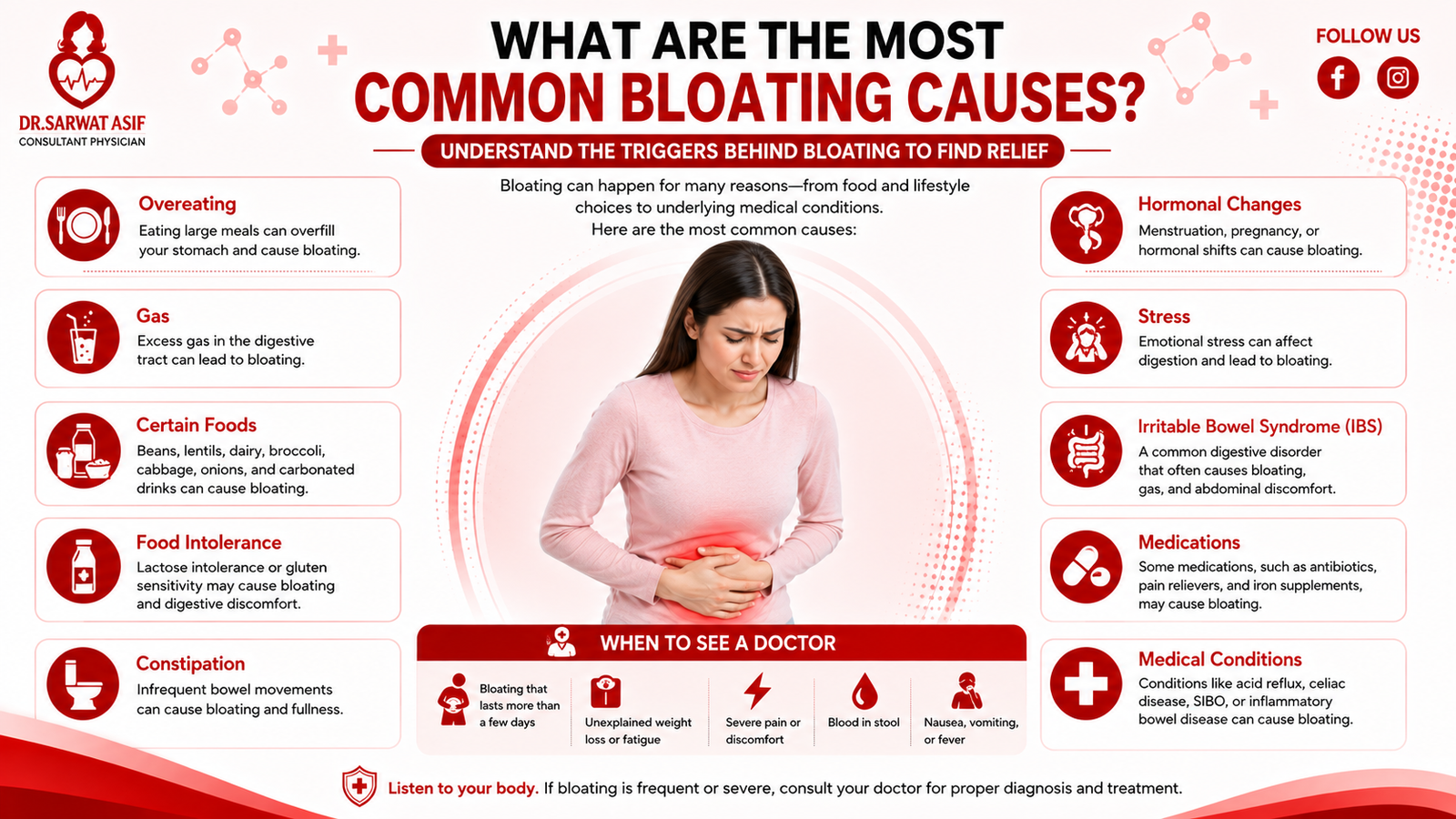
The most common causes include excess intestinal gas, swallowing air, constipation, certain foods, food intolerances, and functional digestive conditions such as IBS.
Some people also experience bloating around their menstrual period.
1. Excess Gas
Gas is a normal part of digestion. It enters the digestive tract when you swallow air and is also produced when bacteria in the large intestine break down carbohydrates that have not been completely digested in the small intestine.
When more gas is produced or trapped in the digestive system, you may experience abdominal fullness, pressure, burping, flatulence, or visible distension.
2. Swallowing Too Much Air
Some everyday habits can increase the amount of air you swallow.
Eating or drinking quickly, chewing gum, sucking hard candies, drinking fizzy beverages, and smoking can contribute to increased swallowed air and gas symptoms.
If bloating regularly occurs after meals, paying attention to eating speed and beverage choices can be a useful first step.
3. Constipation
Constipation is another common reason for abdominal bloating.
When stool moves slowly through the bowel or is difficult to pass, the abdomen may feel full or uncomfortable.
Constipation can involve fewer bowel movements, hard or lumpy stools, difficulty passing stool, or a sensation that the bowel has not completely emptied.
It can have several causes, including low fiber intake, inadequate fluid intake, low physical activity, certain medicines, and digestive or hormonal conditions.
4. Food Intolerance
Some people develop bloating after eating foods containing particular carbohydrates that their digestive system does not handle well.
Lactose intolerance is one example. People with lactose intolerance can develop bloating, abdominal discomfort, and diarrhea after consuming foods or drinks containing lactose. Fructose intolerance can also cause digestive symptoms in some people.
A food diary can help identify a possible connection between meals and symptoms.
However, eliminating major food groups without professional guidance may unnecessarily restrict the diet.
5. Irritable Bowel Syndrome
IBS is a digestive disorder associated with repeated abdominal pain and changes in bowel habits, including diarrhea, constipation, or both. Bloating and gas are also common symptoms.
The exact cause of IBS is not fully established. Researchers believe that interactions between the brain and digestive system, changes in bowel movement, sensitivity to intestinal contents, previous infections, and food sensitivities may play roles in some people.
6. Certain Foods and Drinks
Different foods affect people differently. Common foods and drinks associated with increased gas or bloating include beans and lentils, some vegetables such as broccoli and cauliflower, dairy products containing lactose, certain high fructose foods, sugar alcohols, and carbonated drinks.
This does not mean these foods are unhealthy or that everyone should avoid them.
The goal is to identify individual triggers rather than unnecessarily removing nutritious foods from the diet.
7. Changes Around the Menstrual Period
Some women notice abdominal bloating around their period. Hormonal changes may contribute to temporary digestive symptoms and changes in bowel habits.
If bloating is severe, persistent, newly developed, or accompanied by other concerning symptoms, it should not automatically be attributed to the menstrual cycle.
8. Celiac Disease and Other Digestive Conditions
Persistent bloating can sometimes occur with conditions affecting digestion, including celiac disease, gastroesophageal reflux disease, gastroparesis, and other gastrointestinal disorders.
The presence of bloating alone does not establish any particular diagnosis. A healthcare professional may need to consider the full pattern of symptoms, medical history, diet, medications, and examination findings.
Which Foods Can Make Bloating Worse?
Food triggers vary from one person to another. A meal that causes significant bloating for one person may cause no symptoms in another.
Common examples associated with gas and bloating include:
- Beans, peas, and lentils
- Broccoli, cauliflower, cabbage, and similar vegetables
- Dairy products when lactose is poorly tolerated
- Some high fructose foods and drinks
- Sugar free gum and candies containing certain sugar alcohols
- Carbonated beverages
- Very large or high-fat meals
NIDDK notes that some people can experience more gas symptoms after consuming high fiber or high fat foods, while certain carbohydrate groups can also contribute to gas production.
Instead of removing many foods at once, consider recording what you eat and when symptoms appear. This may provide useful information for a doctor or dietitian.
Bloating After Eating: Why Does It Happen?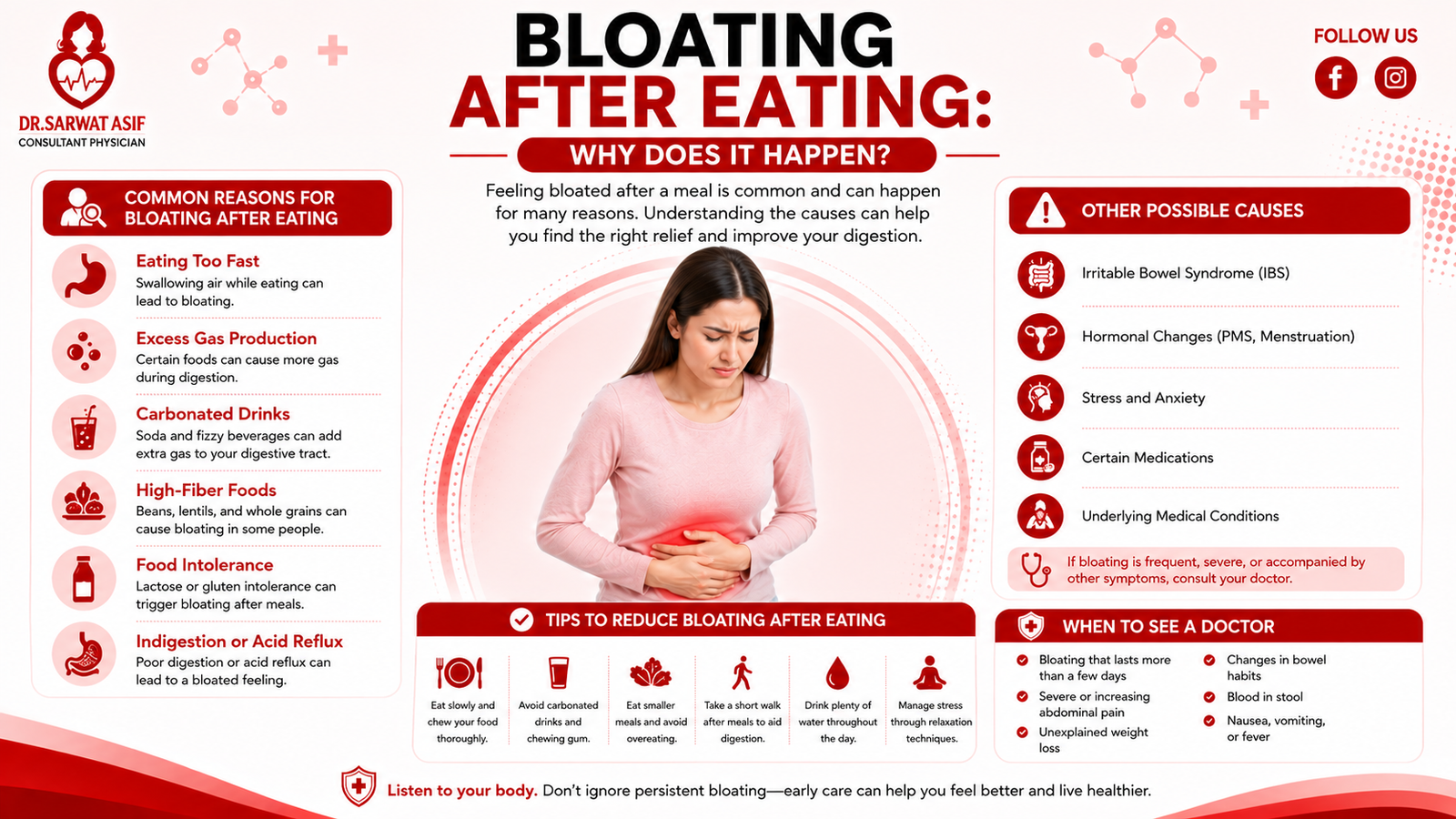
Bloating after eating can occur because the digestive system is processing food and producing gas.
Eating large meals, eating quickly, drinking carbonated beverages, or consuming foods that trigger an individual’s digestive symptoms may make the sensation more noticeable.
For some people, bloating after meals is related to constipation, lactose intolerance, IBS, or another digestive condition.
Persistent symptoms should be evaluated rather than treated as ordinary gas indefinitely.
Bloating With Constipation, Diarrhea, or Abdominal Pain
The combination of bloating with other digestive symptoms can provide useful information.
Symptoms with bloating | Possible association | What to consider |
Bloating + constipation | Constipation, IBS-C, dietary factors | Bowel frequency, stool consistency, fluid and fiber intake |
Bloating + diarrhea | Food intolerance, IBS, infection or other digestive conditions | Recent foods, duration, frequency and other symptoms |
Bloating + abdominal pain | IBS and other digestive disorders | Pattern, location, severity and relationship to bowel movements |
Bloating + weight loss | Underlying medical condition needs evaluation | Seek professional assessment |
Bloating + blood in stool | Possible gastrointestinal bleeding or other condition | Prompt medical evaluation is appropriate |
These symptom combinations are not diagnoses. Similar symptoms can occur with several different conditions, so a healthcare professional needs to evaluate the overall picture.
How Can You Reduce Bloating?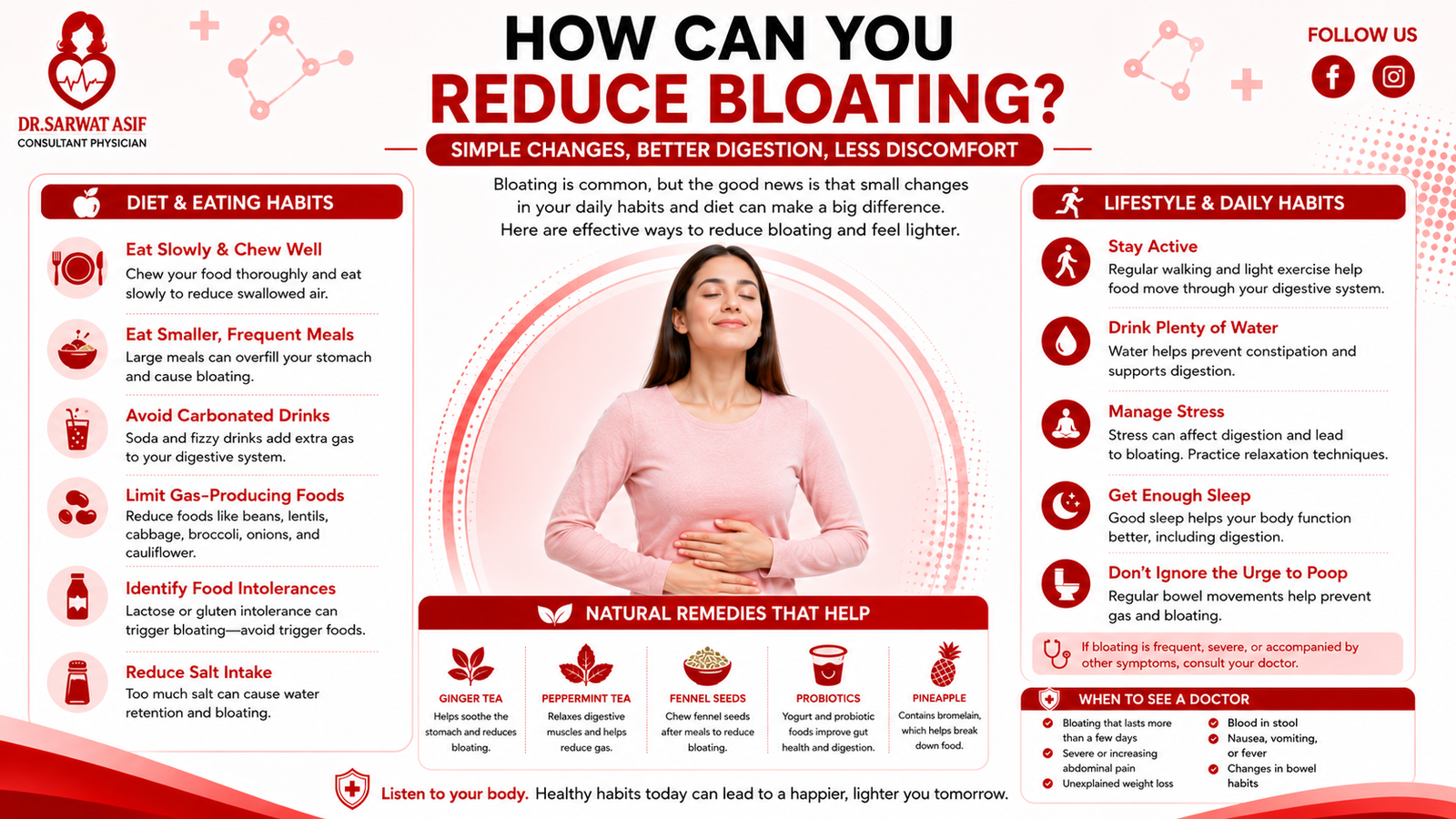
For occasional bloating, simple lifestyle changes may help.
The most useful approach is to identify what appears to trigger your symptoms rather than assuming that one remedy works for everyone.
Try eating meals at a comfortable pace and avoiding habits that increase swallowed air.
If certain foods repeatedly cause symptoms, keep a food and symptom diary and discuss the pattern with a healthcare professional.
If constipation is contributing to bloating, improving bowel habits may help. Fiber can be beneficial for constipation, but increasing it too quickly may itself cause more gas and bloating. A gradual dietary change may be easier to tolerate.
For people with IBS, a healthcare professional may recommend dietary approaches such as a low FODMAP diet in appropriate circumstances.
Such diets can be restrictive, so professional guidance can help ensure that nutrition remains adequate.
When Should You See a Doctor for Bloating?
You should consider medical evaluation when bloating is frequent, persistent, worsening, or interfering with everyday activities.
Medical advice is particularly important when bloating occurs with unexplained weight loss, blood in the stool, significant abdominal pain, vomiting, fever, or changes in bowel habits.
A doctor may ask about your diet, bowel movements, medications, medical history, symptom duration, and any factors that make the bloating better or worse.
Depending on the situation, further testing or referral to a specialist may be considered.
For patients in Karachi, discussing persistent digestive symptoms with a qualified healthcare professional such as Dr. Sarwat Asif can be an appropriate step when symptoms are recurring or difficult to manage.
The appropriate evaluation and treatment depend on the individual’s symptoms and underlying cause.
Warning Signs That Need Prompt Medical Attention
Seek urgent medical attention if bloating occurs with severe or sudden abdominal pain, vomiting blood, severe difficulty breathing, or a markedly swollen abdomen with significant symptoms.
Inability to pass stool or gas, particularly with pain or vomiting, can also require urgent assessment.
Do not assume that persistent bloating is simply gas when warning signs are present.
How Is Persistent Bloating Evaluated?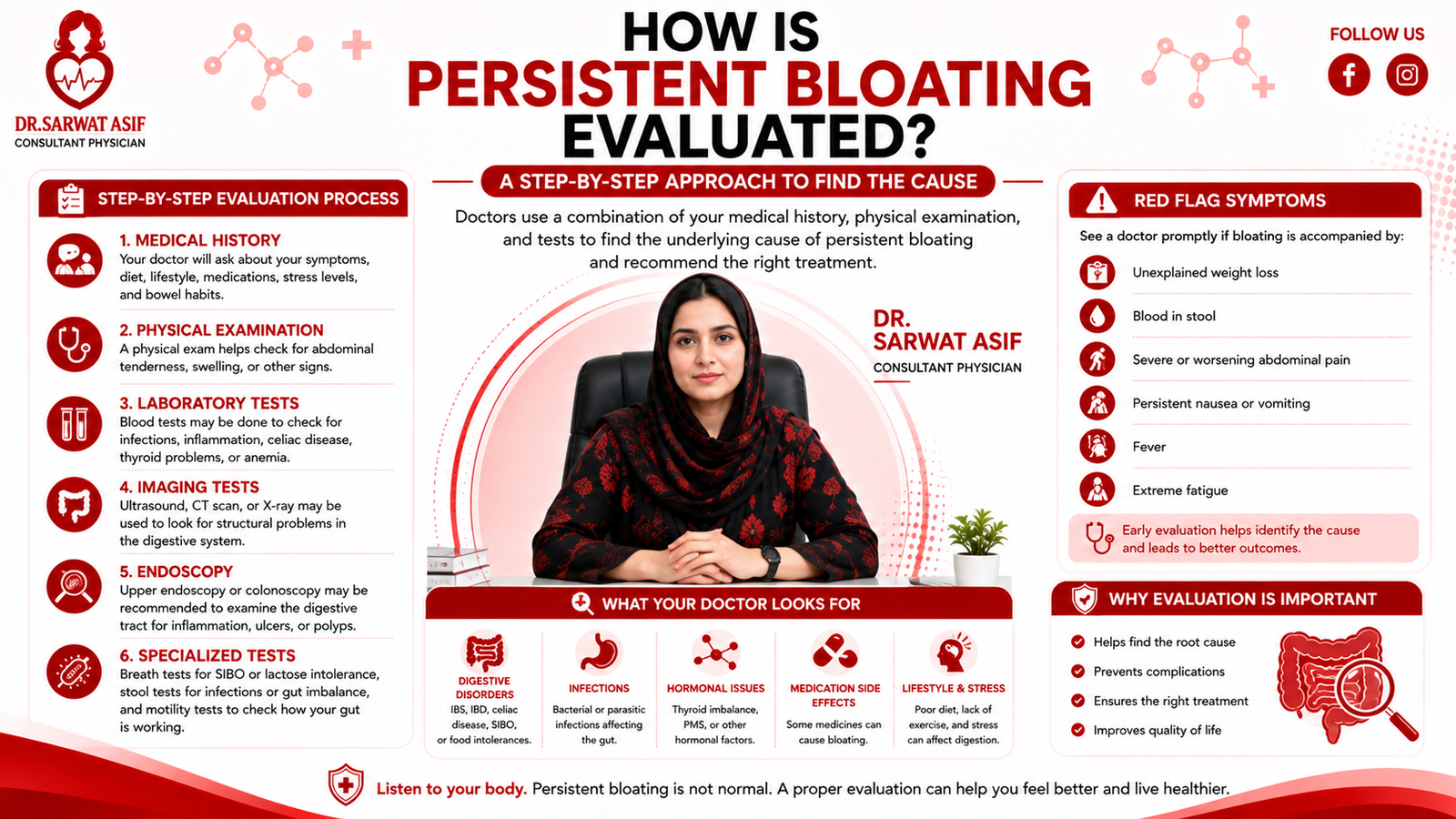
There is no single test that explains every case of bloating. Evaluation depends on the symptoms and suspected cause.
A healthcare professional may consider:
- Medical history: When symptoms began, how often they occur, what foods are associated with them, and whether bowel habits have changed.
- Physical examination: The abdomen and other relevant areas may be examined for signs that could help guide further evaluation.
- Dietary assessment: Food patterns can help identify possible intolerance or dietary triggers.
- Further testing: Depending on symptoms and medical history, a clinician may recommend appropriate laboratory, imaging, or other diagnostic tests.
For example, persistent bloating accompanied by diarrhea and weight loss may require a different evaluation from occasional bloating after a large meal.
Bloating Causes: Common vs. Medical Reasons
It can be helpful to distinguish occasional lifestyle-related bloating from symptoms that recur.
Common causes often include swallowed air, gas-producing foods, carbonated drinks, large meals, constipation, and individual food intolerance.
Medical causes may include IBS, celiac disease, lactose intolerance, small intestinal bacterial overgrowth, gastroparesis, and other gastrointestinal conditions.
More serious diseases can occasionally present with persistent bloating, which is why ongoing or changing symptoms should not be ignored.
The presence of one symptom does not tell you which condition you have. Proper assessment is more reliable than self-diagnosis.
Practical Ways to Track Your Symptoms
A simple record can make a medical consultation more productive.
For one or two weeks, if appropriate, note the foods and drinks you consume, the timing of bloating, bowel movements, abdominal pain, and other symptoms.
Also record whether symptoms improve after passing stool or gas. This information can help a healthcare professional identify patterns and decide whether further evaluation is needed.
Avoid making several major dietary changes simultaneously. If you remove multiple foods at once, it can become difficult to determine which change actually affected your symptoms.
Frequently Asked Questions
What is the most common cause of bloating?
Excess gas in the digestive tract is a common cause of bloating. Gas can result from swallowed air or from bacteria breaking down undigested carbohydrates in the large intestine.
Constipation, food intolerance, IBS, and certain digestive conditions can also cause or worsen bloating.
Why is my stomach bloated every day?
Daily bloating can have several causes, including constipation, food intolerance, IBS, dietary triggers, or another digestive condition.
Frequent bloating should be assessed by a healthcare professional, especially if dietary changes do not improve it or if other symptoms occur.
Can constipation cause bloating?
Yes. Constipation can cause abdominal fullness and discomfort because stool moves slowly or is difficult to pass.
Constipation can have dietary, lifestyle, medication-related, digestive, hormonal, and other causes.
Can gas and bloating be caused by IBS?
Yes. Bloating and gas are common symptoms associated with IBS. IBS can also cause recurring abdominal pain and changes in bowel movements, including diarrhea, constipation, or both.
What foods commonly cause bloating?
Beans, lentils, certain vegetables, lactose containing dairy products, some high fructose foods, sugar alcohols, and carbonated drinks can increase gas or bloating in some people.
Individual responses vary, so a food diary can be useful for identifying personal triggers.
When is bloating a serious concern?
Bloating deserves prompt medical attention when it occurs with severe or sudden abdominal pain, persistent vomiting, blood in the stool or vomit, unexplained weight loss, fever, inability to pass stool or gas, or severe difficulty breathing.
Should I see a doctor for persistent bloating in Karachi?
If bloating occurs regularly, does not improve with reasonable dietary changes, or is accompanied by other concerning symptoms, medical evaluation is appropriate.
Patients in Karachi can consult a qualified healthcare professional, such as Dr. Sarwat Asif, to discuss recurring digestive symptoms and determine whether further evaluation is needed.
Conclusion
Bloating can have a simple explanation, such as swallowed air, constipation, a large meal, or a food trigger.
It can also be associated with IBS, food intolerance, celiac disease, and other digestive conditions.
The key is to look at the pattern of symptoms, not just the sensation of abdominal fullness.
Occasional bloating without other concerning symptoms is often manageable, but persistent, worsening, or unexplained bloating deserves professional assessment.
If you are experiencing recurring bloating in Karachi, keeping a food and symptom record before consulting a healthcare professional such as Dr. Sarwat Asif may provide useful information for discussing possible causes and next steps.
Medical disclaimer: This article is for general educational purposes and does not diagnose or treat any individual.
Treatment and testing should be determined by a qualified healthcare professional based on the patient’s symptoms and medical history.