

Dehydration happens when the body loses more fluid than it takes in. Common dehydration symptoms include increased thirst, dry mouth, dark yellow urine, urinating less often, tiredness, dizziness, and headache.
More serious dehydration can cause confusion, fainting, rapid breathing, rapid heartbeat, and very little or no urine.
Dehydration can develop after vomiting, diarrhea, fever, heavy sweating, prolonged physical activity, or simply not drinking enough fluids.
In a hot city such as Karachi, fluid loss from sweating can become more noticeable during periods of high heat, especially when someone works or exercises outdoors.
This guide explains how to recognize dehydration in adults and children, what commonly causes it, how healthcare professionals assess it, what you can do for mild dehydration, and when medical attention is necessary.
What Is Dehydration?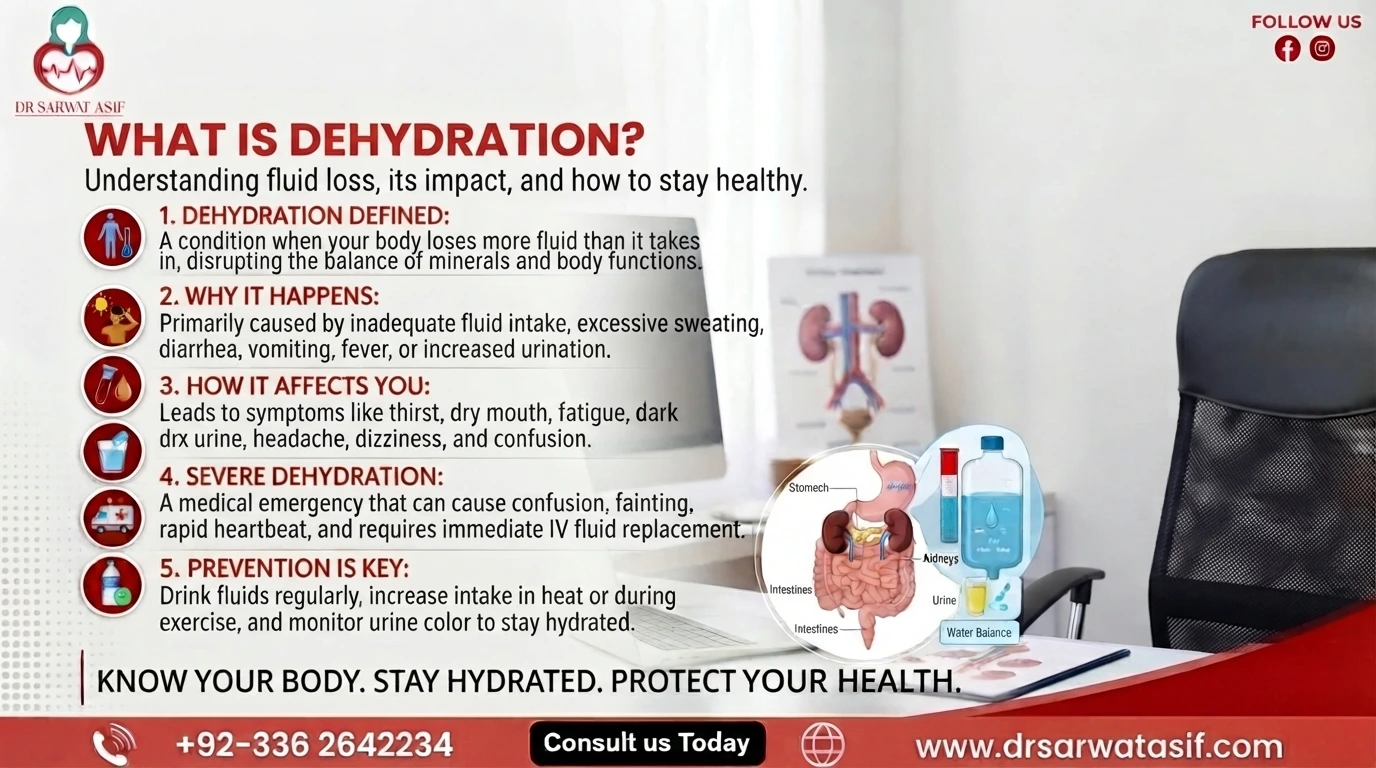
Dehydration is a condition in which the body does not have enough fluid to function properly. It can happen because you are not drinking enough, losing too much fluid, or both.
The body continuously loses water through urination, sweating, and breathing. Illnesses such as diarrhea, vomiting, and fever can increase fluid loss. Certain medical conditions and medicines can also increase the risk.
Mild dehydration may initially cause thirst and a dry mouth. As fluid loss increases, symptoms can become more noticeable and may affect circulation, alertness, and kidney function.
Severe dehydration can be a medical emergency and requires prompt assessment and treatment.
What Are the Common Dehydration Symptoms?
The most common signs include thirst, dry mouth, dark colored urine, reduced urination, tiredness, and dizziness. Some people may also develop a headache, dry skin, or muscle cramps.
Early Signs of Dehydration
Early symptoms can be easy to overlook because they may resemble tiredness or the effects of heat.
Common early signs include:
- Increased thirst
- Dry or sticky mouth
- Dry lips
- Darker yellow urine
- Urinating less frequently
- Feeling tired or weak
- Dizziness or lightheadedness
- Headache
- Dry skin
Urine color can provide a useful clue, but it should not be used by itself to diagnose dehydration.
A healthcare professional considers symptoms, fluid intake, illness, and other factors when assessing fluid status.
Moderate to Severe Dehydration Symptoms
As fluid loss becomes more significant, symptoms can become more serious.
A person may experience very little urine, marked dizziness, rapid heartbeat, rapid breathing, confusion, or unusual sleepiness.
Very little or no urine is particularly concerning, especially when it occurs together with other symptoms.
Severe dehydration can affect blood circulation and may progress to shock if not treated.
Dehydration Symptoms in Children and Babies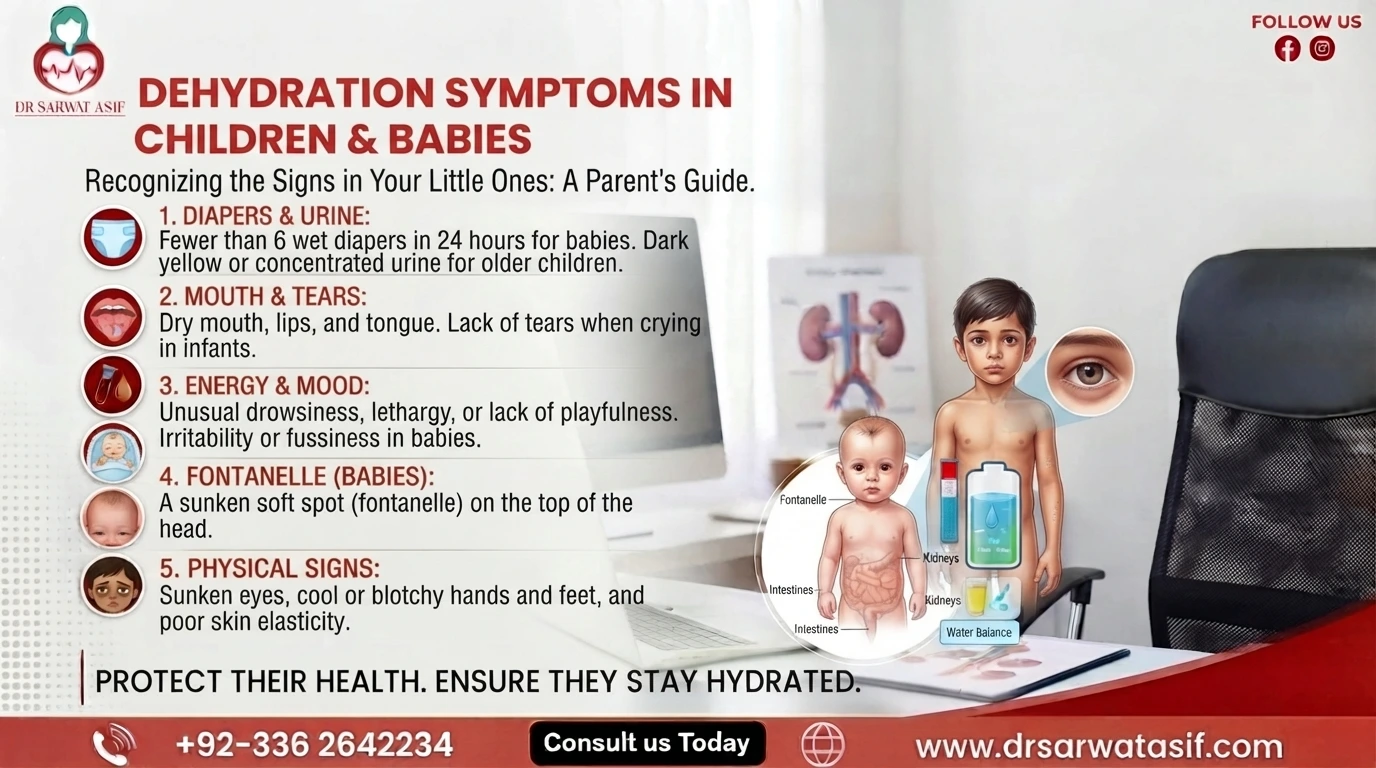
Children can become dehydrated more quickly than adults, particularly when they have vomiting or diarrhea.
Signs may include a dry mouth and tongue, crying without tears, fewer wet diapers, unusual sleepiness, irritability, sunken-looking eyes, and reduced urination.
In infants, a significant reduction in wet diapers can be an important warning sign.
Parents should pay close attention when a child has repeated vomiting, frequent diarrhea or fever and is drinking less than usual.
For children with diarrhea, oral rehydration solutions can help replace both fluids and electrolytes.
The CDC notes that oral rehydration salts are commonly available in developing countries and are used to help prevent dehydration in children with diarrhea.
What Causes Dehydration?
Dehydration can result from either excessive fluid loss or inadequate fluid intake. Sometimes both happen at the same time.
Common causes include:
Vomiting and diarrhea: These can rapidly remove water and electrolytes from the body. Gastrointestinal illnesses are a common reason for dehydration.
Heavy sweating: Hot weather, exercise, and outdoor work can increase fluid loss. This is especially relevant in warm climates and during periods of high temperature.
Fever: A high temperature can increase fluid loss and may also reduce a person’s desire to drink.
Not drinking enough: Someone may drink too little because of illness, nausea, a sore throat, mouth problems, or simply being busy.
Frequent urination: Some medical conditions and medicines can cause increased urination and contribute to fluid loss. Diabetes is one possible medical cause.
Who Is More Likely to Become Dehydrated?
Anyone can become dehydrated, but some people have a greater risk.Infants and young children can lose fluids quickly during vomiting or diarrhea.
Older adults may also be at increased risk because thirst can become less noticeable with age.
People with certain chronic conditions, including diabetes and kidney problems, may also need particular attention to fluid balance.
People who exercise or work outdoors in hot weather may lose more fluid through sweating.
This makes regular fluid intake particularly important during physically demanding activities.
Dehydration in Karachi: Why Heat Matters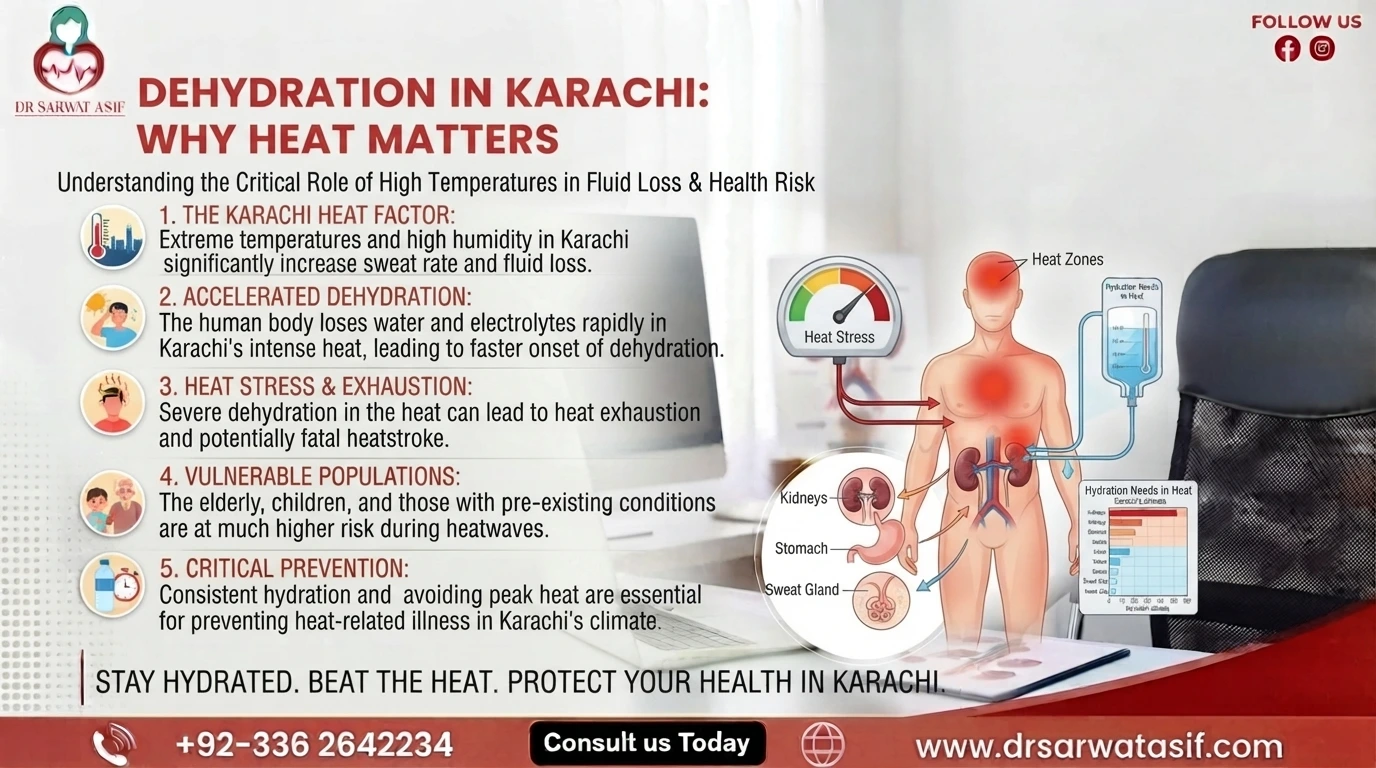
Karachi’s warm climate can make fluid loss from sweating more noticeable, particularly during hot weather or prolonged outdoor activity.
However, heat is not the only cause of dehydration.
Someone staying indoors can also become dehydrated because of vomiting, diarrhea, fever, poor fluid intake, or a medical condition.
If you are spending several hours outdoors, exercising, doing physical work, or experiencing significant sweating, pay attention to thirst, urine output, dizziness, and other signs of fluid loss.
Dehydration Symptoms vs Heat Exhaustion
Dehydration and heat-related illnesses can occur together, but they are not the same condition.
Factor | Dehydration | Heat Exhaustion |
Main problem | Too little fluid in the body | Illness caused by excessive heat exposure and fluid or salt loss |
Common signs | Thirst, dry mouth, dark urine, reduced urination, fatigue, dizziness | Heavy sweating, weakness, dizziness, headache, nausea and other heat-related symptoms |
Common triggers | Vomiting, diarrhea, fever, sweating or inadequate fluid intake | Prolonged heat exposure or physical activity in hot conditions |
Main concern | Increasing fluid loss can become severe | Can progress to a more serious heat illness |
What matters | Replacing appropriate fluids and addressing the cause | Moving away from heat and obtaining medical help when symptoms are severe or worsening |
The two conditions can overlap. A person who has been sweating heavily in hot weather may develop dehydration while also experiencing heat related illness.
If someone becomes confused, faints, develops severe symptoms, or has an altered level of consciousness, urgent medical assessment is appropriate.
How Is Dehydration Diagnosed?
A healthcare professional usually assesses dehydration by considering symptoms, medical history, and physical findings.
Vital signs, urine output, and the circumstances causing fluid loss can provide important information.
Depending on the situation, blood tests may be used to evaluate electrolytes and kidney function.
Urine testing may also help assess hydration and investigate the underlying cause.
The assessment is particularly important when dehydration occurs alongside persistent vomiting, diarrhea, fever, diabetes, kidney problems, or another significant medical condition.
How Is Dehydration Treated?
Treatment depends on how severe the dehydration is and why it occurred.
For mild fluid loss, drinking appropriate fluids may be enough. When substantial fluid and electrolyte losses occur, an oral rehydration solution may be useful because it provides water and electrolytes together.
If dehydration is severe, a healthcare professional may recommend treatment with intravenous fluids in a medical setting.
The underlying cause also needs attention. For example, persistent vomiting or diarrhea may require evaluation rather than simply drinking more water.
Do not assume that drinking large quantities of plain water is always the correct treatment.
Fluid and electrolyte needs can vary depending on the person’s condition.
When Should You Seek Medical Help?
Mild symptoms may improve when fluid intake is restored, but worsening or severe symptoms should not be ignored.
Seek urgent medical attention if dehydration is accompanied by:
- Confusion, fainting, or significant changes in alertness
- Very little or no urine
- Rapid heartbeat or rapid breathing
- Severe weakness or unusual drowsiness
- Signs of shock
- Inability to keep fluids down
- Severe or worsening symptoms
These signs can indicate significant dehydration or another medical problem requiring prompt evaluation.
Children, older adults, and people with chronic medical conditions may require earlier medical assessment when they develop significant fluid loss.
How Can You Prevent Dehydration?
Prevention is generally easier than treating significant fluid loss. Drink fluids regularly and increase attention to hydration when you are sweating heavily, exercising, working outdoors, or experiencing vomiting, diarrhea, or fever.
During illness, small frequent sips may be easier to tolerate than drinking a large amount at once. MedlinePlus also recommends paying close attention to fluid intake when someone in the household is sick, particularly children and older adults.
If you have a medical condition that affects fluid balance, ask your healthcare professional about your individual fluid needs rather than following a generic target.
Common Mistakes When Dealing With Dehydration
One common mistake is waiting until thirst becomes severe before paying attention to fluid intake.
Thirst can be an early warning sign, but it is not the only symptom to watch.
Another mistake is treating the symptom without considering the cause.
Repeated vomiting, persistent diarrhea, fever, or unusually frequent urination may continue causing fluid loss even after someone starts drinking.
It is also important not to use salt tablets on your own. MedlinePlus specifically warns that salt tablets can cause serious complications.
When Should You See a Doctor in Karachi?
Consider speaking with a healthcare professional if dehydration symptoms are persistent, recurrent, or accompanied by another illness.
A doctor can evaluate whether fluid loss is related to vomiting, diarrhea, fever, heat exposure, medication, diabetes, kidney problems, or another underlying condition.
This is particularly useful when symptoms do not improve with appropriate fluid intake.
Patients in Karachi who need an assessment for dehydration or related symptoms can discuss their concerns with a qualified healthcare professional such as Dr. Sarwat Asif, depending on the nature and severity of the symptoms.
A medical evaluation is especially important when symptoms are severe, rapidly worsening, or associated with confusion, fainting, very low urine output, or an inability to keep fluids down.
Frequently Asked Questions
What are the first signs of dehydration?
The first signs can include increased thirst, dry mouth, darker urine, reduced urination, tiredness, and dizziness.
Headache and dry skin can also occur. These symptoms should be considered alongside the person’s fluid intake and any recent vomiting, diarrhea, fever or heavy sweating.
What color is urine when you are dehydrated?
Dehydration can make urine darker yellow and more concentrated. However, urine color can change for other reasons as well, so it should not be used as the only way to determine whether someone is dehydrated. Reduced urination together with thirst and other symptoms provides more useful context.
Can dehydration cause dizziness?
Yes. Dizziness or lightheadedness is a recognized symptom of dehydration.
If dizziness is severe, persistent or accompanied by fainting, confusion, rapid heartbeat, or very little urine, seek prompt medical attention.
How do you know if a child is dehydrated?
Signs can include a dry mouth and tongue, crying without tears, fewer wet diapers or less urination, unusual sleepiness, irritability, and sunken-looking eyes.
Children with repeated vomiting or diarrhea should be monitored closely because they can lose fluids quickly.
Is dehydration serious?
Mild dehydration may improve after appropriate fluid replacement, but severe dehydration can be life-threatening.
Confusion, fainting, very little or no urine, rapid breathing, rapid heartbeat, and signs of shock require urgent medical assessment.
Can vomiting and diarrhea cause dehydration?
Yes. Both vomiting and diarrhea can cause substantial loss of fluids and electrolytes.
If a person cannot keep fluids down, has persistent diarrhea, or develops signs such as reduced urination, dark urine, dizziness, or unusual weakness, medical evaluation may be necessary.
Should I see a doctor for dehydration symptoms?
You should seek medical advice when symptoms are severe, persistent, worsening, or associated with an underlying medical condition.
Urgent care is appropriate for confusion, fainting, very little or no urine, rapid breathing, rapid heartbeat, or other signs of severe dehydration.
Conclusion
Recognizing dehydration symptoms early can help prevent fluid loss from becoming more serious.
Thirst, dry mouth, dark urine, reduced urination, tiredness, and dizziness are common warning signs, while confusion, fainting, very low urine output, and rapid breathing can indicate severe dehydration.
In Karachi, hot weather and outdoor activity can increase fluid loss, but dehydration can also result from vomiting, diarrhea, fever, inadequate fluid intake, or certain health conditions.
If symptoms are persistent or severe, do not rely only on home hydration.
A healthcare professional, including Dr. Sarwat Asif where appropriate, can assess the symptoms and determine whether further evaluation is needed.