

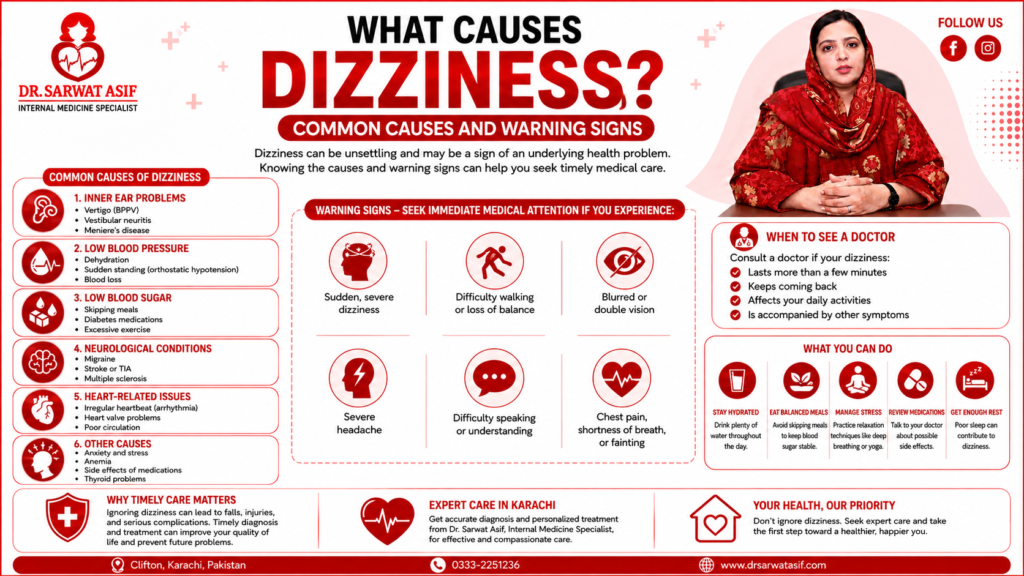
What Is Dizziness?
Dizziness is a broad term used to refer to a variety of sensations such as lightheadedness, lack of balance, vertigo, or a sense of the world passing by.
Does not actually cause dizziness, so targeting the root cause may be more beneficial than just treating the dizziness.
Dizziness can be described as feeling faint, or vertigo can be a sensation of spinning or moving.
The experiences may be different in cause, so it may be helpful to tell your doctor exactly how you feel.
Dizziness can last for a few seconds, minutes, hours, or more. May occur one time or more often.
The timing, precipitants, ancillary features, and history of the illness are all helpful.
What Are the Most Common Dizziness Causes?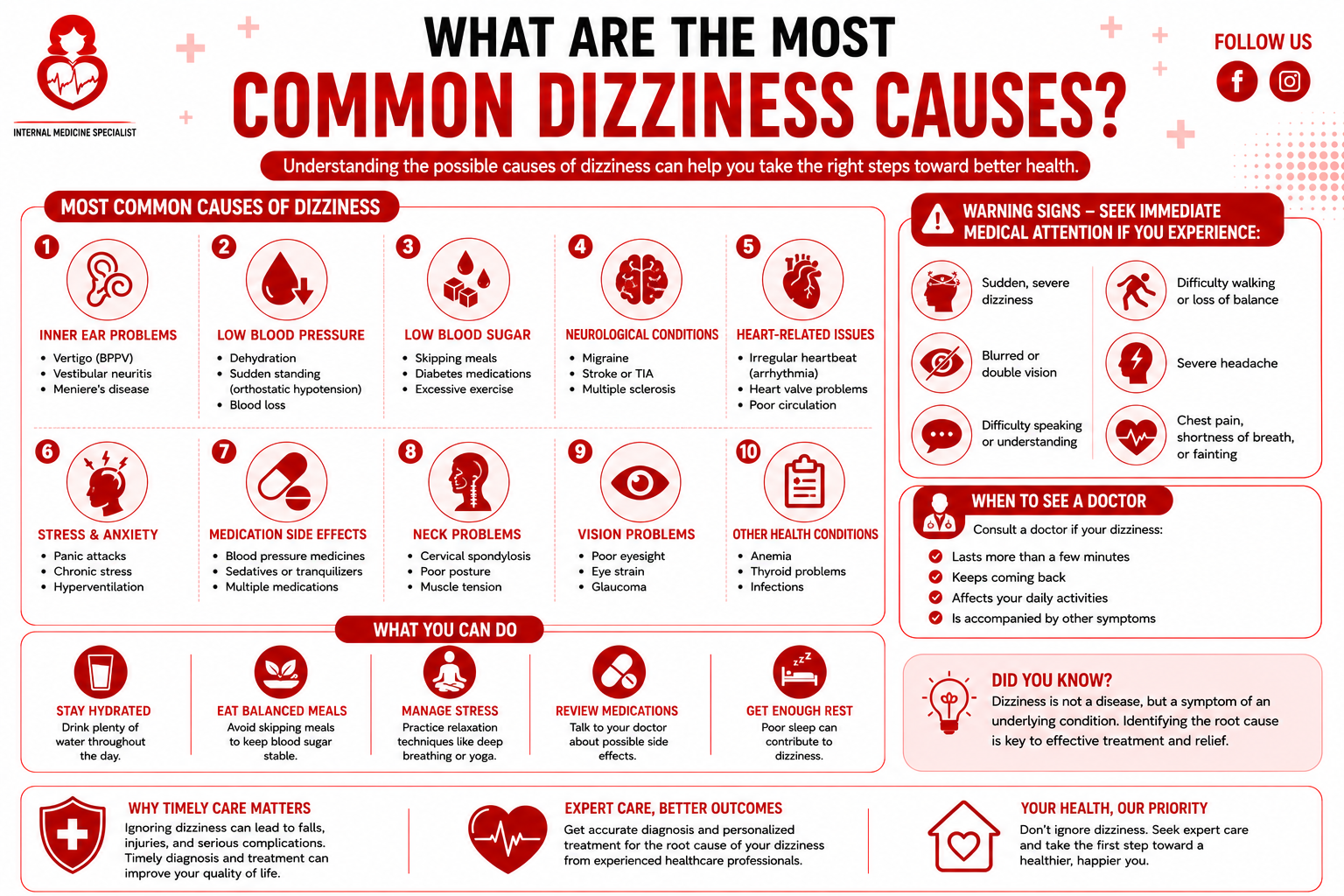
Dehydration, low blood sugar, rapid fluctuations in blood pressure, ear problems, migraine headaches, certain medications, anxiety, anemia, and some cardiac or neurological diseases are common causes of dizziness.
Dizziness may have a simple cause, and if it happens over and over, it might need more in-depth medical attention.These are some of the more common and significant causes.
Dehydration
To keep your body’s circulation normal, you need enough fluids. Dizziness can be caused by losing too much fluid from sweating, vomiting, diarrhea, high temperature, or by not drinking enough water.
It can be especially applicable during hot temperature. The climate of Karachi can cause a lot of heat to be a problem and if someone is exposed to the outdoors for too long without enough fluids, it can be a serious problem.
Low Blood Pressure
A fall in blood pressure may cause temporary lack of blood to the brain, causing dizziness or a sense of faintness.
This can happen after abruptly rising from sitting or lying down. This is usually referred to as orthostatic hypotension. It can also be caused by dehydration, some medications, loss of blood, or other illnesses.
Low Blood Sugar
People with diabetes or those who have gone for a long time without eating may experience dizziness when blood glucose falls too low.
Other symptoms may involve sweating, shaking, hunger, weakness, confusion or rapid heartbeat. If the episodes occur again and again, it should be discussed with a health care professional, not taken for granted that the person is having a low blood sugar.
Inner Ear Problems
The inner ear is responsible for balance. Dysfunctions of this system may lead to vertigo, dizziness, nausea or balance issues.
Benign paroxysmal positional vertigo (BPPV) is a common condition. It can be responsible for brief periods of spinning that occur when turning in bed, gazing upward or shifting the position of the head.
Other inner ear problems can also cause dizziness, and may be accompanied by changes in hearing or tinnitus.
Migraine
Sometimes, migraine doesn’t present with a severe headache. Dizziness or vertigo can be a symptom of a migraine.
Some people may also be sensitive to light/sound, experience nausea, visual problems, or a history of migraine. Dizziness or vertigo can be a primary symptom in one type of migraine, called a vestibular migraine.
Anemia
When the blood does not carry enough oxygen for the body’s needs, anemia occurs. Anemia can cause fatigue and weakness, difficulty breathing, fast heartbeat or even dizziness, depending on its severity and cause.
Iron deficiency is a possible cause, but there are several causes for anemia. If you are thought to have anemia, a blood test might be necessary.
Medication Side Effects
There are a number of medicines that can cause dizziness or lightheadedness. These can include medications for blood pressure, sleep, anxiety, pain, or fluid balance.
Tell the prescribing clinician if dizziness began after starting a new medicine or adjusting the dose of a medicine. Never discontinue a medication that was prescribed by a health care provider without a provider’s advice.
Anxiety and Stress
This can lead to physical reactions, like increased breathing, heart rate, shaking, and dizziness, when anxiety is high. Stress can also increase a person’s awareness of balance sensations.
But that doesn’t mean any dizziness equals anxiety. It is reasonable to consider a proper evaluation if symptoms are new, persistent, severe, or if there are other concerning symptoms.
Heart and Circulation Problems
Certain cardiovascular diseases can decrease the proper blood supply to the brain or lead to an abnormal heart rhythm. Chest discomfort, weakness, shortness of breath, dizziness, or fainting may also happen with palpitations.
If dizziness is accompanied by more severe heart symptoms or loss of consciousness, medical evaluation is necessary.
Neurological Conditions
Dizziness can also be a symptom of neurological conditions such as the nervous system or the brain, but this is less common. The risk is based on the individual’s symptoms and medical history.
Difficulty speaking, weakness or numbness on one side of the body, severe loss of coordination, or other sudden neurological symptoms that occur with dizziness necessitate immediate medical care.
Is Dizziness the Same as Vertigo?
No. Dizziness is a broad term, while vertigo specifically describes a sensation of movement, often spinning or turning.
Vertigo commonly involves the balance system of the inner ear or certain parts of the nervous system, although other causes are possible.
Feature | General Dizziness | Vertigo |
Typical sensation | Lightheadedness, weakness, or imbalance | Spinning or movement sensation |
Possible causes | Dehydration, blood pressure changes, medications, anemia, and others | BPPV, inner ear disorders, migraine, and other conditions |
Balance problems | May occur | Common |
Nausea | Sometimes | Common in some cases |
Triggered by head movement | Not always | Frequently in positional vertigo |
Evaluation | Depends on symptoms and cause | Often focuses on balance and inner ear symptoms |
These descriptions are not enough to diagnose a condition. A healthcare professional may need to assess the complete pattern of symptoms.
What Symptoms Can Occur With Dizziness?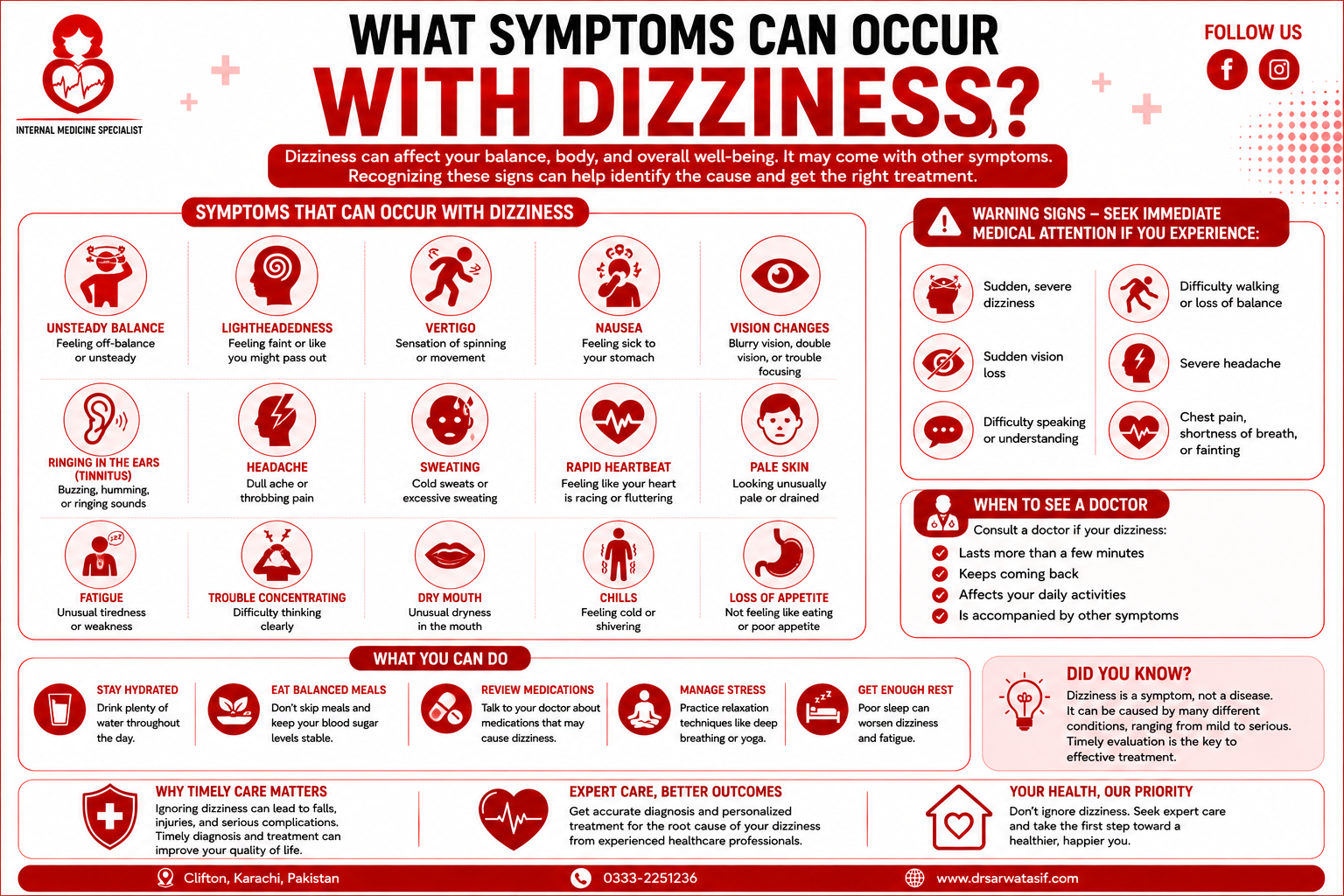
Accompanying symptoms with dizziness may give important clues on what is causing the issue.
Some people might only feel faint, others might feel dizzy, get sick, struggle with balance or experience hearing issues.
Notice the time of onset, duration, precipitating factors, and associated symptoms of the dizziness. This data can help make a medical appointment more productive.
An associated:
- Nausea or vomiting
- Headache
- Unusual or blurred vision
- Ringing in the ears
- Hearing changes
- Weakness or fatigue
- Unsteadiness while walking
- Palpitations
- Sweating
- Feeling faint
When Is Dizziness an Emergency?
If dizziness strikes suddenly and is very strong, and is accompanied by symptoms like drooping mouth, one-sided weakness or numbness, difficulty speaking, severe difficulty walking, chest pain, fainting, severe headache, or significant vision changes, it’s a medical emergency and requires immediate attention.
If these symptoms are present, they can be a sign of a serious health issue and should not be treated at home.
If the dizziness occurs with warning signs (abrupt onset of neurological changes, significant chest symptoms, loss of consciousness, severe difficulty breathing or severe headache), please seek urgent care.
If someone starts to get dizzy and falls or cannot walk safely, they also may require immediate evaluation. If you feel dizzy or have potentially serious symptoms, do not drive yourself.
How Does a Doctor Find the Cause of Dizziness?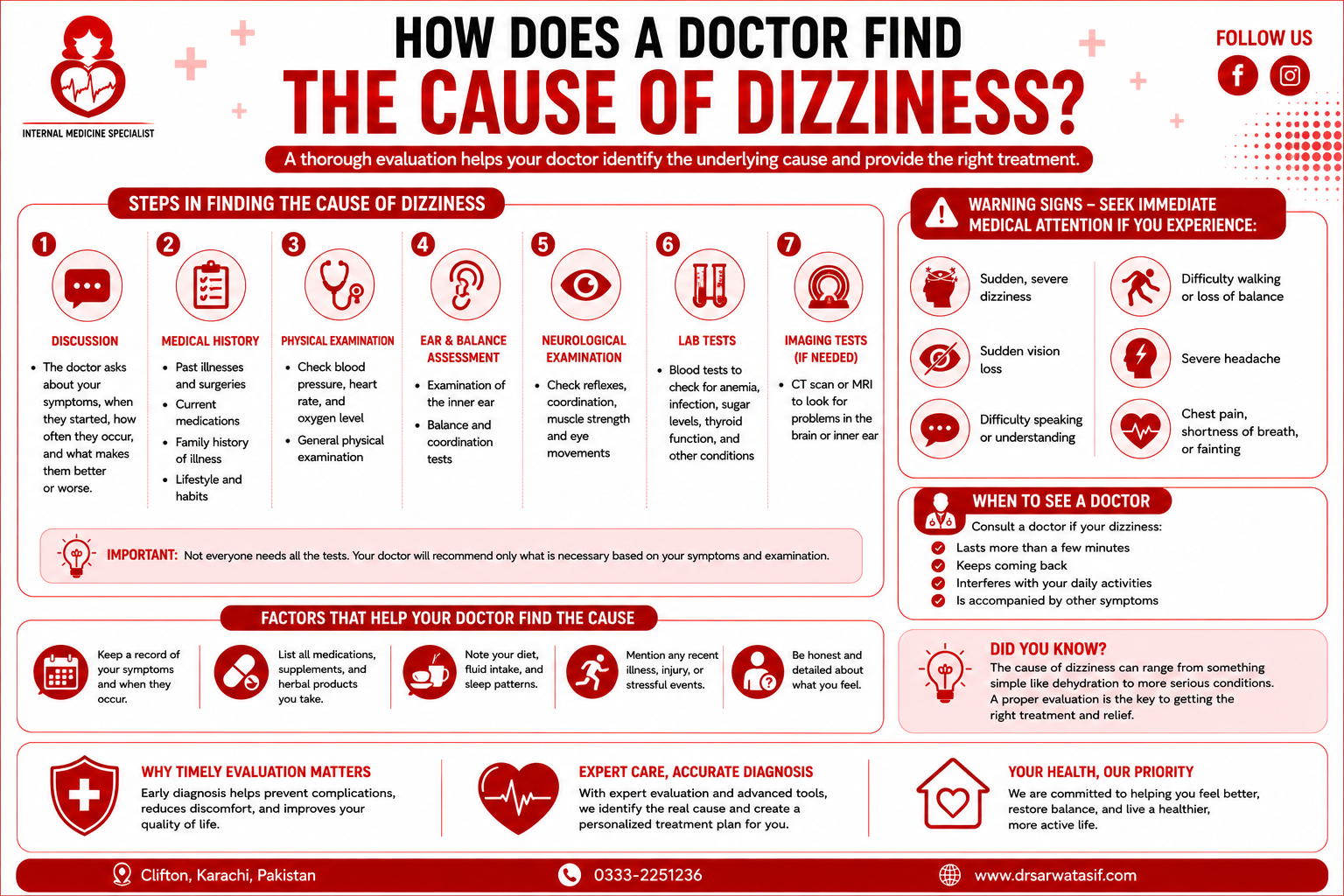
No single test is able to detect all causes of dizziness. Diagnosis is typically initiated with a detailed history and physical examination and then additional testing is chosen based on the symptoms and suspected cause.
A health care worker might ask:
- How long has the dizziness been going on for?
- Does it feel like spinning, fainting or imbalance?
- What is the duration time of every episode?
- Does it move with head movement?
- Has it started following an illness, injury or new medication?
- Does there appear to be any changes in hearing or tinnitus (ringing in the ears)?
- Headaches, chest symptoms, weakness or changes in vision?
Blood pressure, heart rate, neurological examination, balance examination, ear examination and positional testing may be performed, if appropriate, during the examination.
In some cases, further tests such as blood tests, hearing and balance tests, an electrocardiogram, or imaging will be performed.
This decision will be based on the clinical picture, not just the presence of dizziness.
How Is Dizziness Treated?
The treatment for dizziness depends on the cause of the dizziness. No one treatment fits all.
For instance, dehydration-induced dizziness is treated differently than dizziness as a result of BPPV, migraine, drug side effects, anemia and other cardiovascular problems.
If dehydration or another reversible factor is identified, symptoms may be improved by correcting that.
If a medicine is contributing to the dizziness, a clinician will consider reviewing the medicine. Some ear conditions can be treated with certain physical techniques and balance rehabilitation exercises.
Treatment may be directed at migraine treatment if dizziness is associated with migraine. If the medical condition is causing this, then treatment of this underlying condition becomes the focus of care.
Never self prescribe a medicine for recurrent dizziness, unless advised to do so by a doctor, and especially if the cause has not been determined.
What Can You Do During a Dizziness Episode?
If a sudden onset of dizziness develops, sit or lie down in a safe place until the dizziness subsides. Slow movement decreases risk of falling, especially when getting up is a trigger for symptoms.
Do not drive, climb stairs, work with machinery, or do anything that might be hazardous when very dizzy.
If they keep happening, note when, how long, what triggers them, what symptoms are present, and any medication changes or new routines in the past month.
This information can be useful to a clinician in detecting patterns that may not be easily discernible.
How Can Dizziness Be Prevented?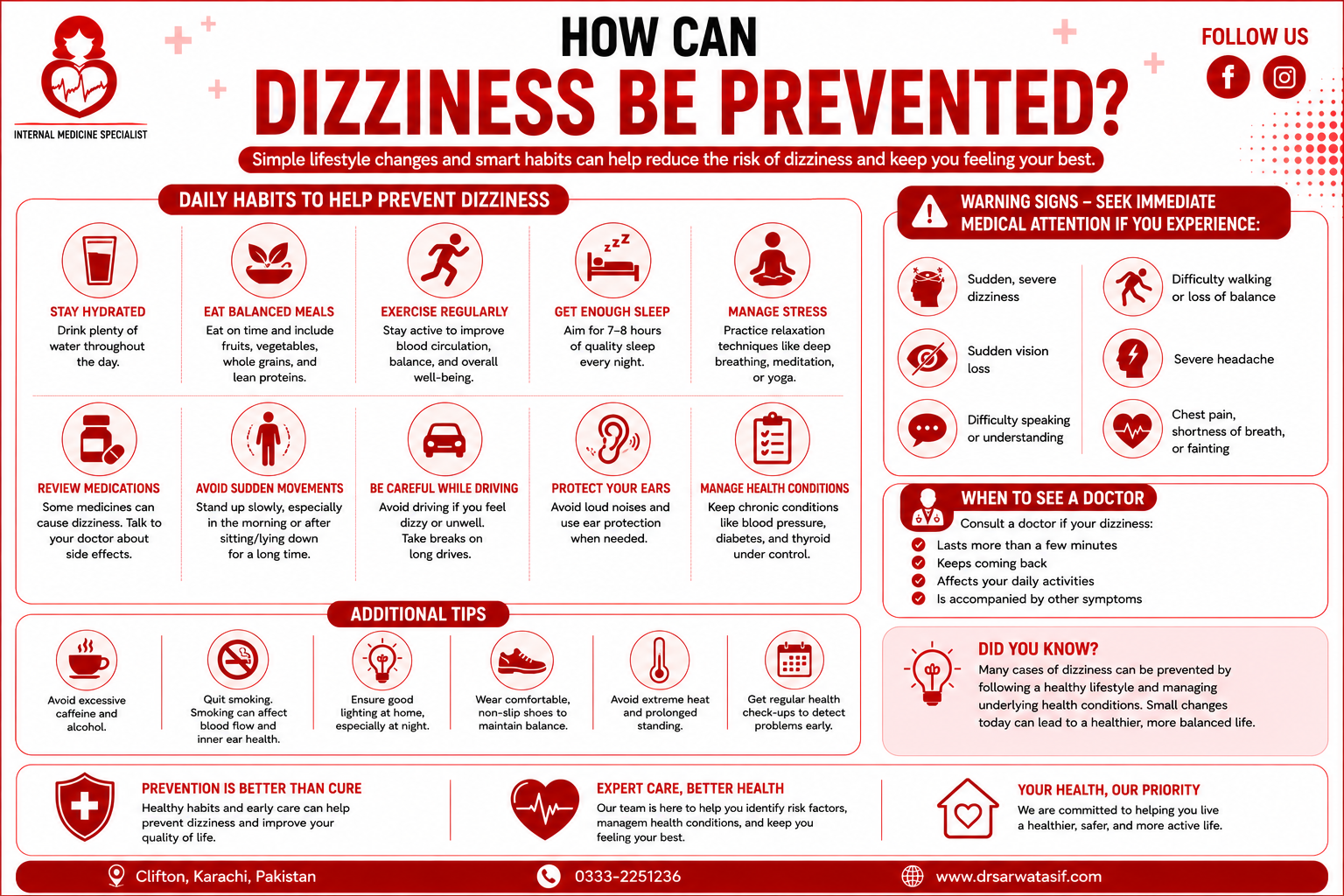
Some causes of dizziness are associated with medical conditions that need to be treated, so it is not possible to prevent all cases of dizziness.
But there are helpful practices that will help minimize the chances of being dizzy from dehydration, missed meals, sudden movements, or unsafe situations.
Drink enough fluids; eat regular, healthy meals when they are necessary for your health; and move up slowly from sitting or lying for extended periods of time.
Discuss any frequent symptoms if taking medicines that can affect blood pressure or balance.
Individuals who experience dizziness often should also take steps to eliminate fall hazards at home, particularly if they have balance issues.
Why Should Repeated Dizziness Be Checked?
Recurrent dizziness should not be ignored and may have an obvious trigger or cause in an occasional brief episode.
If the symptoms keep happening, it may affect your ability to work, walk, drive, sleep, and do routine daily activities.
If the dizziness is increasing in frequency or duration, happens without a known cause, or is accompanied by other symptoms, it is very important to attempt to establish a cause.
A medical examination may be useful to rule out relatively common conditions from those that need more specific treatment.
When Should You See a Doctor in Karachi?
Patients in the city of Karachi should seek medical attention if they experience recurrent dizziness that interferes with their activities of daily living, if they fall down, or if they experience dizziness along with palpitations, weakness, headache, hearing problems, and fainting.
The correct specialist will be determined by the suspected cause. In some cases, a general physician or internal medicine physician may be able to assess them and provide initial care; in other cases, an ENT specialist, neurologist, cardiologist, or other health care provider may be necessary.
If you’re thinking of consulting with Dr Sarwat Asif, you should talk about the entire pattern of symptoms and not just the dizziness itself.
Information about the timing of episodes, length, and factors that make them better or worse can help inform the evaluation.
Common Mistakes People Make When They Feel Dizzy
A frequent error is the belief that all dizziness is due to low blood pressure. The other is right away pointing to dehydration, anxiety, or an ear issue without contemplating any different issues.
Dizzy people may also still be able to drive or walk on slippery surfaces, thus putting themselves at risk of injury.
Another issue is that certain medicinal products, when taken, make the person feel dizzy, so he or she does not take them anymore.
If dizziness persists, it is better to determine the pattern and get proper medical advice.