

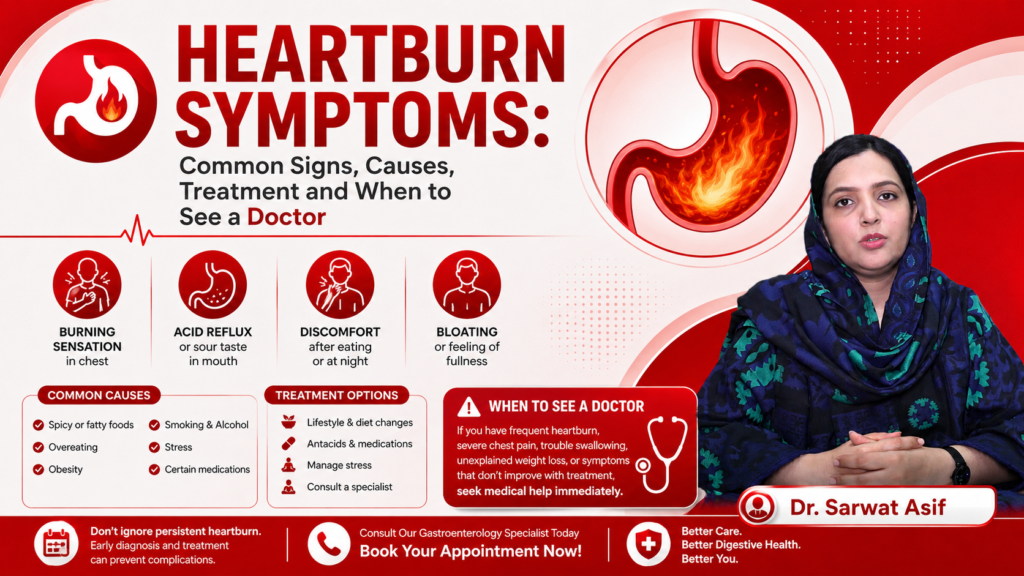
If the heartburn is due to GERD, the symptoms typically include a burning sensation behind the breastbone, which may occur after feeding, following meals, while lying down, or during bending over. Others experience a bitter or sour taste in their mouth or an urge to spit up from the stomach. Heartburn occurs occasionally, but when it happens frequently, it may be a sign of gastroesophageal reflux disease (GERD).
If you have a burning sensation in your chest or the acid is coming into your throat, and you have trouble swallowing, or you are having trouble sleeping or are having nausea every day, talk to your health care provider. This guide will explain the common symptoms, causes, triggers for a seizure, treatment strategies, ways to prevent seizures, and warning signs that need medical attention.
What Is Heartburn?
If stomach acids and other digestive juices get into the esophagus, they will cause heartburn, which is a burning sensation. The esophagus is the tube that transports food from the mouth to the stomach. If reflux irritates the esophagus, it can cause the familiar burning sensation in the chest.
Heartburn is not a disease in and of itself. Occasional reflux can also be a symptom, or, if reflux becomes recurrent and problematic, GERD.
The feeling may sometimes be confused with other chest pain. Chest pain does not always occur as a result of acid reflux and should not be taken as such for new or unexplained heart pain.
What Are the Common Heartburn Symptoms?
The most common symptom is a burning pain in the center of the chest, typically behind the breastbone. May occur after eating and may get worse when lying flat or bending over.
Other symptoms can be present in addition to the burning sensation, especially if reflux is frequent.
Common signs include:
- Burning or discomfort in the back of the chest bone
- A tasting sensation of sour, bitter, or acidic feelings in the mouth.
- Upward flow of food or stomach contents towards the throat
- Symptoms that get worse when eating.
- A pain that worsens with lying or bending.
- Nighttime symptoms that interfere with sleeping
- Heartburn from acid reflux.
- Some people get upset and feel sick.
- For some GERD patients, a cough or a hoarse voice is a persistent problem.
- In more serious cases, trouble or pain with eating goes away (swallowing).
Not all people have the same symptoms. In some GERD sufferers, there may be no burning chest pain, but only cough or hoarseness.
How Does Heartburn Usually Feel?
Heartburn may be described as a warm, burning, or uncomfortable feeling in the chest. It is often related to feeding and can ascend towards the throat.
For instance, if a person has a large, heavy meal and feels a burning sensation in the back of the breastbone later, it is because of this. The pain may get worse when lying down or bending over. This may be accompanied by a sour taste or feeling in the throat.
Although symptoms are important, they do not always indicate the cause of chest pain.
What Causes Heartburn?
The most frequent cause of heartburn is the reflux of stomach contents back up into the esophagus. A muscular valve in the lower esophagus (lower esophageal sphincter) usually prevents this backflow. If this barrier is weakened or becomes loose when it is not supposed to, the reflux can occur.
There are a few things that may make reflux more likely. These factors are too much weight, pregnancy, smoking or secondhand smoke, and hiatal hernia. Some medicines also can make reflux symptoms worse for some people.
Just one episode doesn’t indicate GERD. Repeated reflux symptoms or complications resulting from reflux over time are associated with GERD.
Common Heartburn Triggers
The triggers are different for different people. One person’s food or habit may cause symptoms differently than for another person.
Some situations that can make symptoms worse are eating a large meal, lying down right after a meal, or bending over right after a meal. However, some also experience symptoms following certain foods or beverages.
It can be helpful to maintain a simple food and symptom journal to recognize individual patterns. Don’t eliminate a lot of foods outright, but keep track of what foods you eat, when you get symptoms, and what activities or positions make them feel worse.
Heartburn vs Acid Reflux vs GERD
These terms are related but do not mean exactly the same thing.
Term | What it means | Typical connection |
Acid reflux | Stomach contents move back into the esophagus | May happen occasionally |
Heartburn | Burning chest discomfort caused by reflux | A common symptom of reflux |
GERD | Recurrent reflux that causes symptoms or complications | May require medical evaluation and treatment |
Gastroesophageal reflux can occur occasionally without causing significant problems. GERD is a more persistent condition in which reflux repeatedly causes symptoms or complications.
When Can Heartburn Be a Sign of GERD?
Frequent or recurring heartburn may be a symptom of GERD. If symptoms occur repeatedly and interfere with other activities, sleep, eating, or providing comfort, it is important to seek professional assessment to determine if GERD or other issues are contributing to the problem.
Medical evaluation will be appropriate if heartburn is happening more than two times a week, it does not go away after self-care remedies, or it is accompanied by other symptoms, including trouble swallowing, persistent nausea or vomiting, or unexplained weight loss,
Depending on your symptoms, medical history, medications, and other factors, a healthcare professional may determine if additional testing is needed.
How Is Heartburn Diagnosed?
Detailed history and symptoms are often the only tests used to assess heartburn and GERD. A healthcare provider might ask when the discomfort occurs, if it is before meals or certain body positions, how often it occurs, and whether or not other symptoms are present.
Sometimes more medical tests are required if lifestyle changes and/or appropriate treatment are not improving symptoms. The specific treatment method will vary depending on the person’s clinical condition and symptoms.
If necessary, reflux disease can be assessed and, as needed, the upper digestive tract can be assessed.
How Is Heartburn Treated?
Treatment is based on the cause and how bad the symptoms are. If symptoms are mild and occasional, a change in lifestyle and appropriate use of over-the-counter remedies can often help relieve symptoms, and, if symptoms are frequent, a treatment plan may be necessary.
Lifestyle changes
People whose symptoms get worse at night may need to lose weight (when appropriate), quit smoking, change their eating and sleeping habits, and so on. Elevating the upper body while sleeping may be helpful for some people who have night-time reflux.
Another important point is to identify your own triggers and not think that all of the “heartburn food” items that are listed should be avoided.
Medicines
There are a number of medicines that can be used to treat reflux symptoms.
If you have mild heartburn, you can take antacids to neutralize the acid in your stomach. Most of the time, they are only meant for occasional use for symptom relief and not for regular use in severe or persistent conditions.
H2 blockers decrease stomach acid production and can be utilized in particular instances of reflux.
Medications that decrease stomach acid, called proton pump inhibitors (PPIs), are often used to treat GERD. They may also help to heal the lining of the esophagus, in many cases with GERD.
Medicines may cause side effects and may not be suitable for all people, so it is important to have a discussion with a healthcare professional if symptoms persist rather than continuing to treat the patient with medicines made at home.
Simple Ways to Reduce Heartburn Symptoms
For some individuals, especially if symptoms are related to meals or nighttime, a small adjustment can be a big part of the answer.
Some useful steps can be:
- Identify and restrict foods or beverages that are known to cause your symptoms.
- Don’t lie down immediately after eating.
- Check to see if symptoms worsen with large meals.
- If nighttime reflux is an issue, discuss appropriate ways to raise the upper body in sleep.
- Keep a healthy weight, as appropriate for medical reasons.
- Do not smoke or be around secondhand smoke.
- Monitor the return of symptoms and talk with your doctor about the symptom pattern.
Do not be unnecessarily restrictive in diet. It’s important to recognise personal triggers and the root cause.
Heartburn or Heart Attack: Why the Difference Matters
Never assume that the only time a person complains of chest pain it is because of heartburn.
Heartburn, angina and heart attack symptoms can sometimes be mistaken for one another. A heart attack can produce pressure, squeezing, aching, difficulty breathing, sweating, nausea, dizziness, or pain radiating to the arm, back, neck, or jaw.
A few characteristics, including a sour taste or some body position symptoms, can increase the risk of reflux but can’t be used to make a diagnosis of a serious heart problem.
Get emergency medical services for any sudden, severe, or unusual chest pain that persists for more than a few minutes or is associated with difficulty breathing, sweating, dizziness, fainting, or pain spreading to the arm, neck, jaw, back, or upper abdomen.
If you aren’t sure whether you’re suffering from heartburn or a heart issue, it is better to get an urgent medical evaluation.
When Should You See a Doctor for Heartburn?
Sometimes, symptoms will be mild and do not need medical treatment. Recurrent symptoms, however, warrant attention, particularly if they impact sleep, appetite, work, or activities of daily living.
If heartburn occurs often, doesn’t get better with the right nonprescription treatment, or is complicated by trouble swallowing, ongoing nausea or vomiting, or weight loss for no known cause, a medical evaluation should be scheduled.
If you are experiencing any symptoms that suggest you may be bleeding from your digestive tract, including black, tarry stools, vomiting blood, or vomiting material that appears like coffee grounds, you should also seek immediate medical advice.
If reflux symptoms occur again, patients in Karachi should consult a trusted doctor or gastroenterologist to determine if the symptoms are due to GERD or another digestive or health concern. When consulting Dr Sarwat Asif about your symptoms, you should not only tell him how often they happen, but also what causes them and if you are already taking any medicine.
Can Heartburn Be Prevented?
Causes and triggers vary from person to person, so sometimes heartburn is not preventable. But for some, making some lifestyle changes and identifying their triggers can help to minimize symptoms.
Instead of a long list of foods to avoid, just look at your individual pattern. When symptoms come back after a specific food (or multiple foods) or eating late at night or right after eating, those are all clues to give your health care provider.
Treatment should not be repeated to “mask” persistent symptoms. When there is frequent reflux, it is more helpful to find the root cause and fix it.
Frequently Asked Questions
What are the most common heartburn symptoms?
The most frequent symptoms include a burning sensation behind the breastbone (sternum) and may include a sour or acidic taste in the mouth, particularly after eating. Symptoms may become worse when lying down or bending over.
Can heartburn cause chest pain?
Yes. A burning sensation in the chest can be caused by heartburn. The chest pain or discomfort may also be associated with a heart problem, however, and may feel like indigestion or heartburn, so if the chest pain or discomfort is new or has not been diagnosed before, it should be carefully evaluated.
What is the difference between heartburn and GERD?
Heartburn is a symptom and typically a burning sensation due to reflux. If GERD is a recurring problem that results in symptoms or problems, it is a longer-lasting condition.
Why is heartburn worse when lying down?
This is because when a baby lies down, reflux symptoms may be worse as stomach contents can more easily travel up into the esophagus. Others notice symptoms especially at night or near bedtime.
When should I see a doctor for heartburn?
If symptoms happen often, do not stop; continue after nonprescription treatments; if symptoms are a problem at school or at night, or if there is any difficulty swallowing, if symptoms do not stop after nonprescription treatments, or if there is unexplained weight loss, see a healthcare professional.
Can heartburn be a sign of a heart attack?
A heart attack can sometimes cause a feeling of heartburn in the chest. Seek emergency care if the chest pain is sudden, severe, unexplained, persistent, or spreading to the arm or jaw, or if it is accompanied by shortness of breath, sweating, dizziness, nausea, or pain spreading to the arm or jaw.
What medicines are commonly used for GERD?
Medications for reflux and GERD include antacids, H2 blockers, and proton pump inhibitors. This will depend on the symptoms and medical history of the individual, and if their symptoms are persistent or severe should be discussed with a healthcare professional.
Conclusion
Being aware of the symptoms of heartburn can help you understand common heartburn patterns, but if you’re experiencing chest pain regularly, it isn’t always heartburn. Typical reflux-related features include: burning behind the breastbone, sour taste, and worsening symptoms after eating or when lying down.
Often, reflux can be managed by lifestyle adjustments and treatment, but if symptoms are frequent, it may need to be assessed, and a diagnosis of GERD or another underlying condition may be made. If you continue to have symptoms in Karachi, it may be worthwhile to talk to a healthcare professional, such as Dr Sarwat Asif, if it’s suitable for your healthcare needs.
Most importantly, get medical help immediately for sudden or unexplained chest pain, especially if it is accompanied by difficulty breathing, sweating, dizziness, fainting, pain spreading to the arm, jaw, neck, back, or upper abdomen.