


What Is Asthma?
Asthma is a condition that affects the airways. The airways carry air into and out of the lungs.
In people with asthma, these airways can become swollen and narrow. Extra mucus may also build up. The muscles around the airways can become tight.
These changes can make breathing harder.
Asthma symptoms may come and go. Some people have symptoms only from time to time. Others may have symptoms more often.
With the right care, many people can keep their asthma under control and continue their normal daily activities.
What Are the Common Symptoms of Asthma?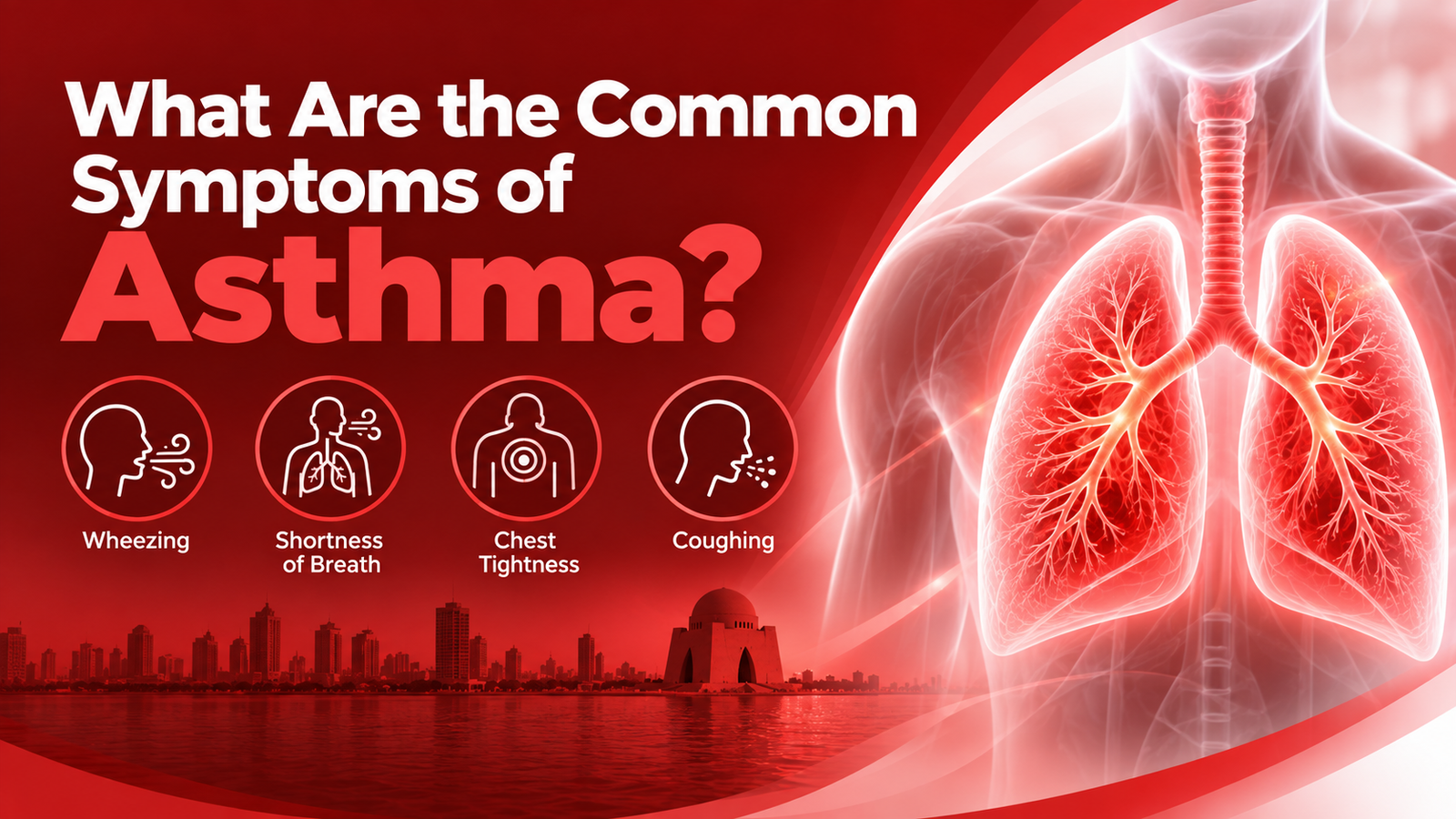
Asthma symptoms can be different from one person to another. They may also change over time.
Common symptoms include:
- Wheezing when breathing
- Shortness of breath
- Chest tightness
- Frequent coughing
- Coughing at night
- Breathing problems during exercise
Some people notice symptoms after being around dust, smoke, pollution, or other triggers.
Asthma symptoms can also get worse during a cold or other breathing infection.
If you often have these symptoms, do not assume that you have asthma. Other health problems can cause similar symptoms. A doctor can check the cause.
What Can Trigger Asthma?
A trigger is something that can bring on asthma symptoms. Triggers are not the same for every patient.
Some people may react to dust. Others may have problems with smoke, pollution, cold air, or allergies.
Common asthma triggers include:
- Dust and dust mites
- Cigarette smoke
- Air pollution
- Strong smells
- Mould
- Pollen
- Pet allergens
- Cold air
- Exercise
- Breathing infections
Karachi has traffic, dust, smoke, and air pollution in many areas. Some patients may notice that these things make their breathing worse.
Knowing your own triggers can help you avoid them when possible. However, avoiding triggers does not replace your asthma medicine.
How Is Asthma Diagnosed?
A doctor usually starts by asking about your symptoms.
You may be asked:
- When do your symptoms start?
- How often do they happen?
- Do they get worse at night?
- Do you have breathing problems during exercise?
- Do dust or smoke make your symptoms worse?
- How often do you use your inhaler?
The doctor may also check your breathing.
A breathing test can help show how well your lungs work. One common test is called spirometry. A peak flow test may also be used in some cases.
The doctor may use your symptoms and test results together. This helps rule out other causes of breathing problems.
What Is Asthma Treatment in Karachi?
Asthma treatment in Karachi usually aims to control symptoms and prevent asthma attacks.
Treatment may include inhalers and other medicines. Your doctor may also help you find your asthma triggers.
The treatment plan depends on your symptoms and health needs. It may change over time.
Some patients need regular treatment. Others may have symptoms less often and need a different treatment plan.
Do not start, stop, or change asthma medicine without medical advice.
What Are Asthma Inhalers?
Inhalers are common medicines used to treat asthma.
They deliver medicine directly to the airways. This can help the medicine work where it is needed.
There are different types of inhalers. They do not all work in the same way.
Some inhalers help reduce swelling in the airways. Others help open the airways and make breathing easier.
Your doctor can tell you which inhaler is right for you.
What Is a Preventer Inhaler?
A preventer inhaler helps control asthma over time.
Many preventer medicines contain inhaled corticosteroids. These medicines help reduce swelling inside the airways.
They are used as part of a long term asthma plan.
Some patients need regular use. The exact plan depends on the person’s asthma.
Feeling better does not always mean that asthma has gone away. Do not stop your prescribed treatment on your own.
What Is a Reliever Inhaler?
A reliever inhaler is used to help with asthma symptoms.
It can help open the airways when they become narrow.
The type of reliever depends on the treatment plan. Some modern asthma plans use an inhaler that can help with both daily control and quick symptom relief.
Your doctor can explain how and when to use your inhaler.
If you need your reliever more often than usual, tell your doctor. It may be a sign that your asthma is not well controlled.
Preventer and Reliever Inhalers: What Is the Difference?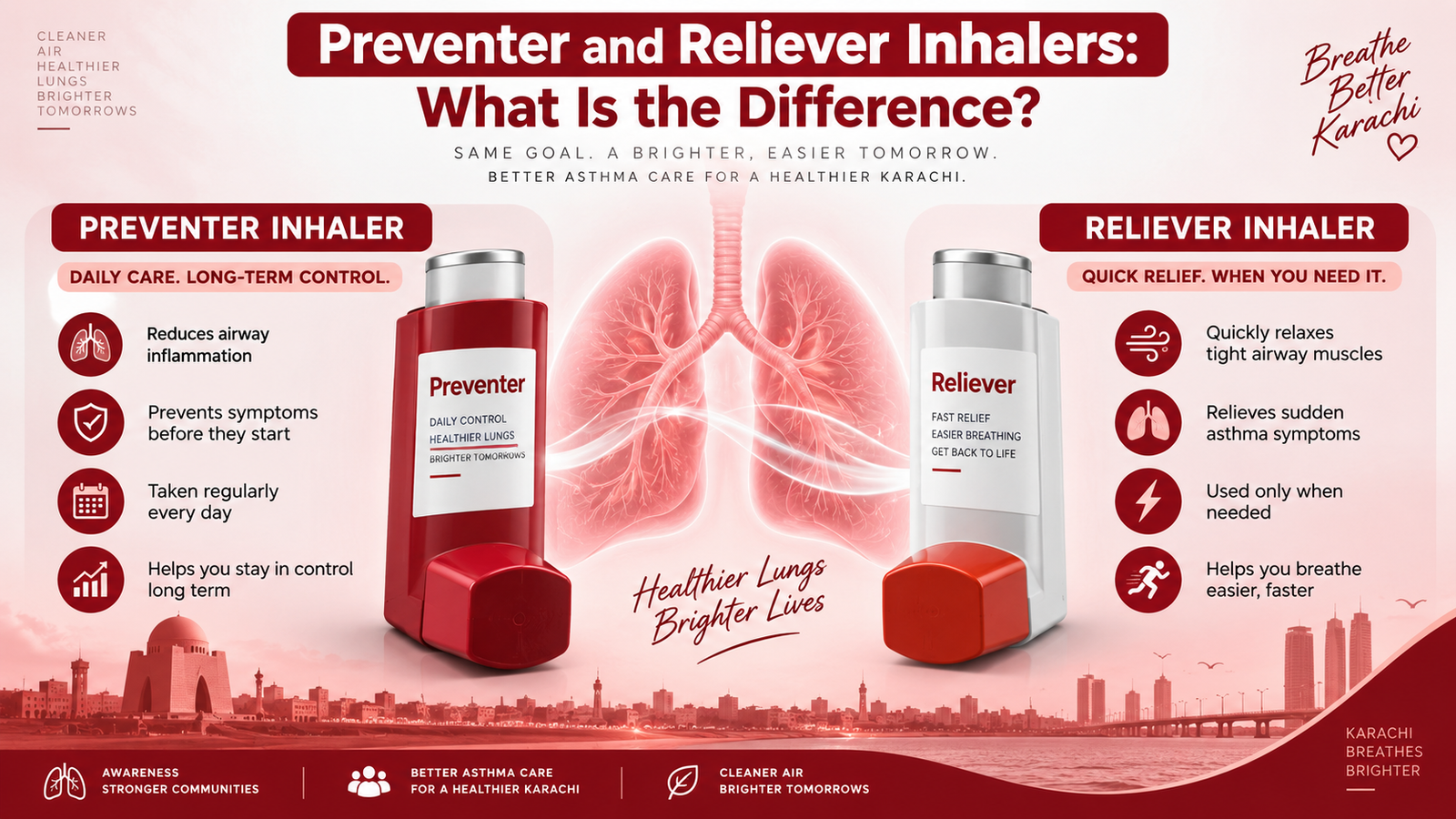
Preventer and reliever medicines have different roles.
Factor | Preventer Treatment | Reliever Treatment |
Main role | Helps control airway swelling | Helps relieve asthma symptoms |
Use | Used as part of the long term plan | Used when needed, based on your plan |
Main goal | Reduce future symptoms and attacks | Help with breathing symptoms |
Important point | Use it as prescribed | Do not depend on it more than advised |
Your doctor may use one inhaler or more than one inhaler. The choice depends on your symptoms and treatment needs.
Why Is Correct Inhaler Technique Important?
Using an inhaler may look easy, but the right technique matters.
If you use it incorrectly, less medicine may reach your lungs. This can make the treatment less effective.
Different inhalers also work in different ways.
Ask your doctor, nurse, or pharmacist to show you how to use your inhaler. You can also ask them to watch you use it.
If your asthma is not controlled, your inhaler technique should be checked. The problem may not always be the medicine itself.
Can Asthma Be Controlled Without Medicine?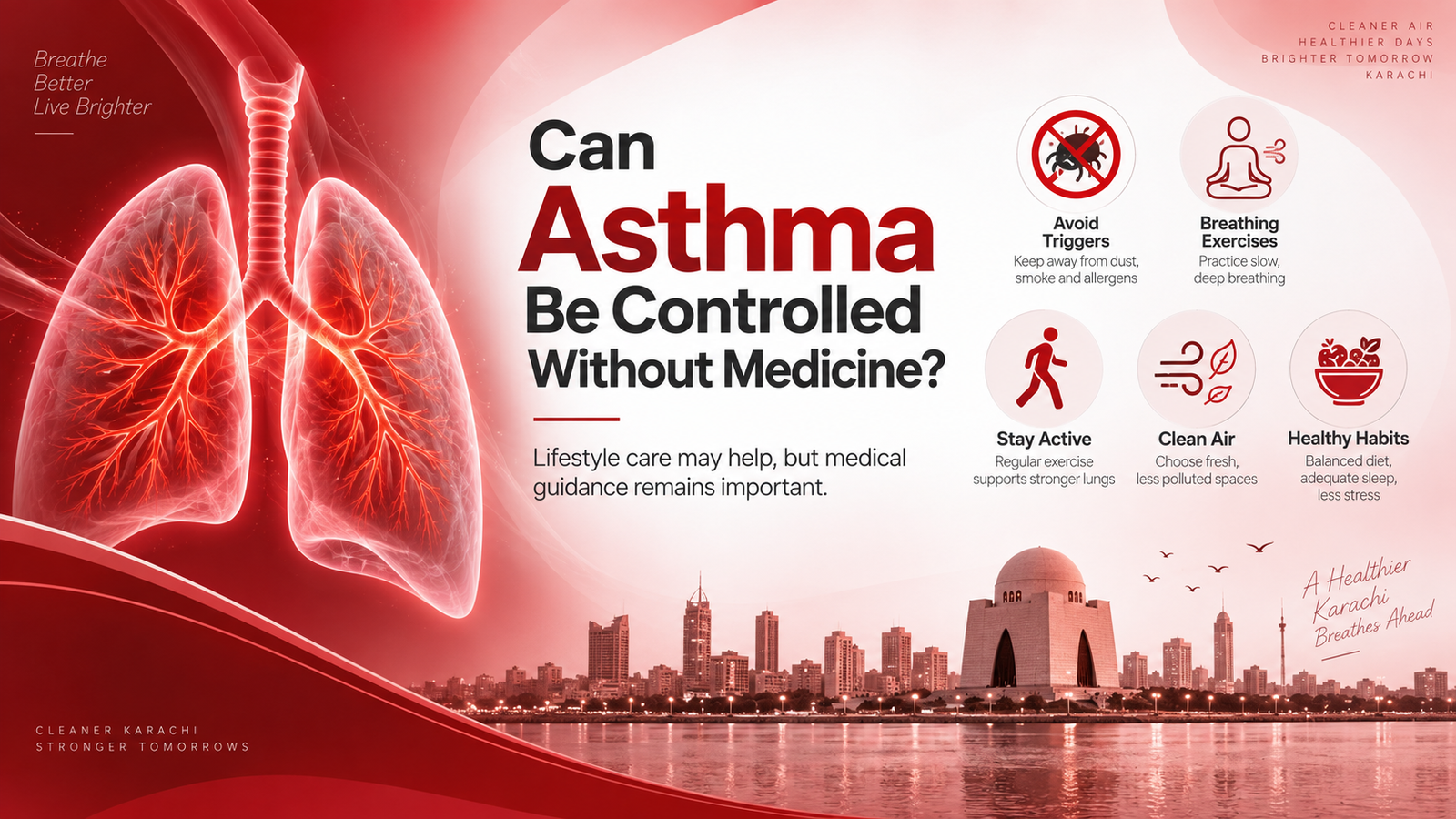
Some patients try to control asthma by avoiding dust, smoke, or other triggers. Trigger control can help, but it does not replace medical treatment when treatment is needed.
Asthma affects the airways. Medicine may be needed to control the swelling and reduce the risk of serious symptoms.
Do not stop your prescribed inhaler because you feel better.
Your doctor can tell you if your treatment needs to be changed.
Can Exercise Make Asthma Worse?
Exercise can cause breathing symptoms in some people with asthma.
This does not mean that every person with asthma should avoid exercise.
Many people with controlled asthma can stay active. The right plan depends on the person’s symptoms and treatment.
If exercise often causes coughing, wheezing, chest tightness, or shortness of breath, speak with a healthcare professional.
Do not stop physical activity without first discussing the problem.
How Can You Manage Asthma at Home?
Good asthma care includes more than taking medicine.
Try to know what makes your symptoms worse. Keep your prescribed inhaler with you when advised. Follow the treatment plan given by your healthcare professional.
Avoid cigarette smoke and other known triggers. Keep track of symptoms that happen often.
If your doctor has given you an asthma action plan, follow it. The plan can tell you what to do when symptoms are mild, getting worse, or severe.
When Should You See a Doctor for Asthma?
You should consider a medical check if you often have coughing, wheezing, chest tightness, or shortness of breath.
A check is also useful if asthma symptoms:
- Wake you at night
- Stop you from normal activities
- Happen more often
- Get worse over time
- Need your reliever more often than before
Frequent symptoms may mean that your asthma needs a review.
The cause may be poor inhaler technique, exposure to a trigger, another health problem, or a need to change the treatment plan.
When Is Asthma an Emergency?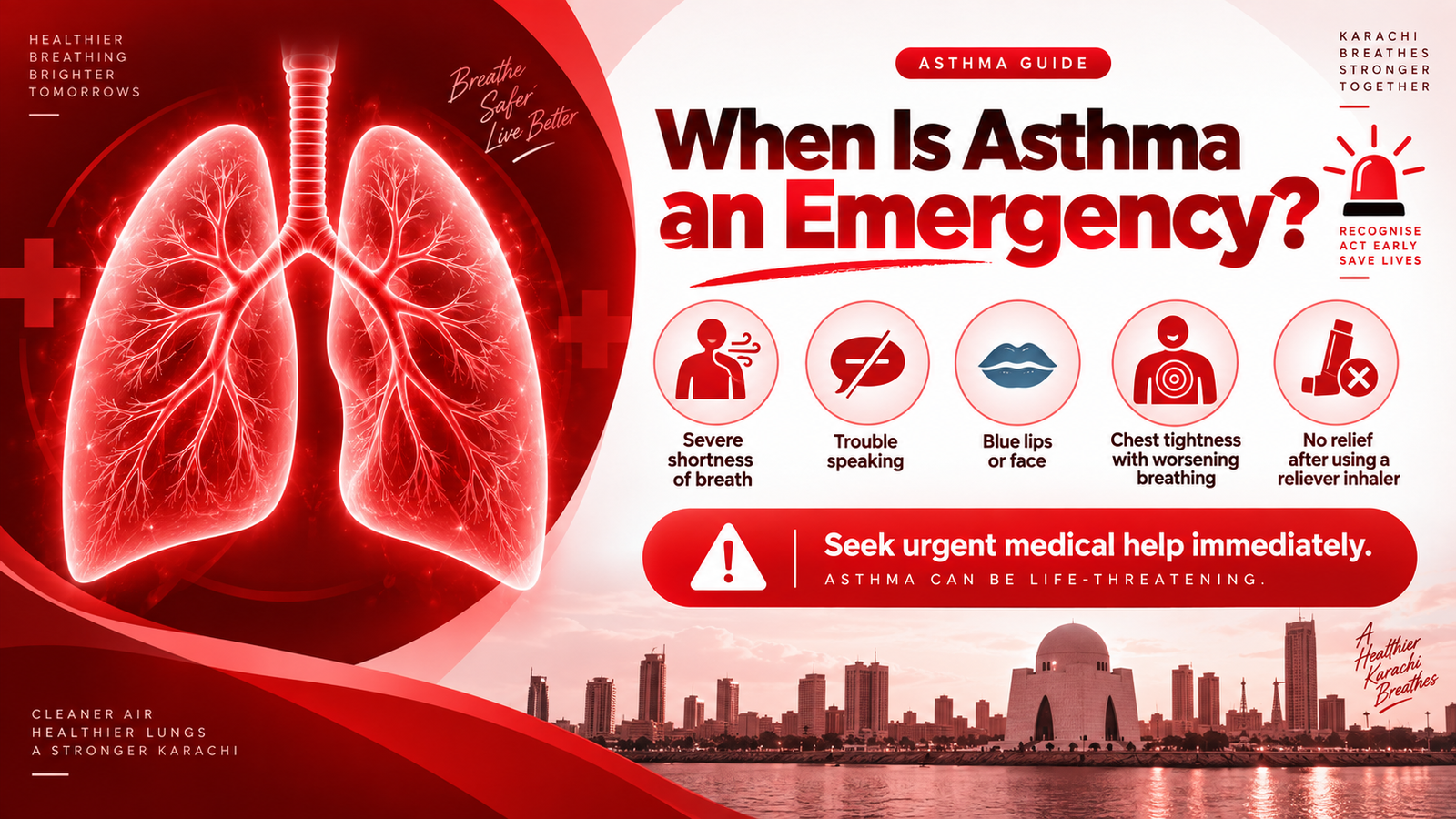
A severe asthma attack can be dangerous.
Get urgent medical help if you have severe trouble breathing or your symptoms are getting worse quickly.
You should also seek urgent help if your prescribed emergency treatment is not giving the expected relief.
Follow your asthma action plan if your doctor has given you one.
Do not depend only on home remedies during a serious asthma attack.
Some patients may need emergency medicines, oxygen, or hospital care.
How Can You Prepare for an Asthma Appointment?
A little preparation can make your visit more useful.
Before your appointment, think about your symptoms. Note when they happen and what seems to make them worse.
Take your current inhalers or medicine list with you. Your doctor can check your medicines and inhaler use.
You can also write down questions before your visit.
Questions you can ask your doctor
- What may be causing my symptoms?
- Do I need a breathing test?
- Which inhaler should I use?
- How should I use my inhaler?
- What should I do during an asthma attack?
- Do I need an asthma action plan?
- When should I come back for a check?
These questions can help you understand your treatment and use your medicines safely.
Asthma Treatment in Karachi With Dr. Sarwat Asif
Patients looking for asthma treatment in Karachi can also learn about the services offered by Dr. Sarwat Asif.
Her official website provides information about asthma diagnosis and treatment. The listed care includes assessment of asthma symptoms, treatment planning, and advice about asthma triggers and inhaler use.
The clinic information on the website lists Taj Medical Complex in Saddar, Karachi.
Clinic timings and appointment details can change. Patients should confirm the latest information with the clinic before visiting.
Dr. Sarwat Asif can assess your symptoms and help decide what type of asthma care may be suitable for your condition.
What Should You Avoid If You Have Asthma?
There is no single list of triggers that affects every patient.
Still, some common irritants can make symptoms worse. These include smoke, dust, strong smells, and air pollution.
Try to notice patterns in your own symptoms. For example, you may find that your breathing gets worse after dust exposure.
Avoiding a known trigger may help. But it should not be used as a replacement for prescribed asthma treatment.
Can Asthma Treatment Change Over Time?
Yes. Asthma symptoms can change over time.
A patient may have more symptoms during certain seasons. Another patient may have problems after an infection or exposure to a trigger.
Your doctor may review your symptoms and treatment during follow up visits.
The treatment plan may stay the same or change based on your condition.
Do not make changes to your asthma medicine without medical advice.