

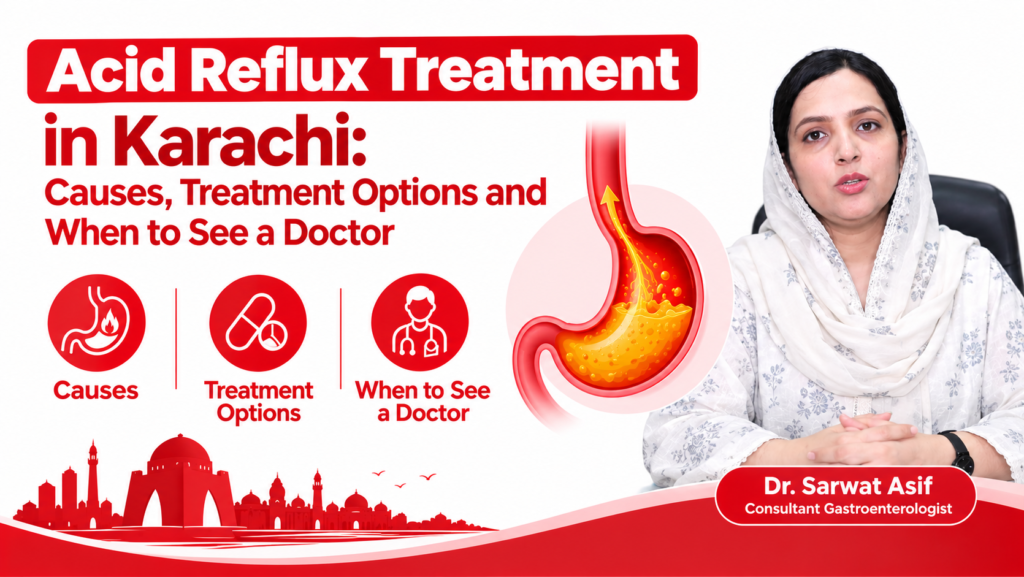
What Is Acid Reflux?
Acid reflux happens when stomach contents move backward into the esophagus, the tube that carries food from your mouth to your stomach. The lower esophageal sphincter normally acts as a barrier and helps keep stomach contents where they belong.
When this barrier becomes weak or relaxes at the wrong time, stomach contents can travel upward and irritate the esophagus.
You may notice heartburn, but reflux does not always feel like simple burning. Some people experience regurgitation, chest or upper abdominal discomfort, nausea, difficulty swallowing, chronic coughing, or hoarseness.
Occasional reflux is common. When reflux becomes frequent, troublesome, or causes complications, it may be diagnosed as GERD.
What Are the Common Symptoms of Acid Reflux?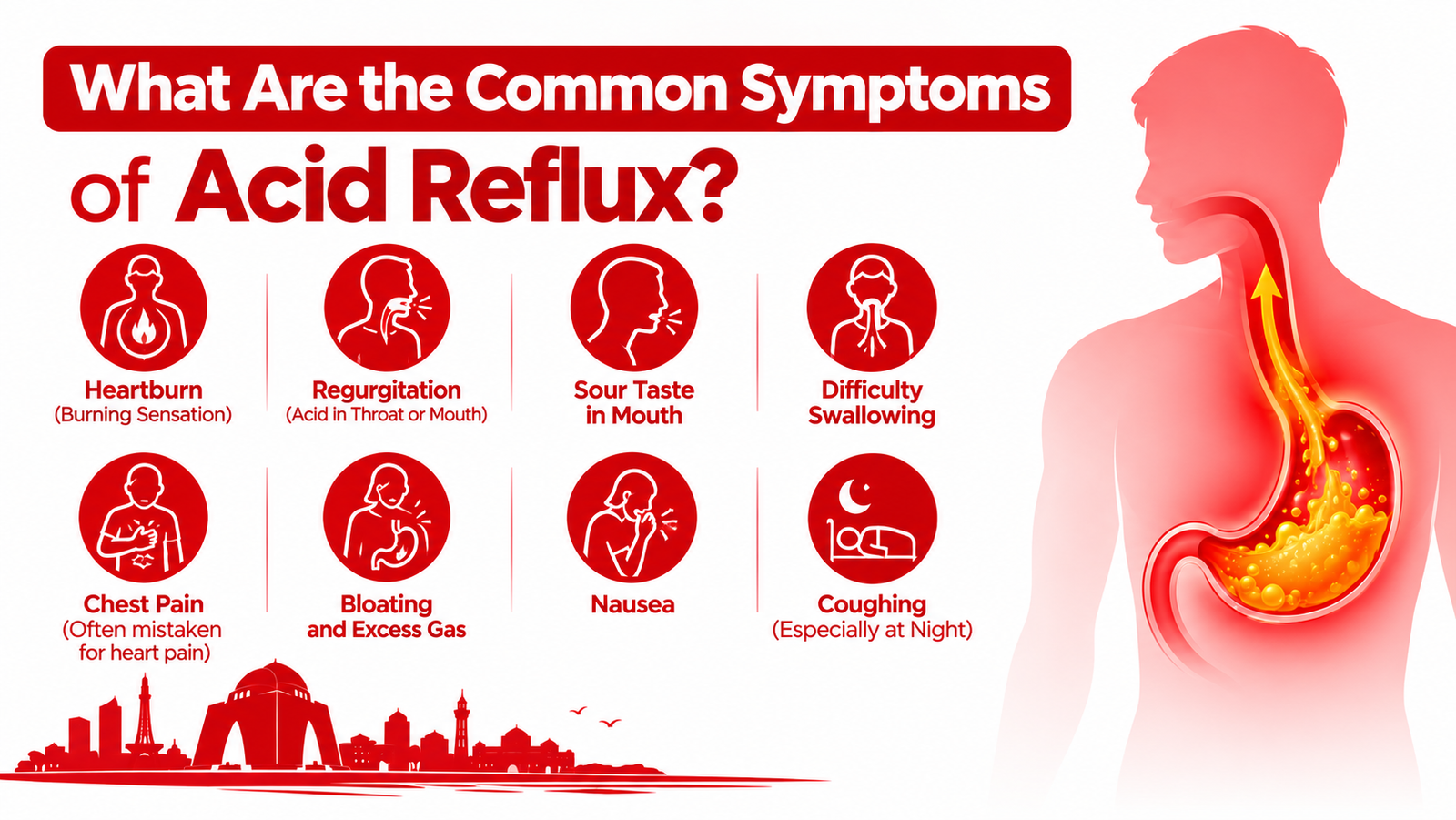
Acid reflux does not feel exactly the same for everyone. For many people, the most recognizable symptom is a burning sensation behind the breastbone, often after eating or when lying down.
Other possible symptoms include:
- Heartburn or burning in the chest
- Sour or bitter fluid coming into the mouth or throat
- Food or stomach contents coming back up
- Upper abdominal or chest discomfort
- Difficulty or pain while swallowing
- A feeling that something is stuck in the throat
- Persistent cough or hoarseness, especially at night
If these symptoms keep returning, it is better not to assume that they are simply “acidity.” Similar symptoms can occur with other digestive and non-digestive conditions, so persistent problems may need proper medical assessment.
What Causes Acid Reflux?
The main reason acid reflux occurs is that the normal barrier between the stomach and esophagus is not working effectively enough to prevent stomach contents from moving upward.
Several factors can make reflux more likely. Being overweight, pregnancy, smoking or exposure to secondhand smoke, certain medicines, and a hiatal hernia may contribute to reflux.
Food and eating habits can also play a role. Large meals, fatty or spicy foods, coffee, chocolate, mint, acidic foods, and certain drinks may trigger symptoms in some people.
However, there is no single “acid reflux diet” that works for everyone. A food that causes symptoms for one person may not bother another. Paying attention to your own symptoms is often more useful than removing large numbers of foods from your diet.
Why Is Acid Reflux Worse at Night?
Nighttime reflux can be particularly frustrating because lying down makes it easier for stomach contents to move toward the esophagus. Eating shortly before going to bed can make the problem worse.
If your symptoms mainly occur at night, leaving around three hours between your evening meal and bedtime may help. Elevating the upper part of your body during sleep may also be recommended in suitable cases.
Acid Reflux Treatment in Karachi: What Are Your Options?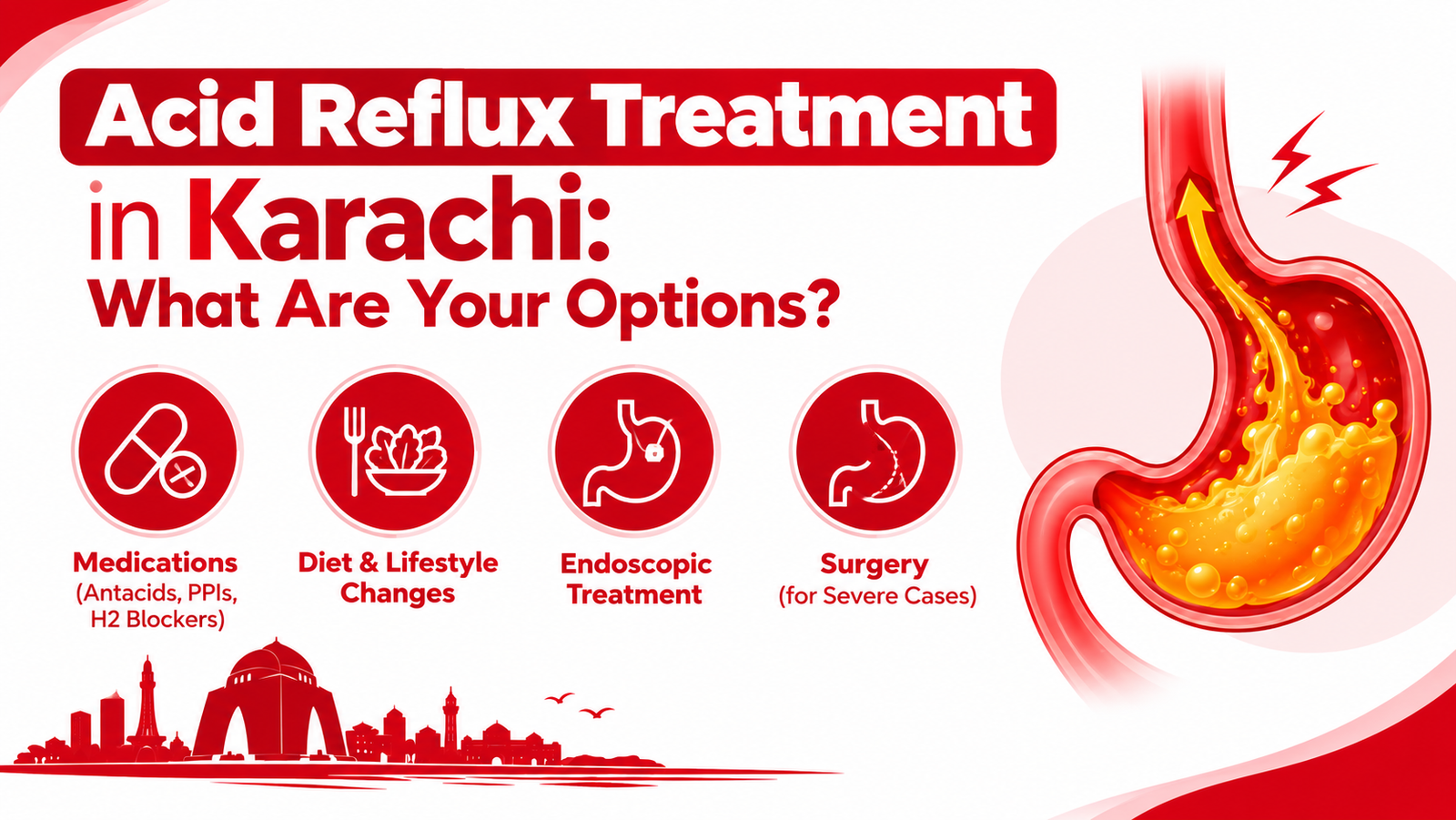
There is no single treatment that works for every person with reflux. The right approach depends on how often your symptoms occur, how severe they are, your medical history, other medicines you take, and whether there are signs of complications.
Treatment may involve lifestyle changes, medicines, or a combination of both. In selected cases where symptoms continue despite appropriate treatment, procedures or surgery may also be considered.
Lifestyle Changes for Acid Reflux
For people with mild or occasional reflux, everyday habits can make a meaningful difference. The goal is not to follow an unnecessarily restrictive diet but to identify the habits that actually trigger your symptoms.
In Karachi, busy work schedules, late dinners, restaurant meals, spicy foods, and frequent tea or coffee can all be part of everyday routines. That does not mean you need to avoid every local food. Instead, notice which meals or habits are repeatedly followed by symptoms.
Some practical changes include:
- Choose smaller meals if large meals make your symptoms worse.
- Avoid lying down soon after eating.
- Leave around three hours between your evening meal and bedtime if nighttime reflux is an issue.
- Keep track of foods and drinks that repeatedly trigger your symptoms.
- If you are overweight, discuss a suitable weight-management approach with a healthcare professional.
- Avoid smoking and secondhand smoke where possible.
These measures may be enough for some people with mild symptoms, while others may need medication or further assessment.
Antacids for Occasional Heartburn
Antacids can offer relatively quick relief from occasional, mild heartburn by neutralizing stomach acid. They are mainly useful for short-term symptom relief rather than treating an underlying cause.
If you find yourself relying on antacids frequently, that is a reason to look beyond temporary relief. Repeated symptoms may need a different treatment strategy or medical evaluation.
H2 Receptor Blockers
H2 receptor blockers reduce the amount of acid produced by the stomach. They can provide longer-lasting acid reduction than antacids and may be suitable for some people with recurring reflux symptoms.
The choice of medicine depends on the person’s symptoms, medical history, other medicines, and overall clinical situation. If symptoms continue despite treatment, a healthcare professional may need to reassess the problem.
Proton Pump Inhibitors (PPIs)
Proton pump inhibitors, commonly known as PPIs, provide stronger suppression of stomach acid. They are commonly used for GERD and can help heal acid-related irritation of the esophagus in many patients.
Examples include omeprazole, esomeprazole, lansoprazole, and pantoprazole.
Although these medicines are widely used, choosing the right medicine and treatment duration should depend on the individual’s circumstances. Long-term self-medication is not a substitute for proper medical advice.
Lifestyle Changes vs Medicines vs Procedures
Treatment approach | Main purpose | When it may help | Important consideration |
Lifestyle changes | Reduce triggers and improve symptom control | Mild or intermittent symptoms and ongoing management | Results differ from person to person |
Antacids | Provide quick relief from occasional heartburn | Mild, occasional symptoms | Not a substitute for evaluating persistent symptoms |
H2 blockers | Reduce stomach acid | Some recurring reflux symptoms | Choice depends on individual circumstances |
PPIs | Provide stronger acid suppression and support healing | GERD and acid-related irritation when appropriate | Long-term use should be reviewed with a healthcare professional |
Endoscopic or surgical treatment | Address reflux mechanically or treat selected problems | Persistent symptoms or specific clinical situations | Requires specialist assessment |
The strongest treatment is not always the best treatment. Good reflux care focuses on finding the likely cause and choosing an approach that fits the person’s symptoms and medical situation.
How Is Acid Reflux Diagnosed?
A person with typical reflux symptoms may not need extensive testing at the beginning. A doctor can often start by reviewing the symptoms, their timing, medical history, and response to treatment.
Further testing may be recommended if symptoms continue, treatment is not working as expected, complications are suspected, or another condition could be responsible.
Upper Endoscopy
An upper gastrointestinal endoscopy allows a healthcare professional to examine the esophagus, stomach, and the beginning of the small intestine using a flexible camera.
It can help identify inflammation, narrowing, and other abnormalities. Endoscopy may be particularly useful when symptoms such as difficulty swallowing raise concerns about complications or another underlying problem.
Other Tests for Reflux
Depending on the symptoms and clinical situation, additional tests may be used to determine whether reflux is responsible for ongoing symptoms or to assess how the esophagus is functioning.
Testing should be selected according to the individual’s symptoms and medical needs rather than being performed automatically for occasional heartburn.
When Should You See a Doctor for Acid Reflux in Karachi?
Occasional heartburn is common and may improve with simple changes. However, recurring symptoms deserve more attention when they begin affecting your sleep, eating habits, work, or everyday life.
Consider speaking with a doctor if your reflux is frequent, severe, persistent, or continues despite appropriate lifestyle changes and nonprescription treatment.
A gastroenterologist or another appropriately qualified healthcare professional can assess whether your symptoms are related to GERD or another condition.
For patients seeking an evaluation in Karachi, Dr. Sarwat Asif can be considered among the healthcare professionals you may discuss your digestive symptoms with. The appropriate treatment should always be based on an individual medical assessment rather than relying solely on online information.
Warning Signs That Should Not Be Ignored
Not every episode of chest burning is caused by acid reflux. Chest pain can sometimes be related to a serious heart problem, so it should not automatically be dismissed as acidity.
Seek urgent medical attention if you experience severe or unexplained chest pain, particularly if it occurs together with shortness of breath or pain spreading to the jaw or arm.
Other symptoms that deserve prompt medical evaluation include:
- Difficulty or pain when swallowing
- Persistent vomiting
- Vomiting blood or material that looks like coffee grounds
- Black or bloody stools
- Unexplained weight loss
- Loss of appetite
- Symptoms that are persistent or getting worse
These signs can occur with complications or other medical conditions and should not simply be treated as routine acidity.
What Happens If GERD Is Left Untreated?
Frequent GERD can irritate the lining of the esophagus over time. In some people, ongoing reflux can lead to complications such as inflammation of the esophagus, narrowing that makes swallowing difficult, or Barrett’s esophagus.
Having heartburn does not mean that these complications will definitely occur. The important point is that frequent or troublesome symptoms deserve proper evaluation so that the need for treatment or monitoring can be determined.
Common Mistakes People Make When Treating Acid Reflux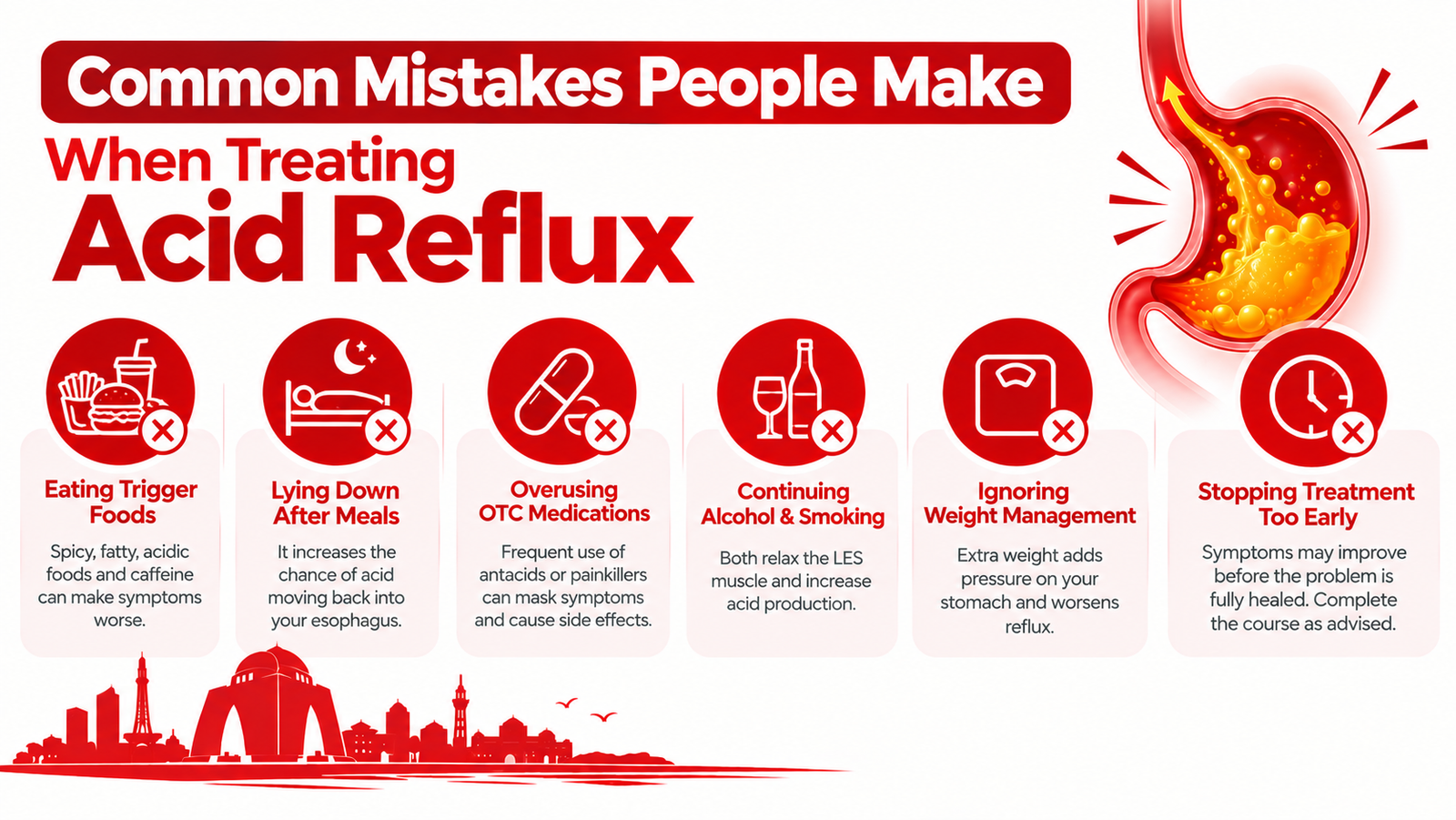
One of the most common mistakes is treating recurring symptoms as ordinary acidity for months without considering whether there is an underlying cause.
Another problem is repeatedly using over-the-counter medicines while ignoring symptoms that continue or become more frequent.
People also sometimes remove large numbers of foods from their diet unnecessarily. Because reflux triggers vary between individuals, it is usually more practical to identify personal patterns instead of following an extremely restrictive diet.
Finally, chest discomfort should never automatically be blamed on acid reflux. New, severe, or unexplained chest pain needs appropriate medical assessment.
How Can You Prepare for an Acid Reflux Consultation in Karachi?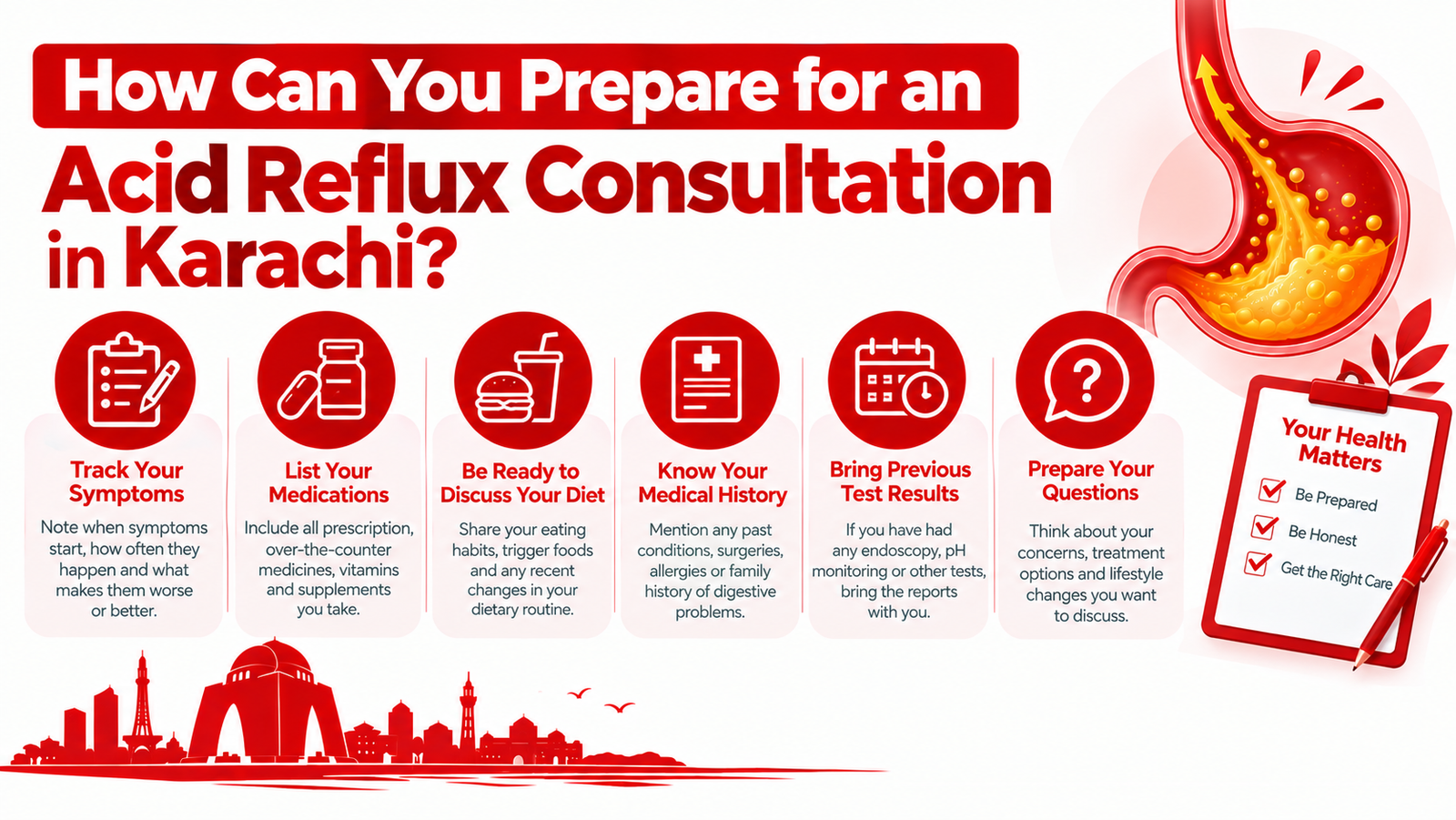
A little preparation can make your appointment more useful. Before seeing a doctor, pay attention to when your symptoms occur and whether they seem connected with meals, lying down, or particular foods and drinks.
You can also note how often the symptoms happen, whether they wake you at night, and whether any medicine or lifestyle change provides relief.
Bring a list of the medicines and supplements you currently use. During the consultation, mention any swallowing problems, vomiting, unexplained weight changes, nighttime symptoms, chest discomfort, or previous digestive tests.
This information can help the healthcare professional decide whether lifestyle management is enough or whether medication, further testing, or specialist care may be appropriate.