

Diarrhea treatment depends on what is causing loose or watery stools and how severe the symptoms are.
For many short-term cases, the main priority is replacing lost fluids and electrolytes, usually with an oral rehydration solution (ORS), while continuing suitable food and rest.
However, blood in the stool, severe dehydration, persistent symptoms, high fever, or significant abdominal pain can require medical evaluation.
For people looking for Diarrhea Treatment in Karachi, knowing the cause is particularly important because diarrhea can result from contaminated food or water, infections, medicines, food intolerance, or underlying digestive conditions.
This guide explains diarrhea causes and treatment, safe approaches to loose motion, medication considerations, warning signs, and when professional care may be appropriate.
Medical note: This article is educational and does not diagnose individual patients or replace a consultation with a qualified healthcare professional.
What Is Diarrhea?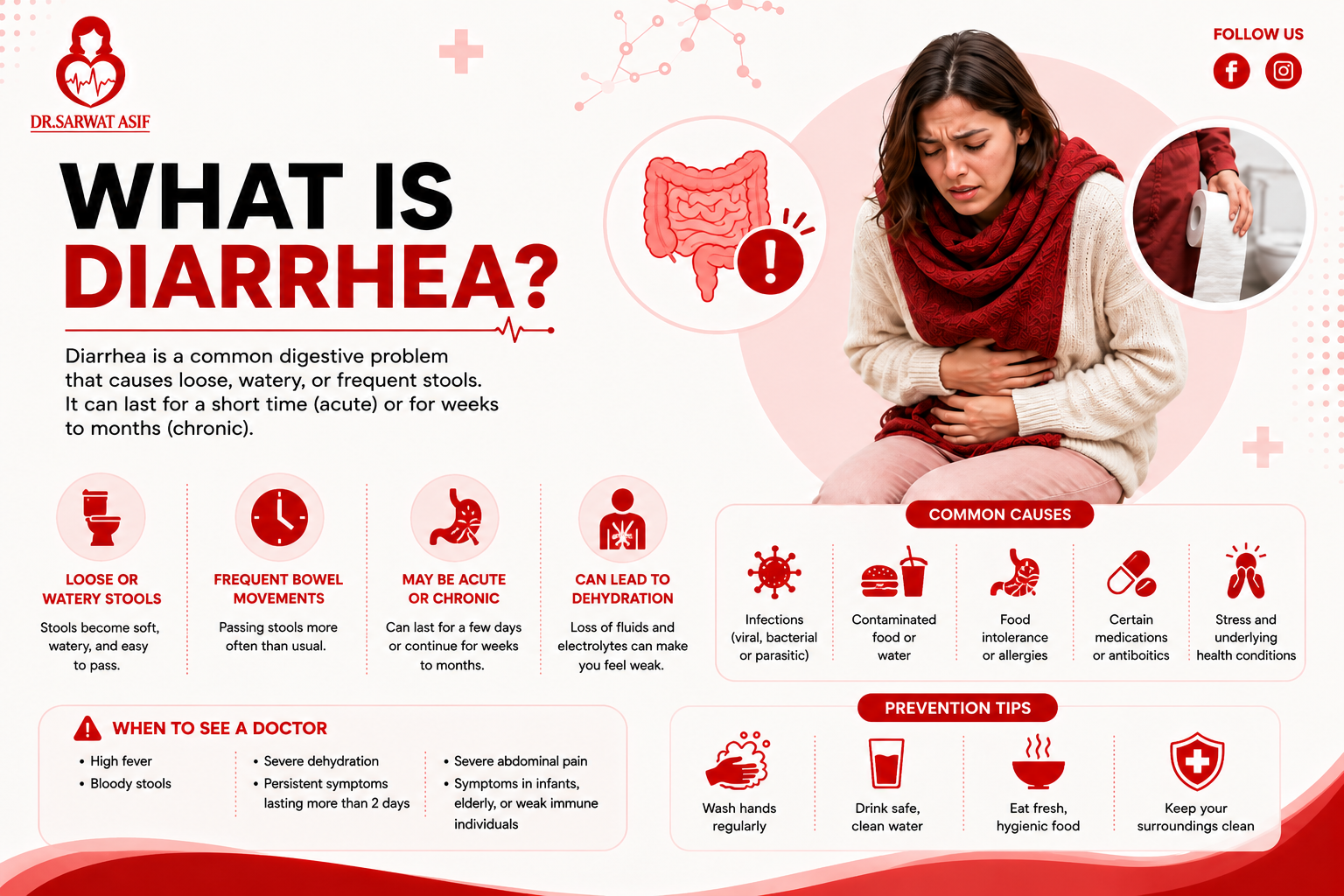
Diarrhea generally means passing loose or watery stools three or more times a day, or more frequently than is normal for an individual.
It may also cause an urgent need to use the bathroom, abdominal cramps, nausea, vomiting, fever, or weakness.
The major immediate concern is dehydration because the body loses water and electrolytes through frequent stools.
Diarrhea can be short-term or persistent. WHO describes acute watery diarrhea as lasting hours or days, acute bloody diarrhea as dysentery, and persistent diarrhea as lasting 14 days or longer. The appropriate approach varies according to the type and underlying cause.
What Causes Diarrhea?
There is no single cause of diarrhea. Identifying the likely trigger helps determine whether home care is enough or whether a medical assessment is necessary.
Common causes include:
- Viral, bacterial, or parasitic infections
- Contaminated food or drinking water
- Food poisoning
- Sudden dietary changes
- Food intolerance or sensitivity
- Certain medicines, including some antibiotics
- Irritable bowel syndrome and other digestive disorders
- Inflammatory bowel diseases
- Some conditions that interfere with digestion or nutrient absorption
In Pakistan, food and water hygiene can be particularly relevant when someone develops sudden loose motion after eating outside, drinking untreated water, or travelling.
WHO notes that diarrheal infections can spread through contaminated food and drinking water or from person to person through poor hygiene.
Can Food Poisoning Cause Diarrhea?
Yes. Food contaminated with bacteria, viruses, parasites, or their toxins can cause diarrhea, often together with abdominal cramps, nausea, vomiting, or fever.
The timing and accompanying symptoms can provide useful clues, but symptoms alone cannot always identify the specific organism.
If symptoms are severe, prolonged, or accompanied by blood in the stool or dehydration, medical evaluation is appropriate.
What Are Common Symptoms of Diarrhea?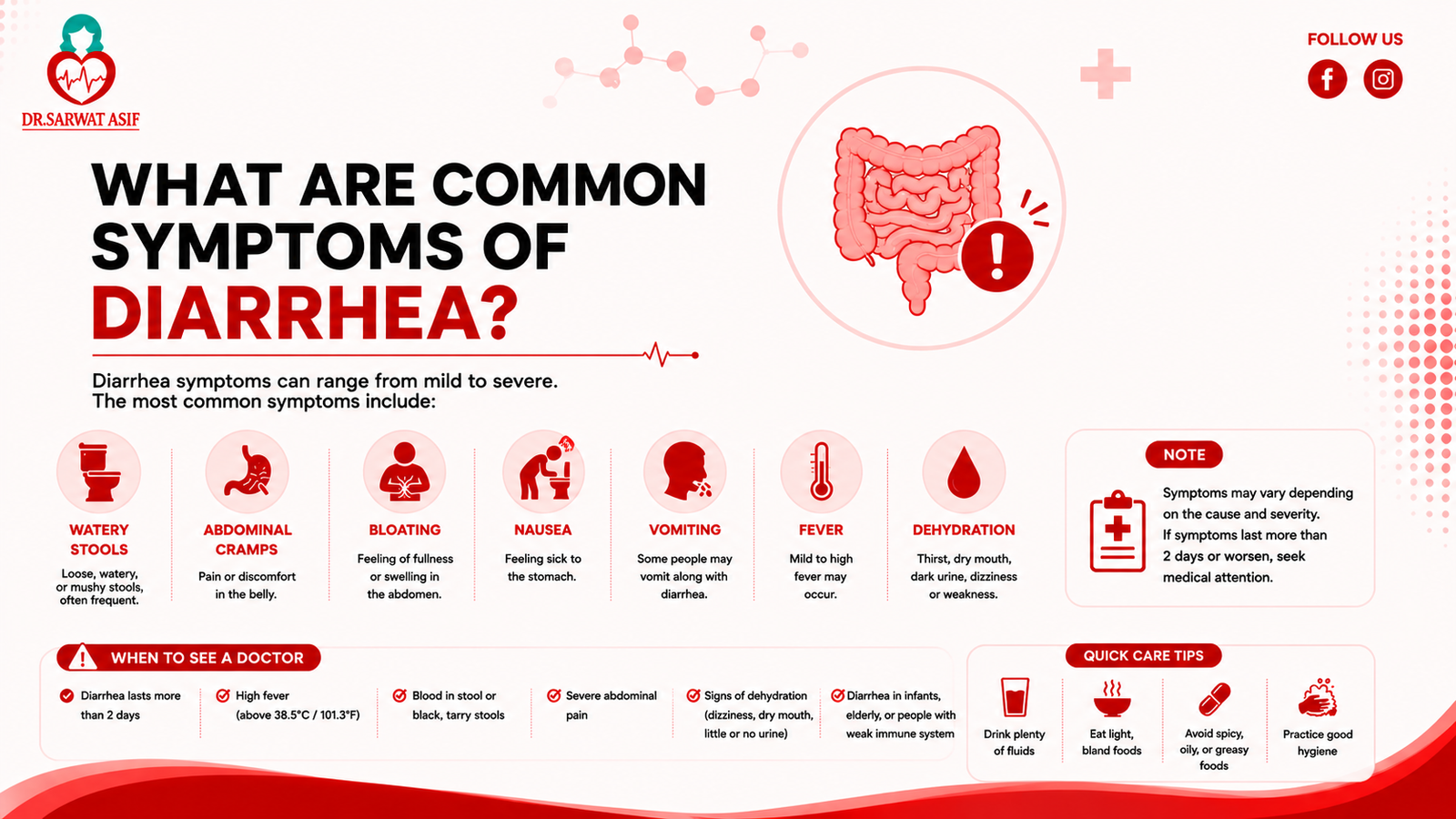
The most common symptoms include loose or watery stools and a frequent or urgent need to use the bathroom.
Some people also develop abdominal cramps, nausea, vomiting, fever, dizziness, or weakness.
Dehydration is one of the most important complications to watch for. Signs can include unusual thirst, dry mouth, reduced urination, dizziness, weakness, and worsening fatigue.
Children, older adults, and people with certain underlying conditions may become dehydrated more quickly.
What Is the Best Diarrhea Treatment?
The best medicine for diarrhea is not necessarily a medicine that immediately stops bowel movements.
For many acute cases, the first priority is replacing fluids and electrolytes lost through diarrhea.
ORS is designed to replace water and important electrolytes and is a key treatment for dehydration caused by diarrhea.
Treatment can involve:
- ORS and adequate fluids to prevent or correct dehydration.
- Continued suitable food rather than prolonged fasting.
- Treatment of the underlying cause when it is identified.
- Zinc supplementation for children is recommended when prescribed by a healthcare professional.
- Specific medicines only when appropriate for the individual situation.
- IV fluids in severe dehydration or shock when oral hydration is not sufficient.
Antibiotics are not automatically needed for every episode of diarrhea.
Some infections are viral or resolve without antibiotics, while selected bacterial infections may require targeted treatment.
A healthcare professional can decide whether an antibiotic is appropriate based on symptoms, examination, and sometimes testing.
Treatment for Loose Motion at Home
For a mild, short-term episode without serious warning signs, home care often focuses on hydration and monitoring.
1. Use Oral Rehydration Solution
ORS helps replace fluids and electrolytes lost through repeated loose stools. Take it according to the instructions on the product package and prepare it correctly.
If nausea is present, taking small, frequent sips may be easier than drinking a large amount at once.
Water is useful, but significant diarrhea can also cause electrolyte losses, which is why an appropriate oral rehydration solution can be valuable.
2. Continue Eating When Possible
Avoiding food completely for a prolonged period is generally unnecessary. Once you can eat, choose foods that are easy to tolerate and continue normal nutrition as appropriate.
For children, continued feeding and breastfeeding are particularly important. WHO recommends continued feeding during diarrheal illness rather than withholding nutrition.
3. Rest and Monitor Symptoms
Rest can help while the body recovers. Keep track of how frequently diarrhea occurs, whether vomiting or fever develops, and whether you can drink enough fluids.
If symptoms worsen instead of improving, medical advice becomes more important.
4. Be Careful With Drinks and Food
During acute diarrhea, some people find that very fatty, spicy, or irritating foods worsen symptoms. Sugary drinks and some fruit juices can also aggravate diarrhea in certain situations.
Clean drinking water and properly prepared food are especially important in preventing further gastrointestinal infections.
Acute Diarrhea Treatment: What Does It Involve?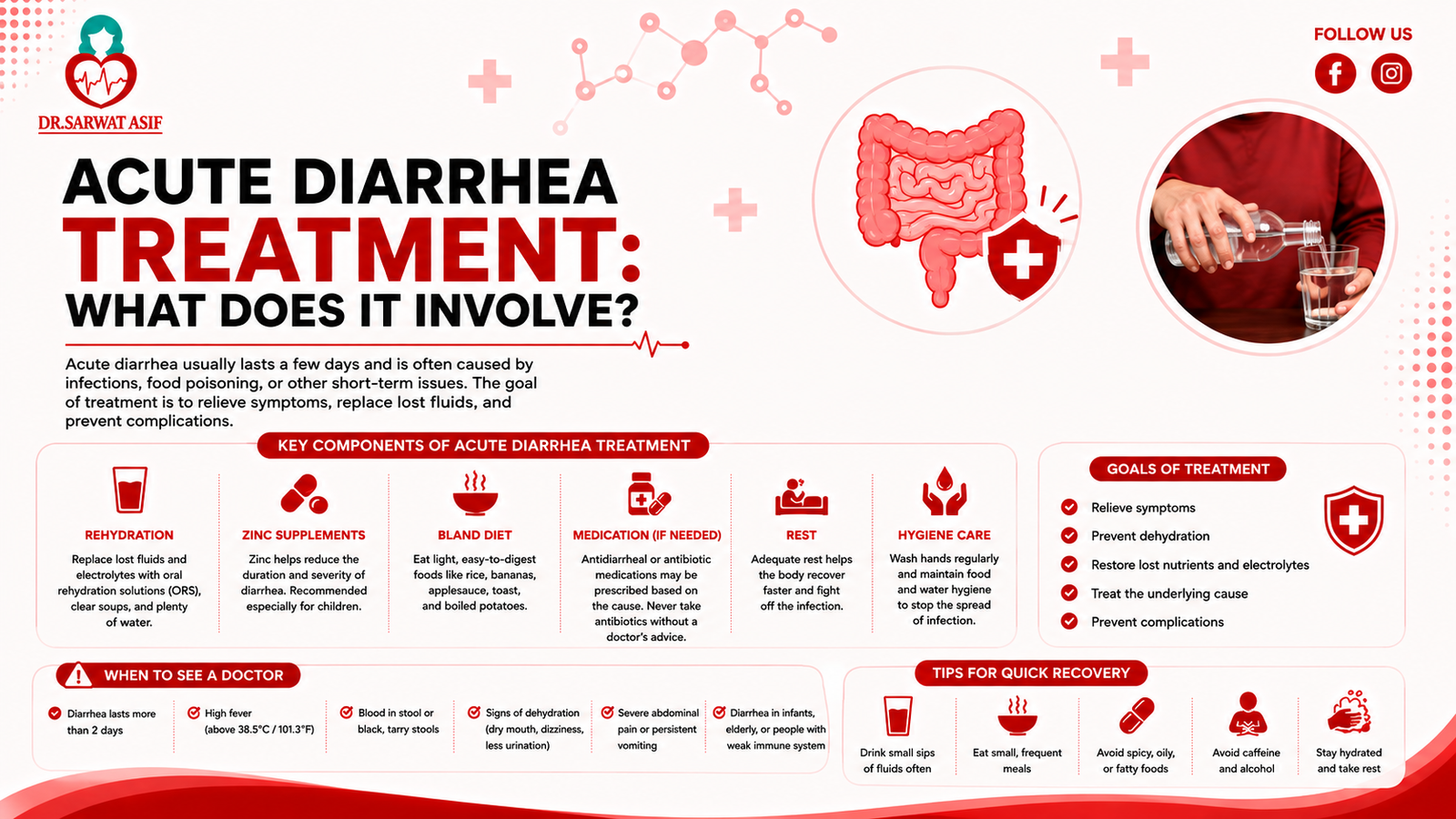
Acute diarrhea treatment generally starts with preventing dehydration and supporting recovery while determining whether a specific cause needs treatment.
For an otherwise healthy adult with mild acute diarrhea, ORS, adequate fluids, appropriate food, and rest may be sufficient. Many acute cases resolve without prescription treatment.
However, treatment changes when there is severe dehydration, blood in the stool, persistent symptoms, significant fever, or another underlying health problem.
The following comparison summarizes the general approach:
Situation | Typical approach | When medical assessment matters |
Mild watery diarrhea | ORS, fluids, suitable food, and rest | Symptoms worsen or fail to improve |
Diarrhea with vomiting | Small, frequent amounts of fluid or ORS | Unable to keep fluids down |
Bloody diarrhea | Hydration while seeking medical advice | Blood may indicate a more serious infection or condition |
Severe dehydration | Urgent rehydration and medical care | IV fluids may be required |
Diarrhea in a young child | ORS, continued feeding and age-appropriate care | Children can become dehydrated quickly |
Persistent or recurrent diarrhea | Evaluation of the underlying cause | May require testing and targeted treatment |
Is There a Medicine for Diarrhea?
There are medicines that can reduce diarrhea in selected adults, but the appropriate choice depends on the cause and the person’s health.
For example, loperamide can reduce stool frequency in some adults with short-term diarrhea. However, it is not suitable for every situation, and it should not be used as a substitute for rehydration.
NHS guidance also advises that it should not be taken for more than 48 hours without medical advice.
People should be especially cautious about taking anti-diarrhea medicines without medical advice when they have:
- Blood or mucus in the stool
- High fever
- Severe abdominal pain
- Significant dehydration
- Persistent or recurrent diarrhea
- Diarrhea in a young child
Do not give over-the-counter diarrhea medicines to infants or young children unless a healthcare professional recommends them.
Are Antibiotics the Best Medicine for Diarrhea?
Not necessarily. Antibiotics treat certain bacterial infections, but they do not treat viral diarrhea and are not appropriate for every episode of loose motion.
Unnecessary antibiotic use can expose a person to side effects and contribute to antibiotic resistance. If diarrhea is severe, bloody, persistent, or associated with other concerning symptoms, a doctor can assess whether testing or targeted treatment is needed.
Diarrhea Treatment for Children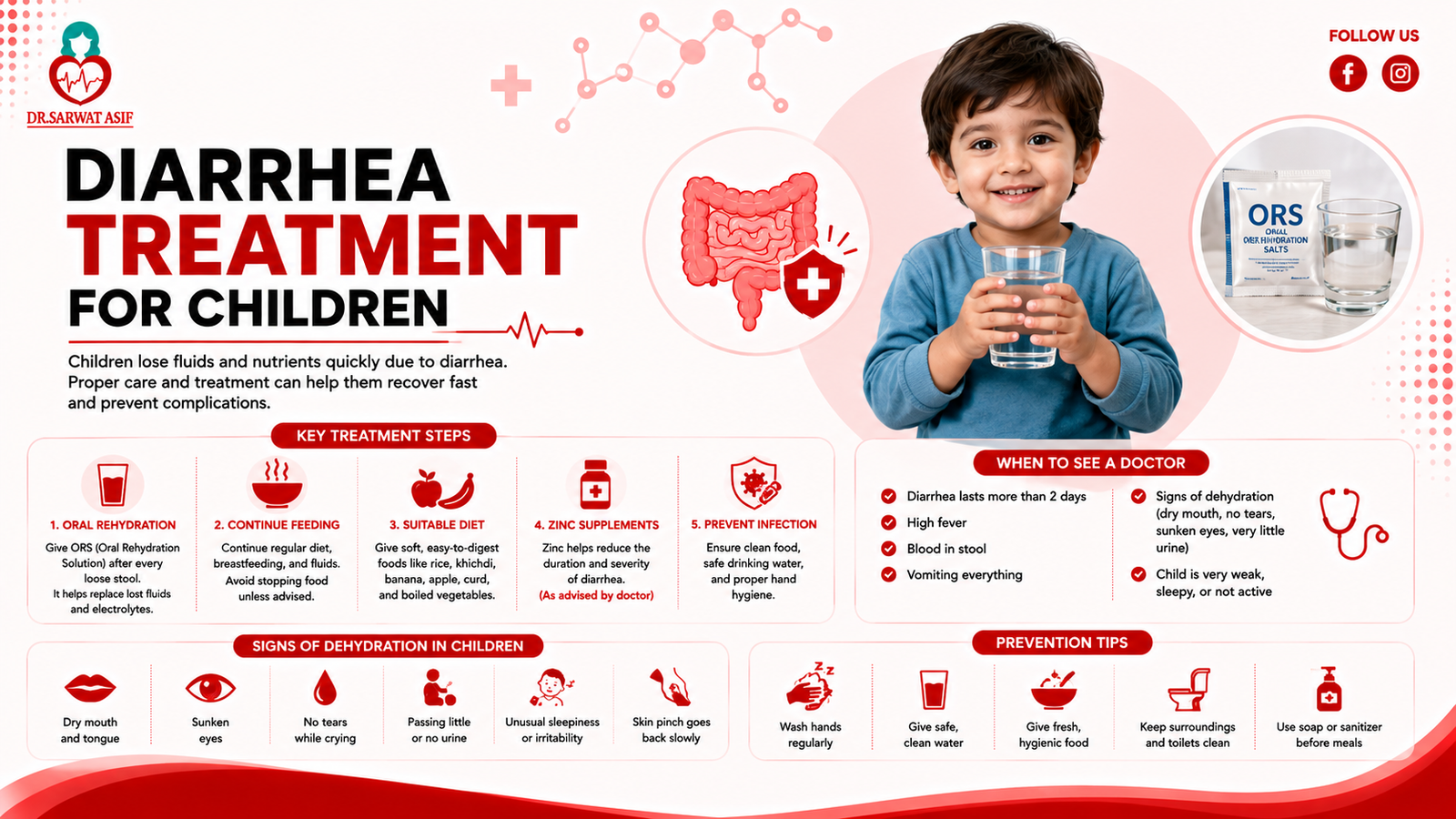
Children require additional attention because dehydration can develop quickly, particularly in infants and very young children.
ORS is an important component of childhood diarrhea care.
WHO also recommends zinc supplementation for children with acute diarrhea, with the dose depending on age.
WHO guidance recommends zinc for 10–14 days, but parents should use age-appropriate products and seek professional guidance about administration.
Breastfeeding should continue during diarrhea. Children should also receive appropriate nutrition rather than being left without food for extended periods.
A child who cannot drink enough, has frequent vomiting, becomes unusually sleepy or weak, produces very little urine, has blood in the stool, or develops a significant fever should be medically assessed promptly.
When Should You See a Doctor for Diarrhea?
Not every episode requires an immediate clinic visit, but some symptoms should not be ignored.
Seek prompt medical care if diarrhea is accompanied by:
- Signs of dehydration
- Blood, pus, or black tarry stool
- Severe abdominal or rectal pain
- Frequent vomiting
- High fever
- Marked weakness, dizziness, or changes in alertness
- Six or more loose stools in a day
- Diarrhea lasting more than two days in an adult
NIDDK also advises earlier medical attention for infants and children, especially when they cannot drink enough fluids, have concerning symptoms, or are younger than 12 months.
Pregnant people, adults over 65, people taking antibiotics, and those with weakened immune systems may also require earlier professional advice.
Emergency care may be necessary when there are signs of severe dehydration, shock, severe weakness, confusion, or inability to keep fluids down.
How Can Diarrhea Be Prevented?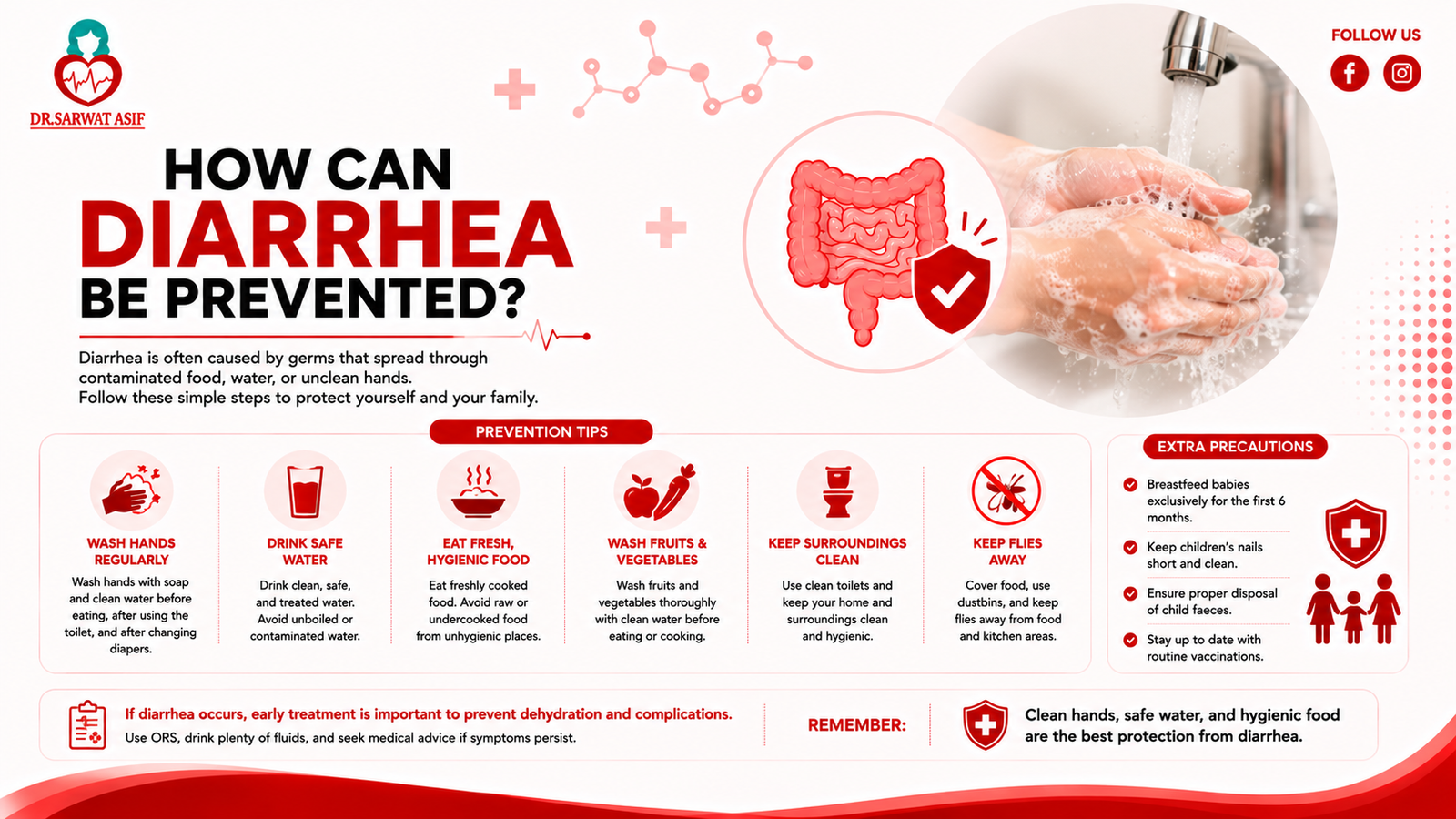
Prevention is especially important when diarrhea is linked to infectious organisms.
Practical steps include:
- Wash your hands thoroughly with soap and water, especially before preparing or eating food and after using the bathroom.
- Drink safe, properly treated water.
- Eat food that has been cooked and stored safely.
- Wash fruits and vegetables appropriately.
- Avoid food from questionable sources when hygiene is uncertain.
- Keep food preparation surfaces clean.
- Follow safe sanitation practices.
- Ensure children receive recommended vaccinations, including rotavirus vaccination where appropriate.
These measures are particularly useful in places where contaminated water and food can contribute to gastrointestinal infections.
Diarrhea Treatment in Karachi: When Should You Seek Local Medical Care?
For someone searching for Diarrhea Treatment in Karachi, the most useful first step is to consider symptom severity rather than simply looking for a medicine.
A patient with mild diarrhea may initially focus on ORS, fluids, appropriate food, and monitoring.
However, persistent symptoms, recurring diarrhea, blood in the stool, significant abdominal pain, dehydration, or high fever warrant medical assessment.
A qualified physician can review the patient’s symptoms, recent food and water exposure, medication history, medical conditions, and other relevant factors. Depending on the presentation, further examination or diagnostic testing may be considered.
Patients in Karachi who are considering consultation with Dr. Sarwat Asif can review her current practice information and services through her official website.
Her site identifies her as a consultant physician and lists digestive and stomach disorders among the conditions she manages.
Dr. Sarwat Asif’s official website
Because clinic schedules and services can change, patients should verify current appointment information directly before visiting.
What Should You Ask a Doctor About Persistent Diarrhea?
If diarrhea keeps returning or does not settle, useful questions include:
- What could be causing my symptoms?
- Do I need any stool or blood tests?
- Could a medicine or food intolerance be contributing?
- What should I eat and drink while recovering?
- Do I need a specific medicine?
- What symptoms should make me seek urgent care?
- How can I prevent the problem from happening again?
These questions can help make a medical consultation more focused and useful.
Frequently Asked Questions
What is the fastest treatment for diarrhea?
The priority is usually preventing dehydration. ORS can replace water and electrolytes lost through diarrhea. Depending on the cause and severity, additional treatment may be required. A medicine that stops bowel movements is not automatically the best treatment for every case.
What is the best medicine for diarrhea?
There is no single best medicine for every case. ORS is a key treatment for preventing dehydration, while medications such as loperamide may be appropriate for selected adults with short-term diarrhea. Antibiotics are reserved for certain infections and should not be taken routinely without appropriate medical advice.
How can I treat loose motion at home?
For mild diarrhea, drink ORS and other suitable fluids, continue eating as tolerated, rest, and monitor symptoms. Avoid prolonged fasting. If you develop dehydration, blood in the stool, severe pain, high fever, repeated vomiting, or persistent symptoms, seek medical advice.
How long does acute diarrhea usually last?
Many episodes of sudden diarrhea improve within several days. However, the duration depends on the cause. Diarrhea that continues beyond the expected period, becomes severe, or repeatedly returns should be evaluated by a healthcare professional.
Should I take antibiotics for diarrhea?
Not automatically. Antibiotics are useful for some bacterial infections but do not treat viral diarrhea and are inappropriate for many cases. A physician should determine whether antibiotics are warranted based on the clinical situation.
When is diarrhea dangerous?
Diarrhea becomes more concerning when it causes dehydration or occurs with blood or black stools, severe abdominal pain, frequent vomiting, high fever, significant weakness, confusion, or persistent symptoms. Young children and older or medically vulnerable people may need assessment sooner.
Is diarrhea in children treated differently?
Children require careful attention to hydration and nutrition. ORS and continued feeding are important, while the WHO recommends zinc supplementation for children with acute diarrhea. Medication decisions for children should be made with age and clinical circumstances in mind.
Conclusion
Effective diarrhea treatment starts with identifying the likely cause and preventing dehydration.
For many mild acute cases, ORS, adequate fluids, appropriate nutrition, rest, and careful monitoring are the foundation of care.
Medicines such as anti-diarrhea drugs or antibiotics are not appropriate for everyone and should be used according to the individual’s circumstances.
If diarrhea is persistent, severe, recurrent, or accompanied by blood in the stool, dehydration, high fever, severe pain, or repeated vomiting, professional medical evaluation is important.
For patients seeking Diarrhea Treatment in Karachi, consulting a qualified physician can help determine whether the problem is a short-term infection or requires further investigation.
Patients considering Dr. Sarwat Asif can verify current consultation details through her official website.