

Kidney disease is a growing health concern in Pakistan, with urban centers like Karachi seeing an increasing number of patients affected by renal conditions.
The kidneys are essential organs responsible for filtering waste, balancing body fluids, regulating essential minerals, and controlling blood pressure.
When kidney function declines due to acute injury or long-term chronic conditions, timely and comprehensive medical evaluation becomes crucial to prevent permanent failure.
Understanding kidney treatment in Karachi requires knowing how renal conditions develop, recognizing early warning signs, exploring available medical therapies, and knowing when to consult a qualified kidney specialist.
From preventive care and dietary management to advanced interventions like dialysis and organ transplantation, modern nephrology offers several options to help patients manage renal health effectively.
Understanding Kidney Disease and How It Affects the Body
The human kidneys contain millions of microscopic filtering units known as nephrons.
These units continually filter blood, removing toxins, metabolic waste products, and excess fluid through urine, while returning essential proteins, nutrients, and minerals back into the bloodstream.
When kidneys become damaged or inflamed, their ability to perform these critical functions declines.
Kidney diseases are broadly categorized into two major types based on how rapidly damage occurs:
1. Acute Kidney Injury (AKI)
Acute Kidney Injury refers to a sudden decline in kidney function that occurs over a few hours or days.
AKI is often caused by severe dehydration, serious infections (such as sepsis), toxic exposure from unmonitored medications, or sudden blockages in the urinary tract.
AKI is frequently reversible if identified and treated promptly under medical supervision.
2. Chronic Kidney Disease (CKD)
Chronic Kidney Disease involves a gradual, progressive loss of renal function over months or years.
CKD is broken down into five distinct stages based on the estimated Glomerular Filtration Rate (eGFR), which measures how effectively the kidneys filter waste:
- Stage 1 (Normal or High eGFR > 90 mL/min): Kidney damage exists, but filtering function remains normal.
- Stage 2 (Mild eGFR 60–89 mL/min): Mild reduction in filtering capacity with initial subtle clinical signs.
- Stage 3 (Moderate eGFR 30–59 mL/min): Noticeable loss of kidney function requiring active medical management.
- Stage 4 (Severe eGFR 15–29 mL/min): Severe impairment requiring preparations for kidney replacement therapy.
- Stage 5 (End-Stage Renal Disease eGFR < 15 mL/min): Near-complete renal failure where dialysis or transplantation becomes necessary to sustain life.
Primary Causes of Kidney Conditions in Pakistan
Renal health issues are particularly common in Karachi due to lifestyle factors, dietary habits, environmental conditions, and underlying chronic diseases. Identifying these primary causes helps in early prevention and lifestyle adjustments.
Diabetes Mellitus (Diabetic Nephropathy)
Uncontrolled high blood sugar is the single leading cause of chronic kidney failure worldwide and in Pakistan.
Over time, high glucose levels damage the delicate blood vessels within the nephrons, causing them to leak vital proteins like albumin into urine and gradually lose their filtering capacity.
Hypertension (High Blood Pressure)
Chronically high blood pressure forces blood through the renal arteries at unnaturally high force.
Over time, this pressure hardens and narrows the blood vessels in the kidneys, limiting oxygen and nutrient delivery and destroying functional kidney tissue.
Dehydration and Heat Exposure
Karachi experiences extended periods of warm weather, making dehydration a frequent issue.
Prolonged or recurring severe dehydration reduces blood flow to the kidneys, increasing the risk of acute kidney injury and contributing to crystal buildup that causes kidney stones.
Medication Abuse and Self-Medication
Unregulated or prolonged use of over-the-counter Painkillers—especially nonsteroidal anti-inflammatory drugs (NSAIDs) like ibuprofen or naproxen—can cause direct toxic damage to renal tissue.
Additionally, unverified herbal remedies or heavy-metal-containing formulations can accelerate kidney damage.
Glomerulonephritis and Autoimmune Disorders
Glomerulonephritis involves acute or chronic inflammation of the glomeruli (the filtering structures inside nephrons).
Diseases like Lupus Nephritis or post-infectious glomerulonephritis occur when the immune system mistakenly attacks healthy kidney tissue.
Recognized Symptoms: When to Seek Medical Attention
Renal conditions are often described as “silent diseases” because significant damage can occur before obvious symptoms appear.
However, as kidney function decreases, patients may observe key physical indicators
COMMON RENAL SYMPTOMS
- Persistent Swelling (Edema) in Feet, Ankles, or Around Eyes
- Changes in Urination (Foamy, Bubbly, or Dark/Bloody Urine)
- Increased Urination Urgency, Especially at Night (Nocturia)
- Unexplained Chronic Fatigue, Brain Fog, and Weakness
- Persistent Flank, Lower Back, or Abdominal Pain
- Shortness of Breath Due to Fluid Accumulation in Lungs
- Metallic Taste in Mouth, Loss of Appetite, or Nausea
If you notice several of these symptoms simultaneously, scheduling an early clinical consultation and basic diagnostic testing is essential.
Diagnostic Procedures for Kidney Health
Accurate diagnosis is the foundation of any effective renal treatment plan.
Physicians in Karachi rely on a combination of laboratory blood tests, urine analysis, and imaging techniques to evaluate kidney health.
- Serum Creatinine and Blood Urea Nitrogen (BUN): Blood tests that measure waste products normally cleared by healthy kidneys. Elevated levels suggest impaired filtering ability.
- Estimated Glomerular Filtration Rate (eGFR): A calculated score based on blood creatinine levels, age, and sex that indicates the percentage of remaining functional kidney capacity.
- Urine Routine Examination & Albumin-to-Creatinine Ratio (ACR): Urine tests that check for microscopic blood, pus cells, or protein leakage (microalbuminuria).
- Renal Ultrasound (Ultrasound KUB): An imaging scan that evaluates the physical size, shape, and structure of the kidneys, ureters, and bladder, detecting stones, cysts, or blockages.
- Kidney Biopsy: In complex cases, a small tissue sample is removed using a needle to examine the cause of glomerulonephritis or unexplained tissue damage.
Types of Kidney Treatment Available in Karachi
Medical facilities and specialized centers across Karachi provide structured treatment options based on the specific stage and cause of the renal condition.
1. Conservative Medical & Lifestyle Management
In early to moderate stages (CKD Stages 1 through 3), treatment focuses on controlling underlying risk factors to slow or halt further damage:
- Blood Pressure Control: Prescribing ACE inhibitors or Angiotensin Receptor Blockers (ARBs), which protect kidney function while lowering blood pressure.
- Glycemic Management: Coordinating with diabetes specialists to maintain stable blood sugar targets.
- Renal Dietary Modifications: Reducing dietary sodium, limiting excessive protein intake, and monitoring potassium and phosphorus levels to ease the workload on impaired kidneys.
- Fluid Management: Balancing daily water intake based on weather conditions and clinical fluid retention limits.
2. Treatment for Kidney Stones (Nephrolithiasis)
Kidney stones are extremely common in dry and warm climates. Treatment varies depending on the size, density, and location of the stone:
- Medical Expulsive Therapy: Used for small stones (< 5mm), combining high fluid intake with medications to help pass the stone naturally.
- Extracorporeal Shock Wave Lithotripsy (ESWL): Non-invasive sound wave therapy used to break medium-sized stones into smaller fragments.
- Ureteroscopy (URS) & PCNL: Minimally invasive surgical procedures used for larger or impacted kidney stones to remove them safely.
3. Renal Replacement Therapy (RRT) for Advanced Failure
When patients reach Stage 5 CKD or experience severe End-Stage Renal Disease (ESRD), conservative therapies are no longer sufficient to remove waste and excess fluid. Renal Replacement Therapy becomes mandatory:
- Hemodialysis: Blood is pumped through an external machine (dialyzer) that filters waste and returns cleaned blood to the body.
- Patients typically attend a specialized dialysis unit two to three times per week for 4-hour sessions.
- Peritoneal Dialysis: A soft catheter inserted into the abdomen uses the peritoneal lining as a natural filter.
- Patients can perform fluid exchanges at home multiple times daily or overnight.
- Kidney Transplantation: A surgical procedure where a healthy kidney from a living or compatible donor is transplanted into the patient.
- Transplantation offers the highest long-term survival rates and quality of life for suitable candidates.
Comparing Main Treatment Pathways
Feature / Aspect | Conservative Management | Hemodialysis Therapy | Kidney Transplantation |
Primary Goal | Slow down disease progression | Artificially filter metabolic waste | Restore natural kidney function |
Applicable Stage | Early to Moderate (CKD 1–3) | Advanced / Failure (CKD Stage 5) | End-Stage Renal Disease (ESRD) |
Treatment Frequency | Daily lifestyle & medication | 2 to 3 sessions per week | One-time surgery + lifelong care |
Lifestyle Impact | Moderate dietary changes | High (requires facility visits) | Minimal after full recovery |
Key Advantage | Non-invasive preventive care | Life-sustaining immediate care | Freedom from ongoing dialysis |
Primary Limitation | Cannot reverse existing scarring | Requires permanent vascular access | Requires long-term immunosuppression |
Consulting a Kidney Specialist in Karachi
When navigating complex renal conditions, consulting an experienced medical specialist ensures a clear, structured care plan tailored to individual patient needs.
For patients seeking comprehensive evaluation, early diagnostic screening, or long-term management of chronic renal conditions in Karachi, Dr. Sarwat Asif provides specialized expertise.
As a dedicated kidney specialist, Dr. Sarwat Asif focuses on early detection of kidney disease, managing diabetic nephropathy and hypertension-related renal damage, and guiding patients through personalized treatment plans to preserve kidney function and improve quality of life.
Practical Steps to Maintain Healthy Kidneys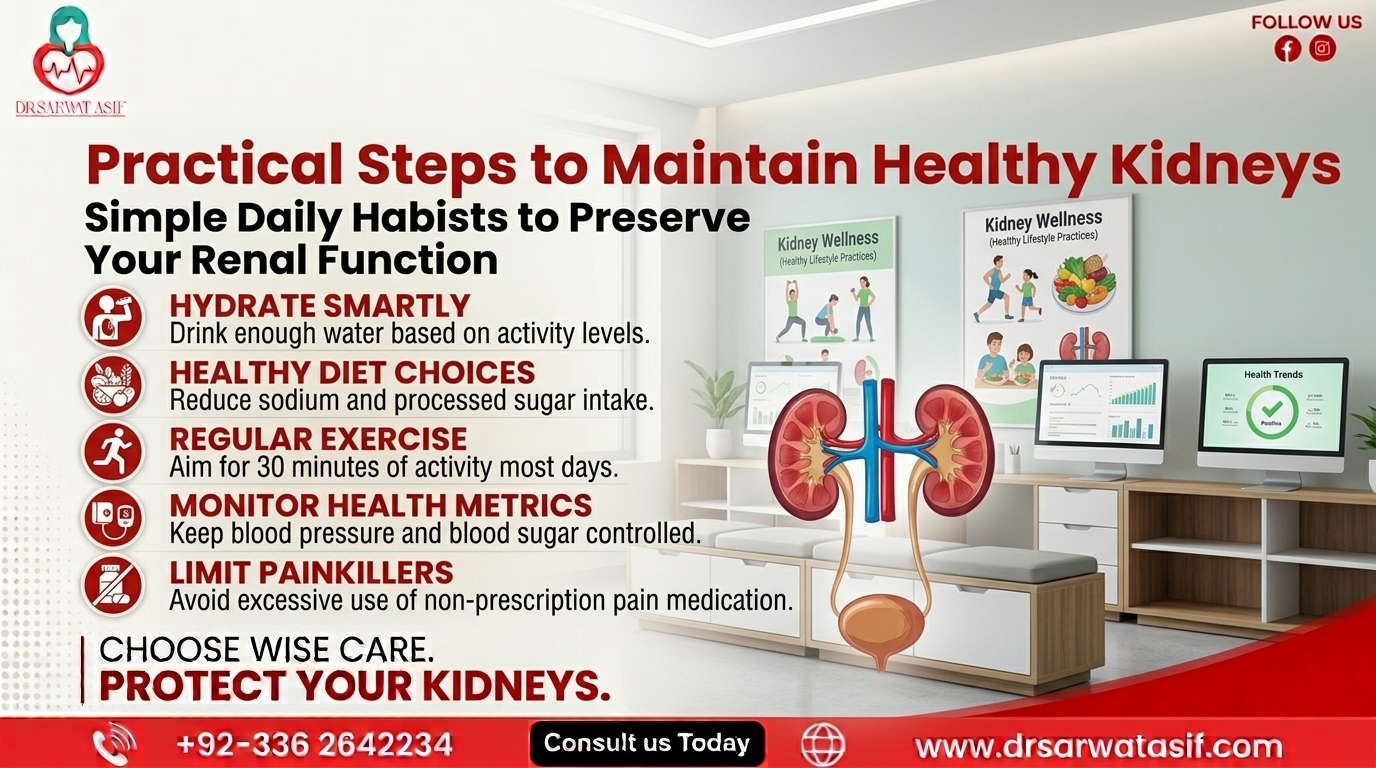
- Stay Appropriately Hydrated: Drink 2 to 3 liters of clean water daily, increasing intake during Karachi’s warm summer months unless instructed otherwise by a doctor.
- Monitor Vital Health Numbers: Keep blood pressure around 120/80 mmHg and maintain fasting blood sugar levels within healthy target ranges.
- Eat a Balanced, Low-Sodium Diet: Reduce added table salt, processed foods, and high-sodium snacks to minimize fluid retention and high blood pressure.
- Exercise Regularly: Engage in moderate physical activity like walking or swimming for at least 30 minutes daily to improve blood circulation.
- Avoid Smoking and Alcohol: Tobacco damages blood vessels, reducing blood flow to the kidneys and accelerating disease progression.
- Get Annual Health Checkups: If you have diabetes, high blood pressure, or a family history of kidney failure, request an annual serum creatinine and urine test from your doctor.
Frequently Asked Questions
What is the early warning sign of kidney damage?
Early kidney damage rarely causes noticeable pain. Microscopic protein leakage in urine (causing foamy urine) and mild fluid retention around ankles or eyes are two of the earliest detectable physical signs.
Can chronic kidney disease be completely reversed?
Existing scar tissue in chronic kidney disease cannot usually be reversed. However, early diagnosis, blood pressure control, blood sugar regulation, and proper medication can successfully halt or delay further progression for years.
How often should a diabetic patient test their kidneys?
Diabetic patients should complete a kidney function test (serum creatinine, eGFR) and a urine albumin-to-creatinine ratio (ACR) test at least once every 12 months.
What is the difference between a Nephrologist and a Urologist?
A nephrologist is a medical doctor who diagnoses and manages non-surgical kidney conditions, chronic kidney disease, hypertension, and dialysis. A urologist is a surgeon who treats structural problems, kidney stones, and urinary tract conditions through surgical procedures.
Is dialysis permanent once started?
Not always. If dialysis is started due to Acute Kidney Injury (AKI), it may only be needed temporarily until kidney tissue recovers. For Chronic End-Stage Renal Disease (ESRD), dialysis is usually permanent unless a successful kidney transplant is completed.
How does high blood pressure affect kidney function?
High blood pressure damages and narrows the small blood vessels inside the kidney’s filtering units. Over time, damaged vessels cannot filter blood effectively, causing waste to build up in the body.
What foods should patients with kidney disease avoid?
Patients with advanced kidney disease are usually advised to limit high-sodium foods, processed meats, potassium-rich foods (like bananas and tomatoes), and high-phosphorus dairy products under professional dietary guidance.
Conclusion
Navigating kidney treatment in Karachi requires a proactive approach centered on early detection, accurate diagnostic testing, and consistent medical management.
Whether dealing with early-stage diabetic nephropathy, recurrent kidney stones, or chronic kidney failure, timely medical advice from experienced specialists like Dr. Sarwat Asif helps patients choose the right treatment path, protect remaining renal function, and maintain long-term health.