


What Are the Most Common Urine Infection Symptoms?
Often, urine infection symptoms are the most obvious, occurring when your normal urination stream has been altered.
A person who urinates normally without symptoms may all of a sudden have to visit the bathroom several times in a short time, or have urinary urgency or burning.
One of the most common symptoms is burning urination. This discomfort can be mild and cause some stinging, or it can be more intense and feel like a burn. Some people say irritation that starts when the urine flows through the urethra.
Another frequent symptom is frequent urination. You might have to go to the bathroom often, but not much urine may come out during each urination. The urge can recur shortly after urination.
Frequency and urgency can be accompanied by painful urination or dysuria. Others may feel pressure or pain in the lower abdomen as well. Urine may be discolored or be smelly (though this does not necessarily indicate an infection).
Sometimes blood will be present in the urine during a bladder infection. So, blood in urine does not always indicate a UTI and should not be assumed as such without evaluation.
What Does a Burning Sensation While Urinating Mean?
If the urinary tract becomes irritated or inflamed, it is often accompanied by a burning sensation when urinating.
A bacterial infection can cause inflammation of the lining of the bladder or urethra that may make it uncomfortable for the person to urinate.
Depending on the site of the irritation, the burning may occur at the start or end of urination. It may also happen along with urgency and frequent urination.
But not all people will have a UTI if they have burning urine. Similar symptoms can be caused by urinary stones, inflammation of the urethra, irritation of the genitalia, and certain sexually transmitted infections.
This is the reason why long-term burning should be assessed and not treated routinely with an antibiotic.
Knowing the true cause can make sure the treatment is appropriate to the problem.
Why Does a UTI Cause Frequent Urination?
A urinary infection can irritate the bladder, causing a person to urinate when he or she has very little urine.
This could lead to an individual using the bathroom over and over again during the day. This may be a stronger need to pass urine and, even though you do so, it may only give short-term relief.
The only way to diagnose a urinary infection is if the patient keeps urinating, or has a urinary infection, all while having a normal urine specific gravity.
Other factors that can influence urinary frequency include increased fluid intake, caffeine, pregnancy, diabetes, some medications, overactive bladder, and prostate issues.
A urinary infection is more likely due to the repeated urination, burning sensation, and painful urination with urgency, but medical evaluation might be needed to identify the cause.
What Other Urinary Tract Infection Signs Can Occur?
UTIs aren’t always accompanied by the same symptoms. Some people may only have mild discomfort with their urine while others may have more than one symptom.
Common symptoms of a UTI are:
- Dysuria (burning or stinging when urinating)
- Frequent urination and sudden urgency to urinate
- Reduced abdominal pressure or discomfort.
- Urine that is cloudy or smells very strong or foul, or that has blood in it
These symptoms are common with infections to the lower urinary tract, especially the bladder.
It is important to recall, however, that urinary discolouration and odour can be caused by other causes besides infection. Changes in urine can be caused by dehydration, food, supplements, and some medications.
So, urine appearance should be taken in conjunction with other symptoms, rather than as a sole criterion for a UTI.
How Do Bladder Infection Symptoms Differ From Kidney Infection Symptoms?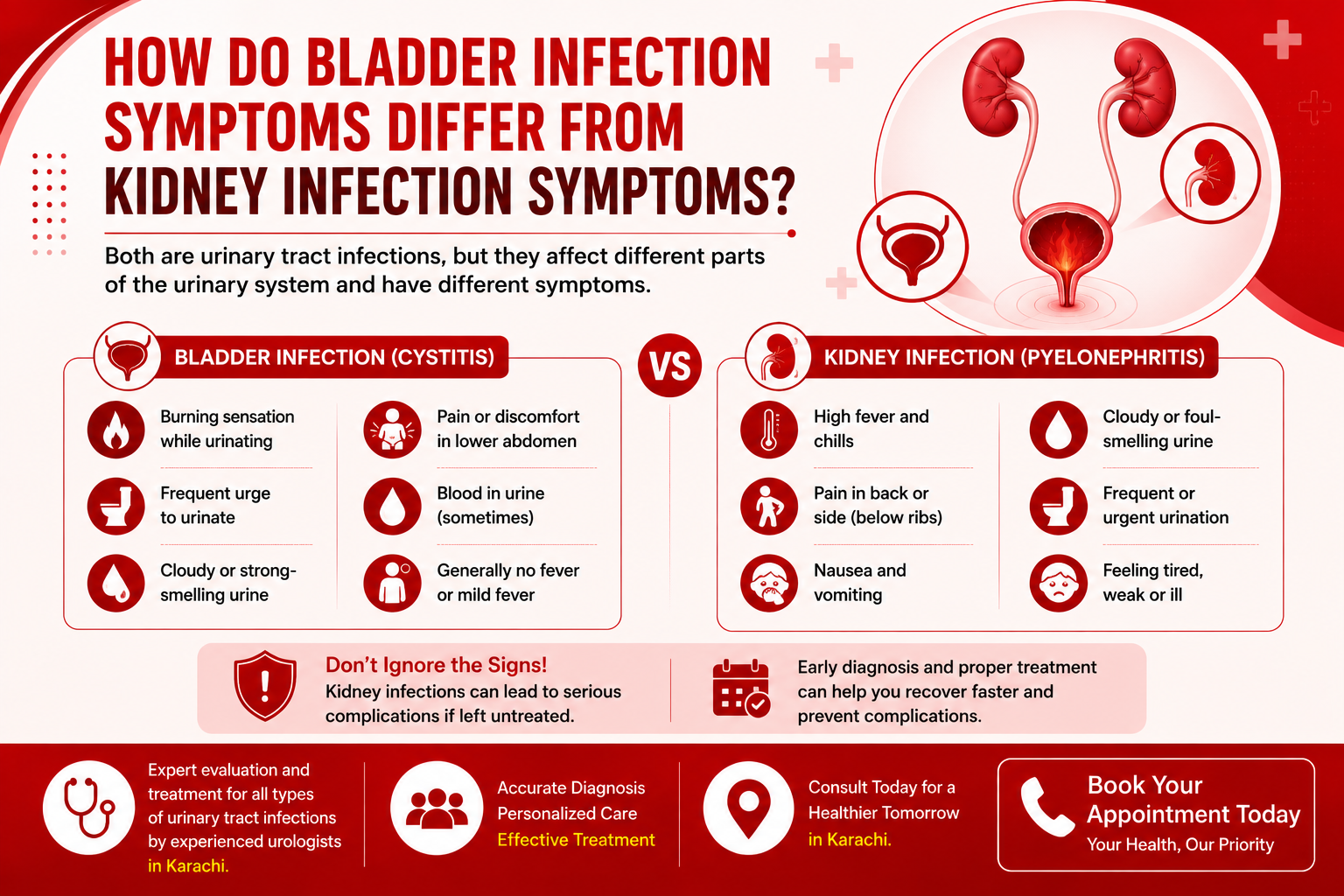
The location of the infection can influence how a person feels.
A bladder infection usually produces symptoms related to urination. Burning, frequency, urgency, and lower abdominal discomfort are common.
A kidney infection can cause these symptoms as well, but it is more likely to cause fever, chills, nausea, vomiting, and pain in the back or side.
Type of urinary problem | Common symptoms | What to consider |
Urethral infection or irritation | Burning, painful urination, possible discharge | The cause needs to be identified |
Bladder infection | Burning, frequency, urgency, lower abdominal discomfort | Medical assessment may be needed |
Kidney infection | Fever, chills, back or side pain, nausea, vomiting | Prompt medical attention is important |
A suspected kidney infection should not be treated as an ordinary case of bladder irritation. Kidney infections can become serious if treatment is delayed.
What Causes a Urinary Tract Infection?
Most UTIs occur when bacteria invade the urinary tract and starts to multiply. The urinary system’s normal defense mechanisms prevent infection from occurring; however, there are instances when bacteria can breach these defenses.
The bladder is emptied regularly, which helps to remove bacteria from the urinary tract. Infections can be more likely if urine flow or the ability to empty the bladder is blocked by a problem.
UTIs are more common among women because bacteria can more easily get into the bladder, and the female urethra is shorter. In some women, sexual activity can also lead to urinary tract infections.
UTIs can affect men, too. In men, urinary symptoms may also be the result of prostate issues and/or difficulty emptying the bladder.
Urinary infections can also be caused by urinary tract abnormalities, the use of a catheter, kidney stones, and some medical conditions.
Who Is More Likely to Develop UTI Symptoms?
Anyone can develop a UTI, but some people are more at risk than others.It’s an important risk factor because individuals who have had an infection are at risk for developing another infection.
Sometimes, completely emptying the bladder is a problem that can also lead to bacteria staying in the urinary tract.
The urinary system may be modified during pregnancy, and it may be necessary to have a more careful evaluation of urinary symptoms.
It is also important to take a more detailed history in older people and those with chronic underlying urinary or medical disorders.
If the infections continue to recur, it may be helpful to have a discussion with your health care provider about the pattern rather than treating separate infections without trying to identify factors.
Are UTI Symptoms Different in Men and Women?
A lot of symptoms are identical for men and women. Both can have burning, painful urination, as well as urinary urgency and frequency, and changes in urine.
In many cases, the difference has to do with causes of the symptoms.
In males, urinary symptoms can be related to the inability to fully empty the bladder due to an enlarged prostate. This can lead to UTIs and/or symptoms mimicking an infection.
Uncomplicated infection of the bladder is more common in women, and some people may have recurrent UTIs.
The assessment can be affected by age, pregnancy, prior infections, medications, sexual activity, urinary anatomy, and other health issues. So, the same symptom can have various possible explanations in each individual.
When Should You See a Doctor for Urine Infection Symptoms?
Mild urinary symptoms do not necessarily mean it is a serious issue, but if symptoms persist or worsen it must not be ignored.
In cases where there is fever, chills, back or side pain, vomiting, a lot of blood in the urine, or a lot of pain, professional medical assessment is especially important.
The symptoms can indicate that the infection could be affecting the kidneys or that another problem with the urinary system may be present.
Other individuals such as pregnant women, children, older adults, or those with recurrent infections and/or known abnormalities of the urinary tract may require more customized medical advice.
The important thing is not to assess the severity of a UTI solely on the discomfort that the burning represents. Sometimes a condition can present with a relatively mild urinary symptom.
How Is a Urinary Tract Infection Diagnosed?
The first step in diagnosis is to recognize the symptoms and to ask the patient about his or her medical history.
A physician may inquire about the onset of symptoms and how frequently the patient urinates, if it is painful, and if there is fever or back pain.
Depending on the circumstances, the urine test may be ordered. Tests may give information about inflammation, blood, or bacteria, or other changes in the urine.
A urine culture might be useful in selected cases to detect the type of bacteria present and to help choose an antibiotic that will be effective.
Individual needs may dictate the need for testing. The health care provider might take into account a person’s age, sex, state of being pregnant, prior infections, symptoms and medical history, and the suspected presence of complications.
This is more certain than assuming that all cases of burning micturition are due to a bacterial urinary tract infection.
What Treatment Is Used for a UTI?
Treatment will vary with the cause and severity of the infection.
If the UTI is bacterial in origin, or likely to be, and is diagnosed, or suspected, a physician or other healthcare provider may prescribe an appropriate antibiotic.
Depending on the patient, the type of bacteria that are suspected, the patient’s medical history, the patient’s allergies, and the local resistance of the bacteria, the specific medicine can vary.
It is important not to use leftover antibiotics or another person’s prescription. Drugs that work for someone else might not work for your infection, and antibiotics are not effective for everyone with painful urination.
Interfering with the need for antibiotics can also lead to antibiotic resistance, which can make some bacterial infections more difficult to treat down the road.
Hydration should be provided to ensure normal fluid balance, but should not be considered as treatment in itself for an infection that necessitates antibiotics for a bacterial infection.
Can You Treat UTI Symptoms at Home?
There are a few simple things you can do to make it more comfortable while you make medical arrangements. For most people, it’s acceptable to drink fluids as normal unless your health care provider has told you otherwise.
Other people have also reported that cutting down on too much caffeine or other beverages that affect the bladder can help ease discomfort.
But home remedies should not be used to put off doctor’s visits if symptoms are serious or alarming. You must drink a lot of water to prevent a bacterial infection from getting better that needs to be treated.
Return after treatment if symptoms do not improve or worsen; then a medical reassessment is indicated.
Can Burning Urination Have Causes Other Than a UTI?
Yes. There are a variety of reasons for burning or painful urination.Dysuria can be caused by urethral inflammation, genital irritation, urinary stones, sexually transmitted infections, or other urinary and reproductive health issues.
Other symptoms may help make a diagnosis. For instance, if a person has discharge or sores in their genital area, it could be a condition other than a common bladder infection.
This is one of the reasons that self-diagnosis may be deceptive. When the symptoms are not typical of a bladder infection, then proper testing may be able to provide insight into the actual cause.
What Should You Do If UTI Symptoms Keep Coming Back?
It is important to pay more attention to recurrent urinary symptoms than to a single case.
A physician might also reevaluate previous urine tests, medications, medical conditions, bladder-emptying issues, kidney stones, and other potential risk factors if the symptoms of burning, urgency, and frequent urination persist.
Knowing the time when symptoms are experienced can also be beneficial. For instance, if the infection occurs frequently and symptoms come back soon after treatment, the doctor will get important information.
Dr. Sarwat Asif is a Consultant Physician who offers general health consultations to people in search of general medical treatment in Karachi.
A GP may examine signs of urine symptoms and if needed, suggest urine tests or refer to a relevant specialist.
Recurrent UTI treatment is not just about treating the same symptoms over and over. It is important to understand the reason for their occurrence and select an appropriate long-term strategy.
How Can You Reduce the Risk of Future UTIs?
However, there are some common habits that can help lower the risk of urinary infections, but they cannot stop all urinary infections.
The best way to do this is to help maintain a healthy urinary tract, rather than treating urinary infections over and over again without medical advice.
These are practical steps that can be taken to prevent the spread of disease:
- Unless instructed not to, drink sufficient water to keep well hydrated.
- Don’t hold urine for extended periods.
- Talk to a health care provider if there are recurring urinary infections.
- If you have kidney stones, trouble urinating, or other urinary problems, please consult for advice.
These steps are straightforward, but most beneficial for those who keep having symptoms when using the right medical assessment.
What Is the Best Next Step for UTI Symptoms in Karachi?
If you are experiencing urinary infection symptoms in Karachi, such as burning while urinating, painful urination, frequent urination, urgency, or lower abdominal discomfort, the next step depends on the severity and duration of your symptoms.
For persistent symptoms, arranging a consultation can help determine whether a UTI is actually present and whether urine testing is appropriate.
If you develop fever, chills, vomiting, blood in the urine, or significant back or side pain, seek medical attention promptly rather than relying on home remedies.
A qualified physician can review the symptoms, consider possible causes, and decide whether treatment or referral is necessary. Dr. Sarwat Asif, a Consultant Physician in Karachi, can be considered for general medical evaluation when appropriate.
Most importantly, do not assume that every episode of burning urination is a UTI. The same symptom can occur in several conditions, and the right treatment depends on the underlying cause.