

Persistent stomach pain, bloating after meals, or unexplained digestive discomfort can disrupt daily life and reduce overall well-being.
Many people ignore early symptoms, assuming they are minor issues, but digestive problems often signal more serious conditions that require professional care.
This is where a digestive disease specialist plays a vital role. These doctors focus on diagnosing and treating disorders of the stomach, intestines, liver, and entire gastrointestinal tract.
From acid reflux and irritable bowel syndrome to more complex conditions like ulcers or inflammatory bowel disease, their expertise ensures accurate diagnosis and effective treatment.
In cities like Karachi, where lifestyle, diet, and stress significantly impact gut health, consulting a specialist early can prevent complications and improve long-term wellness.
In this article, you’ll learn when to seek help, what treatments are available, and how to choose the right expert for your needs.
What does a digestive disease specialist do for gut health?
A digestive disease specialist focuses on the complete digestive system, including the esophagus, stomach, intestines, liver, pancreas, and gallbladder.
They are often known as gastroenterologists.
Their role includes:
- Diagnosing chronic and acute digestive issues
- Treating acid reflux, ulcers, and infections
- Managing long-term conditions like Crohn’s disease or ulcerative colitis
- Performing diagnostic procedures like endoscopy and colonoscopy
- Offering dietary and lifestyle guidance for gut health
According to the World Gastroenterology Organisation (WGO), early diagnosis of gastrointestinal disorders significantly reduces the risk of complications such as bleeding ulcers or colon cancer.
In Karachi, many hospitals now offer advanced Endoscopy and Colonoscopy Services, helping specialists detect problems early and accurately.
When should you visit a digestive disease specialist?
You should consult a digestive disease specialist near me if you experience persistent or recurring symptoms such as:
- Chronic abdominal pain or cramps
- Frequent heartburn or acid reflux
- Unexplained weight loss
- Blood in stool or black stool
- Long-term constipation or diarrhea
- Difficulty swallowing food
- Ongoing bloating or gas
These symptoms may seem minor at first, but they often indicate underlying digestive disorders.
For example, persistent heartburn could signal GERD, while blood in stool may require urgent evaluation through colonoscopy.
Early consultation ensures timely treatment of digestive disorders, reducing the risk of complications.
What conditions does a digestive system specialist treat?
A digestive system specialist manages a wide range of gastrointestinal conditions, including:
- Gastroesophageal reflux disease (GERD)
- Peptic ulcers
- Irritable bowel syndrome (IBS)
- Inflammatory bowel disease (IBD)
- Liver diseases such as hepatitis
- Gallstones and pancreas disorders
They also handle functional disorders where symptoms exist but no visible damage is found.
For example, IBS patients often experience bloating and irregular bowel movements triggered by stress or certain foods.
A specialist helps create a personalized treatment plan combining medication, diet changes, and lifestyle adjustments.
How does a gastroenterologist consultation work?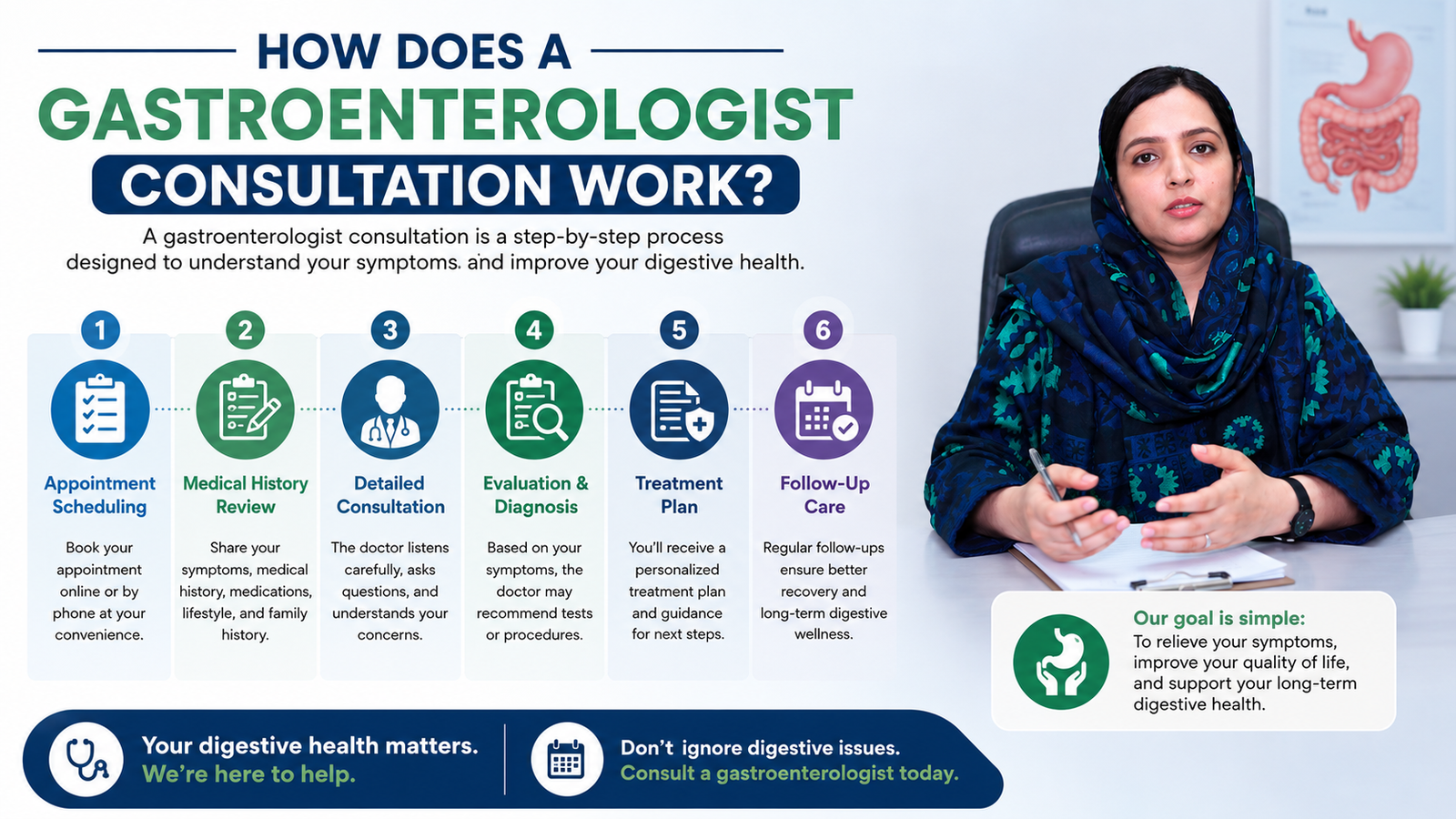
A gastroenterologist consultation usually begins with a detailed discussion about your symptoms, medical history, and lifestyle habits.
Here’s what typically happens:
- Initial assessment: The doctor evaluates your symptoms and dietary patterns
- Physical examination: Abdominal checks for tenderness or swelling
- Diagnostic tests: Blood tests, stool analysis, ultrasound, or imaging
- Advanced procedures: Endoscopy or colonoscopy if needed
Top medical associations like the American College of Gastroenterology (ACG) recommend early diagnostic testing for persistent digestive symptoms to rule out serious conditions.
Patients in Karachi often benefit from modern clinics offering quick access to endoscopy and imaging facilities, reducing waiting time for diagnosis.
What tests are used in digestive disorders treatment?
Accurate diagnosis is key in digestive disorders treatment, and specialists use several tests, including:
- Endoscopy (upper GI tract examination)
- Colonoscopy (large intestine evaluation)
- Ultrasound of the abdomen
- CT scan or MRI
- Blood and liver function tests
- Stool analysis
Comparison Table: Common Diagnostic Tests
Test Type | Purpose | Condition Detected |
Endoscopy | Upper digestive tract view | Ulcers, GERD |
Colonoscopy | Colon examination | Polyps, cancer |
Ultrasound | Organ imaging | Gallstones, liver issues |
Blood Tests | Infection and enzyme levels | Hepatitis, anemia |
These tests help the gastroenterologist for digestive diseases identify the root cause instead of just treating symptoms.
What are the signs you need a stomach and intestine specialist?
A stomach and intestine specialist is needed when symptoms affect daily life or persist despite home remedies.
Warning signs include:
- Severe stomach pain after meals
- Persistent nausea or vomiting
- Sudden changes in bowel habits
- Chronic fatigue due to poor digestion
- Loss of appetite
Ignoring these signs may lead to complications such as ulcers or nutrient deficiencies.
For instance, untreated stomach ulcers can worsen and cause internal bleeding.
Timely consultation ensures proper diagnosis and prevents long-term damage.
What is the difference between a gastroenterologist and a general physician?
Many patients first visit a general physician, but a specialist offers deeper expertise.
Aspect | General Physician | Gastroenterologist |
Focus | Overall health | Digestive system only |
Tests | Basic lab work | Advanced GI procedures |
Treatment | Initial care | Specialized treatment |
Equipment | Limited | Endoscopy & colonoscopy |
While general doctors manage basic symptoms, a digestive disease specialist provides advanced care for complex gastrointestinal conditions.
What are the benefits of endoscopy and colonoscopy services in Karachi?
Modern hospitals in Karachi offer advanced diagnostic tools that greatly improve patient care.
Benefits include:
- Early detection of serious diseases
- Accurate diagnosis without surgery
- Quick recovery time
- Prevention of colorectal cancer
- Detailed visualization of the digestive tract
These services are essential for people with chronic digestive symptoms or a family history of gastrointestinal diseases.
How to choose the best digestive disease specialist near me?
Choosing the right specialist is crucial for effective treatment. Here are some practical tips:
- Check qualifications and certifications
- Look for hospital affiliation and experience
- Read patient reviews and feedback
- Ensure access to modern diagnostic tools
- Prefer specialists with experience in endoscopy
A digestive health specialist with strong clinical experience can significantly improve treatment outcomes.
Why is early diagnosis important in digestive health?
Early diagnosis allows timely treatment and prevents complications. According to global health studies, many gastrointestinal cancers are treatable when detected early.
Benefits of early care:
- Better treatment success rate
- Lower medical costs
- Reduced risk of complications
- Improved quality of life
Delaying treatment often leads to more severe conditions that require advanced procedures or surgery.
FAQs
What does a digestive disease specialist treat?
They treat conditions affecting the stomach, intestines, liver, and digestive tract, including IBS, ulcers, and GERD.
When should I see a digestive disease doctor?
If you have persistent stomach pain, bloating, or changes in bowel habits, you should consult a specialist.
Is endoscopy painful?
Endoscopy is usually not painful as sedation is used, making the procedure comfortable for patients.
What is the difference between a gastroenterologist and a general doctor?
A gastroenterologist specializes in digestive health, while a general doctor treats overall health issues.
Are digestive disorders curable?
Many digestive conditions are manageable or curable with early diagnosis, proper treatment, and lifestyle changes.
Conclusion
A digestive disease specialist plays a critical role in diagnosing and treating a wide range of gastrointestinal conditions.
From mild stomach discomfort to complex digestive disorders, their expertise ensures accurate diagnosis and effective care.
If you experience persistent symptoms, consulting a qualified digestive disease specialist in Karachi can help prevent long-term complications and improve your digestive health. Early action is always the best step toward a healthier life.