

Many people infected with the Hepatitis B virus (HBV) don’t realize they have it until liver damage has already begun.
In fact, the infection can remain silent for weeks, months, or even years before noticeable health problems appear.
That’s why recognizing hepatitis b symptoms early can make a significant difference in protecting your liver and preventing serious complications.
Whether you’ve recently been exposed to HBV, are worried about unexplained fatigue, or simply want to stay informed, this guide covers everything you need to know.
You’ll learn about the first warning signs, how symptoms change from acute to chronic infection, how doctors diagnose the disease, treatment options, and practical steps to reduce your risk.
What Are Hepatitis B Symptoms?
Hepatitis B is a viral infection that attacks the liver and causes inflammation. It is one of the most common forms of viral hepatitis worldwide.
While some people recover completely after an acute infection, others develop chronic liver disease that can lead to cirrhosis or liver cancer.
One important fact is that many infected individuals experience no symptoms at all, especially during the early stages.
Others develop mild flu-like illness before more noticeable liver-related signs appear.
Common hepatitis B infection symptoms include:
- Persistent tiredness
- Fever
- Loss of appetite
- Nausea and vomiting
- Muscle aches
- Joint pain
- Right upper abdominal pain
- Dark urine
- Pale stools
- Yellow skin and eyes (jaundice)
- Itchy skin
The severity varies from person to person. Some experience only mild discomfort, while others become seriously ill.
Featured Snippet Answer:
The most common hepatitis B symptoms include fatigue, nausea, fever, loss of appetite, abdominal pain, dark urine, pale stools, and jaundice.
However, many infected people have no symptoms, especially during the early stages.
What Are the First Symptoms of Hepatitis B?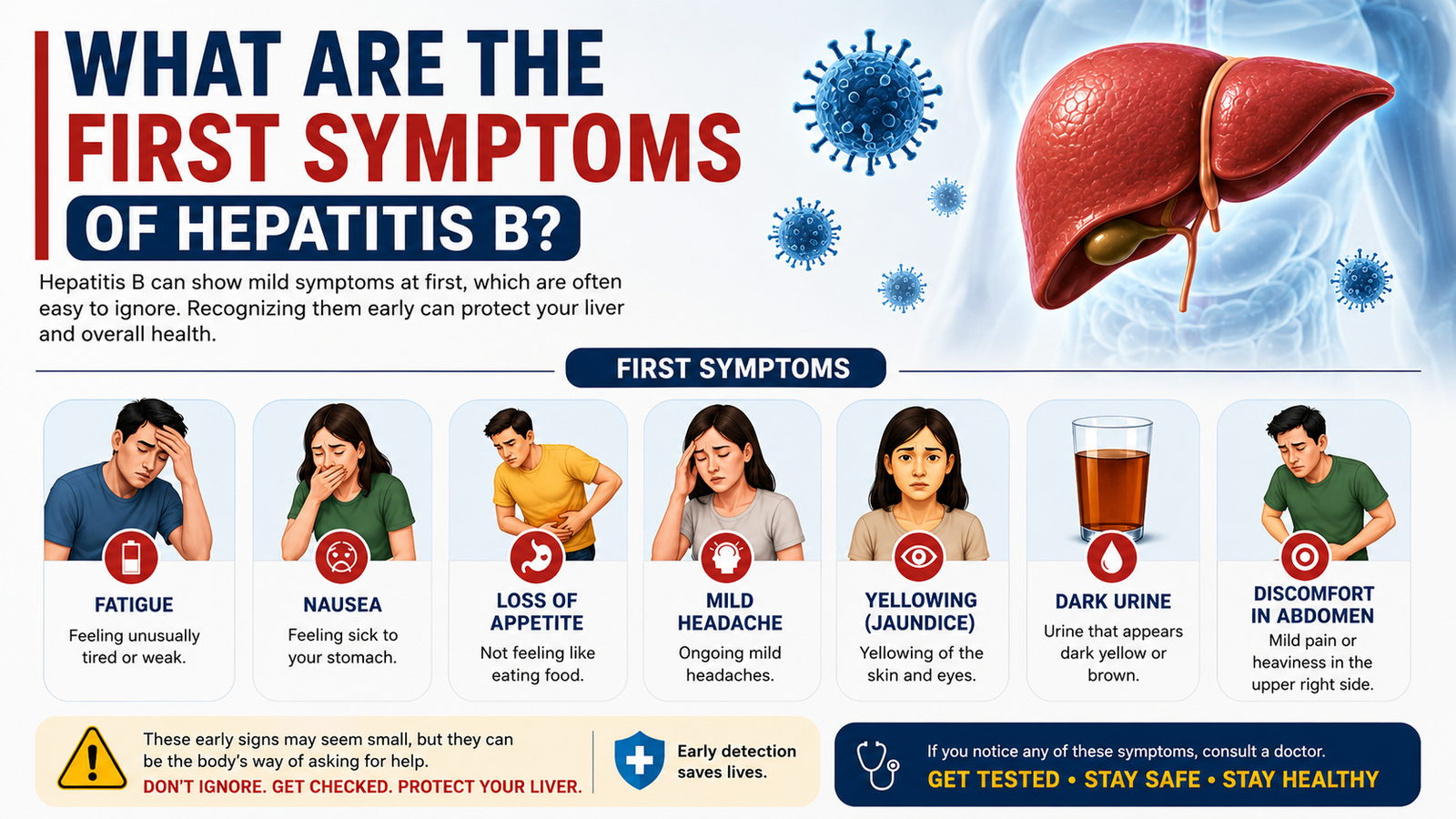
The early symptoms of hepatitis B often resemble a common viral illness, making them easy to overlook.
Early warning signs may include:
- Mild fever
- Persistent tiredness
- Muscle pain
- Joint aches
- Reduced appetite
- Nausea
- Occasional vomiting
- General weakness
Many people assume they have seasonal flu or food poisoning. As liver inflammation increases, more specific symptoms begin to appear.
Hepatitis B symptoms before jaundice
Before yellowing of the skin develops, many patients notice:
- Feeling unusually exhausted
- Digestive discomfort
- Mild pain beneath the right ribs
- Loss of energy
- Dark-colored urine
Recognizing these early warning signs of hepatitis B infection allows earlier diagnosis and treatment.
How Long After Exposure Do Symptoms Appear?
Most people develop symptoms between 6 weeks and 6 months after exposure.
The average incubation period is around 90 days, although it varies depending on:
- Viral load
- Individual immune response
- Age
- Overall health
Some individuals never develop noticeable symptoms despite carrying the virus.
This is why hepatitis screening is recommended after possible exposure, even if you feel healthy.
Can Hepatitis B Have No Symptoms?
Yes.
One of the biggest challenges with Hepatitis B is that many infected individuals remain completely symptom-free.
People without symptoms can still:
- Spread the virus
- Develop liver inflammation
- Experience gradual liver damage
- Progress to chronic liver disease
This silent progression is one reason regular hepatitis blood tests are important for people at higher risk.
Individuals who should consider screening include:
- Healthcare workers
- Pregnant women
- People living with someone who has HBV
- Individuals with multiple sexual partners
- People who share needles
- Patients receiving dialysis
What Does Hepatitis B Feel Like?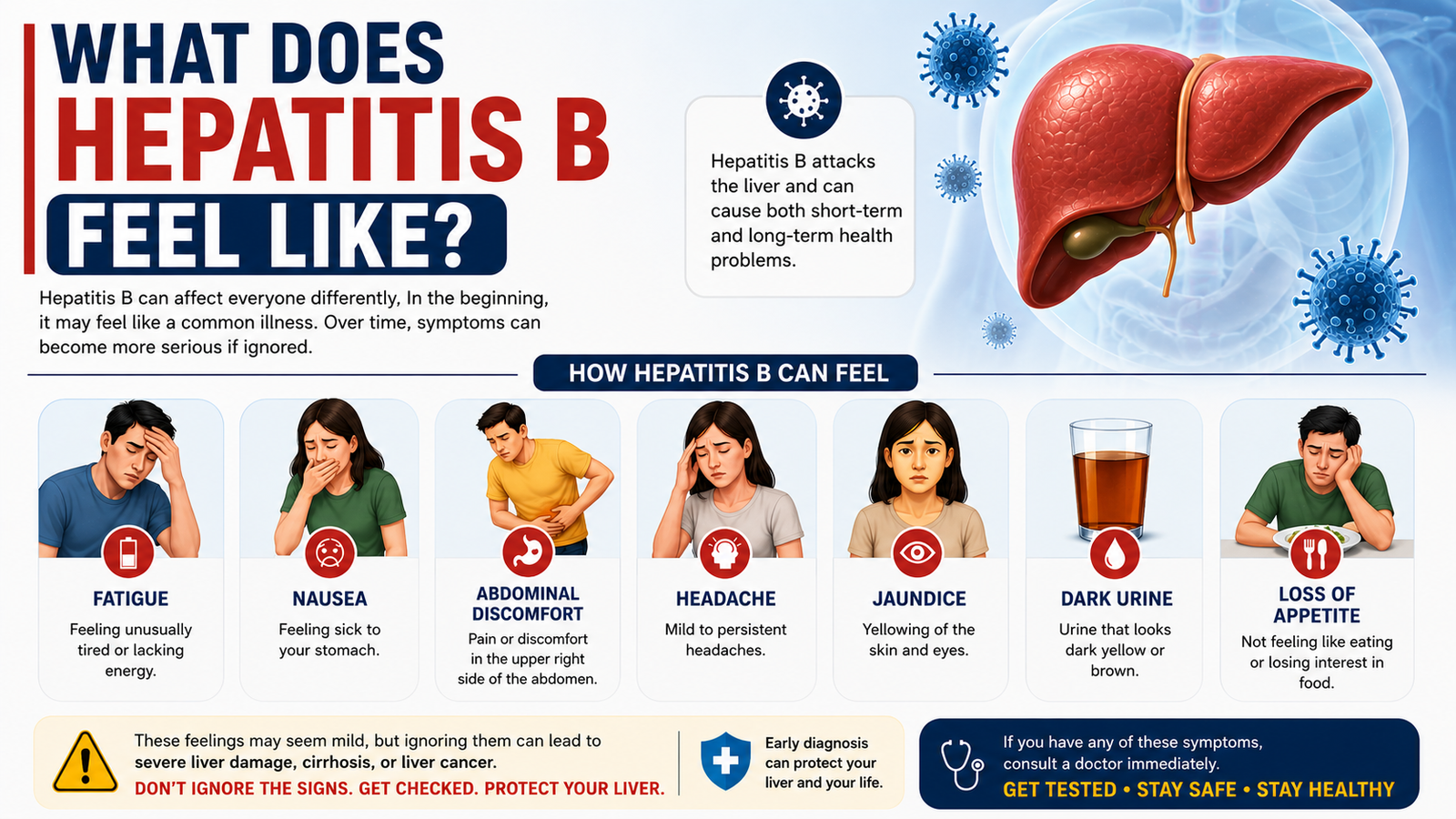
People describe the illness differently depending on the stage of infection.
Some report:
- Constant fatigue
- Feeling “run down”
- Loss of motivation
- Stomach discomfort
- Pressure under the right ribs
- Flu-like body aches
As liver inflammation worsens, symptoms become more noticeable.
Advanced liver symptoms may include:
- Yellow eyes
- Severe tiredness
- Swollen abdomen
- Persistent nausea
- Itchy skin
- Confusion in severe liver disease
Not everyone experiences the same combination of symptoms.
How Do Acute and Chronic Hepatitis B Symptoms Differ?
Acute Hepatitis B | Chronic Hepatitis B |
Appears suddenly | Develops slowly |
Often lasts less than 6 months | Persists longer than 6 months |
Fever is common | Fever is uncommon |
Jaundice may develop | May have no symptoms for years |
Many recover completely | Can lead to liver cirrhosis |
Fatigue improves after recovery | Fatigue may become long-term |
Usually resolves naturally | Often requires long-term monitoring |
Acute viral hepatitis often causes more noticeable illness initially, while chronic hepatitis B disease can quietly damage the liver over many years.
What Are the Warning Signs of Liver Damage?
As hepatitis B progresses, liver damage becomes more serious.
Common hepatitis B liver symptoms include:
- Jaundice symptoms
- Dark urine
- Pale stools
- Persistent fatigue and weakness
- Swollen legs
- Swollen abdomen (ascites)
- Easy bruising
- Unexplained weight loss
- Confusion due to liver failure
These symptoms require immediate medical evaluation because they may indicate advanced liver disease.
Which Symptoms Occur in Adults, Women, Men, and Children?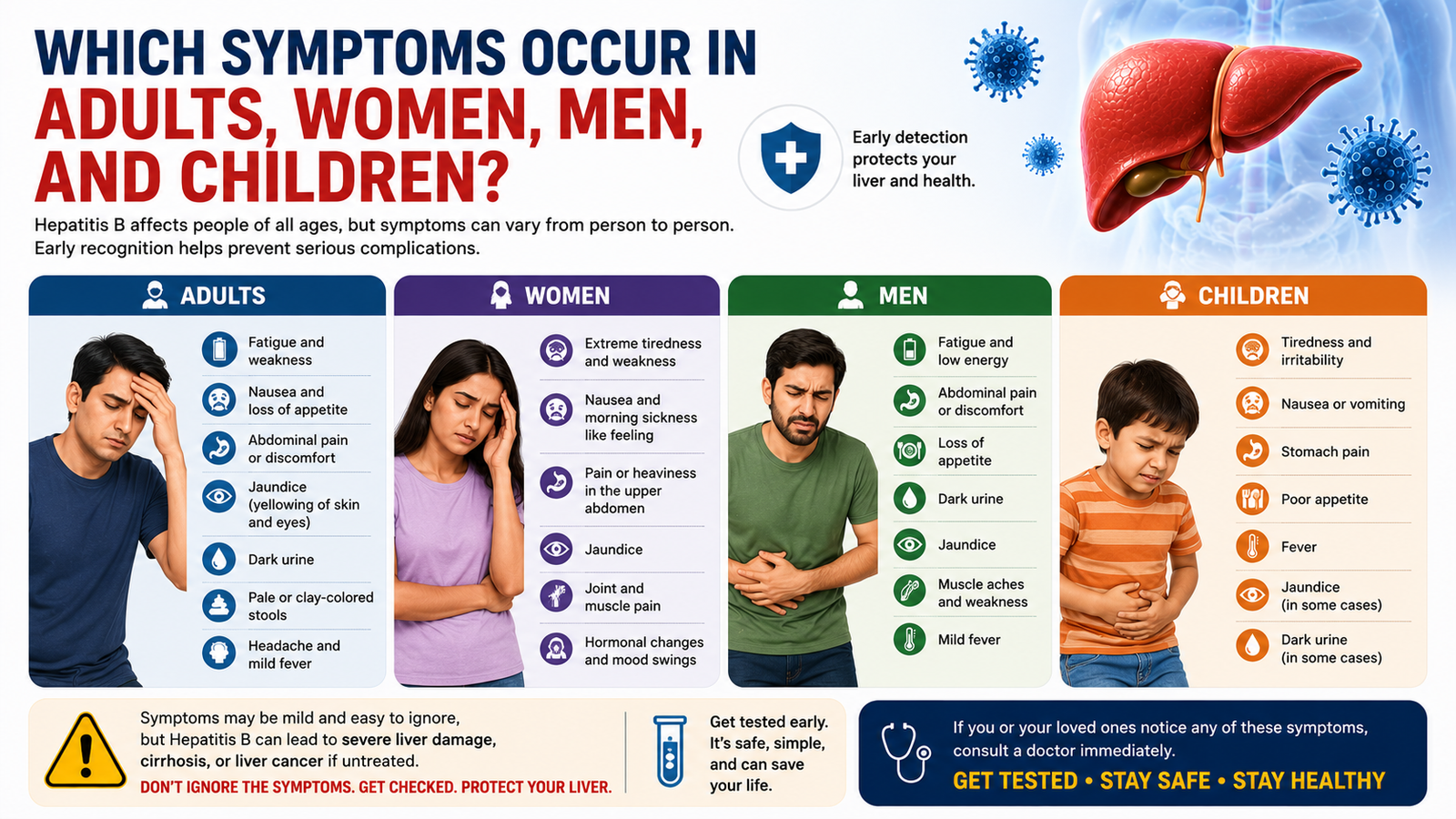
Although many symptoms overlap, certain groups may experience the disease differently.
Hepatitis B Symptoms in Adults
Adults often develop:
- Fever
- Fatigue
- Joint pain
- Abdominal discomfort
- Jaundice
Adults are more likely than children to experience symptoms during the initial infection.
Hepatitis B Symptoms in Women
Women may notice:
- Extreme tiredness
- Digestive upset
- Loss of appetite
- Muscle aches
- Jaundice
During pregnancy, screening is especially important because the virus can pass from mother to baby during childbirth. Proper medical care significantly reduces this risk.
Hepatitis B Symptoms in Men
Symptoms in men are generally similar to those in women and may include:
- Persistent tiredness
- Fever
- Right upper abdominal pain
- Dark urine
- Yellowing of the skin and eyes
Hepatitis B Symptoms in Children
Children often have very mild symptoms or none at all. However, they are at a much higher risk of developing chronic infection, which is why childhood vaccination is essential.
What Causes Hepatitis B and How Does It Spread?
The Hepatitis B virus (HBV) spreads through contact with infected blood or certain body fluids.
It is not transmitted by casual contact such as hugging, shaking hands, sharing meals, coughing, or sneezing.
Common Ways HBV Is Transmitted
- Unprotected sexual contact with an infected person
- Sharing needles or syringes
- Mother-to-child transmission during childbirth
- Accidental needle-stick injuries in healthcare settings
- Using unsterilized tattoo or piercing equipment
- Sharing razors, toothbrushes, or other personal items contaminated with blood
- Receiving unscreened blood products (rare in countries with strict blood screening)
Common Misconceptions
Hepatitis B does not spread through:
- Hugging
- Kissing on the cheek
- Sharing food or drinks
- Handshakes
- Using the same toilet
- Mosquito bites
Knowing the actual transmission routes helps reduce unnecessary fear while encouraging appropriate preventive measures.
Who Is at Higher Risk of Getting Hepatitis B?
Although anyone can become infected, certain individuals face a higher risk.
Risk Factors Include:
- Healthcare workers
- People living with someone who has chronic HBV
- Individuals with multiple sexual partners
- Injection drug users
- Babies born to infected mothers
- People receiving frequent blood transfusions or dialysis
- Travelers to regions where Hepatitis B is common
- Individuals with weakened immune systems
If you belong to one of these groups, regular hepatitis screening and vaccination are strongly recommended.
How Is Hepatitis B Diagnosed?
Because symptoms alone cannot confirm the infection, doctors rely on blood tests and liver evaluations.
1. HBsAg Test
The HBsAg (Hepatitis B Surface Antigen) test is usually the first test ordered.
A positive result indicates that the virus is present in the body.
2. HBV DNA Test
This test measures:
- The amount of virus in the blood
- How actively the virus is reproducing
- Whether antiviral therapy may be needed
It also helps monitor treatment effectiveness.
3. Liver Function Tests (LFTs)
Liver function tests measure enzymes such as:
- ALT (Alanine Aminotransferase)
- AST (Aspartate Aminotransferase)
High liver enzyme levels often indicate liver inflammation or ongoing damage.
4. Additional Tests
Depending on your condition, your doctor may recommend:
- Liver ultrasound
- FibroScan (to assess liver stiffness)
- Liver biopsy (in selected cases)
- Additional hepatitis blood tests
These investigations help determine whether the infection is acute or chronic and whether liver damage has occurred.
Featured Snippet Answer:
Hepatitis B is diagnosed using blood tests such as the HBsAg test, HBV DNA test, liver function tests, and sometimes imaging studies like ultrasound or FibroScan to assess liver health.
When Should You See a Doctor?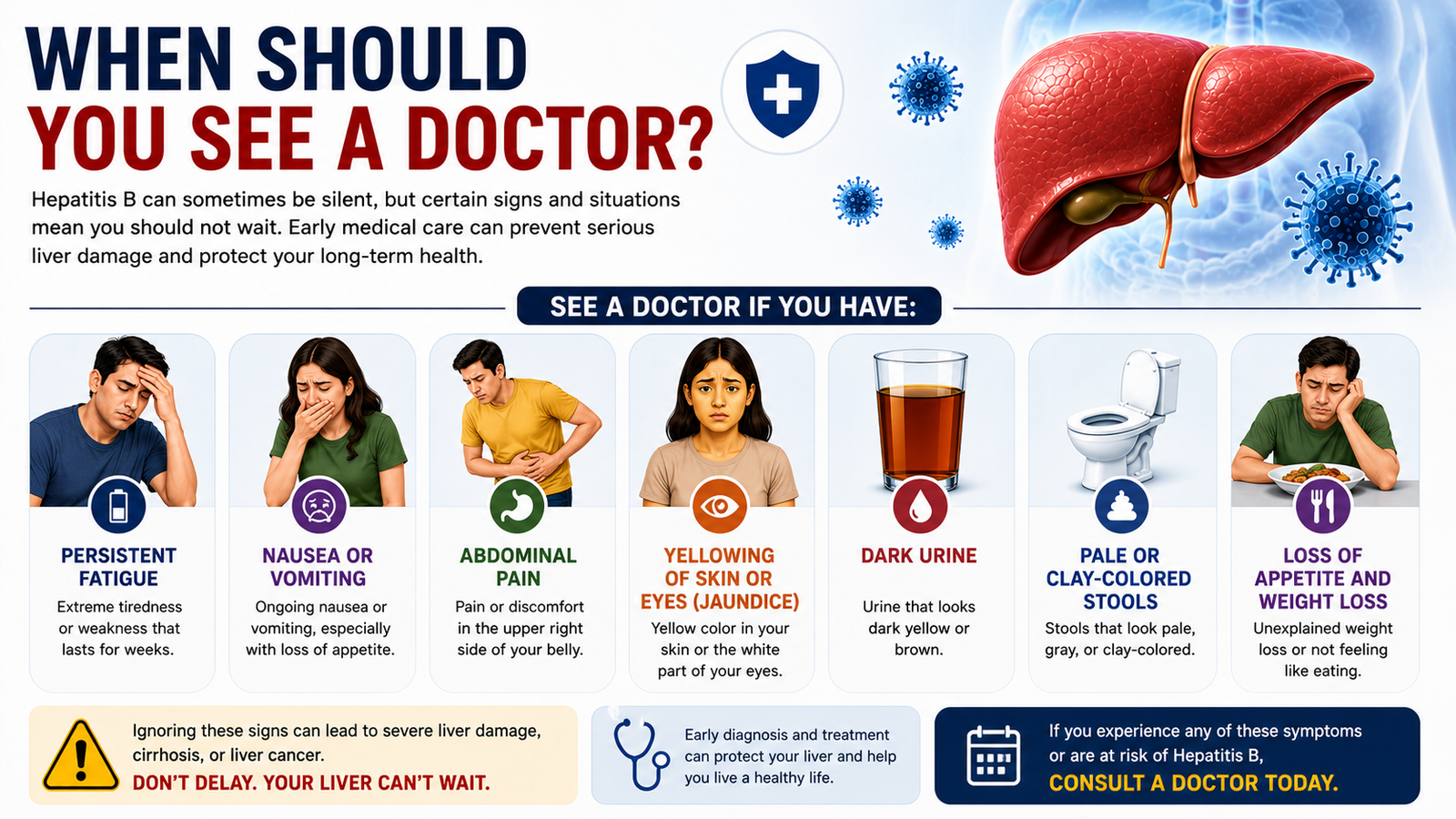
Seek medical attention immediately if you experience:
- Yellow skin or eyes
- Severe abdominal pain
- Persistent vomiting
- Extreme weakness
- Confusion
- Swollen abdomen
- Dark urine lasting several days
- Known exposure to HBV
Early diagnosis greatly improves treatment outcomes and helps prevent complications.
Is Hepatitis B Curable?
This is one of the most frequently searched questions.
Acute Hepatitis B
In most healthy adults, acute Hepatitis B clears on its own within a few months. The immune system successfully eliminates the virus, and no long-term infection remains.
Chronic Hepatitis B
Chronic Hepatitis B usually cannot be completely cured with current medications. However, modern antiviral therapy can:
- Reduce the amount of virus in the body
- Protect the liver from further damage
- Lower the risk of cirrhosis
- Reduce the chance of liver cancer
- Improve long-term quality of life
Many people with chronic HBV live long, healthy lives by following their treatment plan and attending regular checkups.
What Treatments Are Available?
Treatment depends on whether the infection is acute or chronic.
Acute Hepatitis B
Most patients need supportive care, including:
- Plenty of rest
- Staying hydrated
- Eating nutritious foods
- Avoiding alcohol
- Avoiding unnecessary medications that may strain the liver
Doctors monitor liver function until recovery.
Chronic Hepatitis B
For chronic infection, a liver specialist (hepatologist) or gastroenterologist may recommend antiviral therapy.
Common treatment goals include:
- Slowing viral replication
- Preventing liver damage
- Reducing liver inflammation
- Lowering the risk of liver failure
Not every patient requires immediate medication. Treatment decisions depend on:
- HBV DNA levels
- Liver enzyme results
- Degree of liver damage
- Age
- Overall health
Regular monitoring remains essential, even if medication is not yet required.
What Lifestyle Changes Support Liver Health?
Medical treatment works best when combined with healthy habits.
Expert Recommendations
 Avoid alcohol completely
Maintain a healthy body weight
Eat a balanced diet rich in fruits, vegetables, and whole grains
Stay physically active
Get enough sleep
Drink adequate water
Avoid smoking
Never share needles or personal items
Discuss all medications and supplements with your doctor before use
These habits help reduce additional stress on the liver and support long-term health.
What Complications Can Develop If Hepatitis B Is Left Untreated?
Without proper monitoring and treatment, chronic HBV may lead to serious health problems.
Possible Complications
- Chronic liver disease
- Liver scarring (cirrhosis)
- Liver failure
- Portal hypertension
- Fluid buildup in the abdomen (ascites)
- Internal bleeding from enlarged veins
- Liver cancer (hepatocellular carcinoma)
These complications usually develop gradually over many years, highlighting the importance of early diagnosis and ongoing care.
How Can Hepatitis B Be Prevented?
The good news is that Hepatitis B is largely preventable.
Prevention Tips
- Get the Hepatitis B vaccine according to recommended schedules.
- Practice safe sex by using protection.
- Avoid sharing needles or syringes.
- Ensure tattoo and piercing equipment is sterile.
- Do not share razors, toothbrushes, or nail clippers.
- Wear protective equipment if you work in healthcare.
- Pregnant women should be screened so newborns can receive timely protection after birth.
Vaccination remains the most effective way to prevent HBV infection and its long-term complications.
What Is the Recovery Timeline for Hepatitis B?
Recovery depends on whether the infection is acute or chronic.
Stage | What to Expect |
Exposure | HBV enters the body through infected blood or body fluids. |
Incubation Period | Usually 6 weeks to 6 months before symptoms appear. |
Acute Infection | Symptoms may last a few weeks to several months. |
Recovery | Most healthy adults clear the virus naturally within 6 months. |
Chronic Infection | If the virus remains for more than 6 months, it is considered chronic and requires ongoing monitoring. |
During recovery, your healthcare provider may repeat blood tests to monitor liver enzymes and confirm whether the virus has been cleared.
How Can You Live Well with Chronic Hepatitis B?
A chronic Hepatitis B diagnosis can feel overwhelming, but many people lead long, active lives with proper care.
The key is to protect your liver and attend regular medical checkups.
Practical Tips for Daily Life
- Take antiviral medication exactly as prescribed.
- Schedule routine liver function tests and HBV DNA monitoring.
- Avoid alcohol to reduce additional liver damage.
- Eat a balanced diet with plenty of fruits, vegetables, lean protein, and whole grains.
- Maintain a healthy weight, as excess body fat can contribute to fatty liver disease.
- Exercise regularly to support overall health.
- Inform healthcare providers about your HBV status before starting new medications.
- Encourage close family members and household contacts to receive the Hepatitis B vaccine if they are not already protected.
Real-Life Example
Imagine two people diagnosed with chronic HBV.
One ignores follow-up appointments and continues unhealthy habits, while the other follows medical advice, attends routine checkups, and maintains a healthy lifestyle.
Years later, the second person is much more likely to have a healthy liver and avoid serious complications. This illustrates how consistent care can make a meaningful difference.
What Are the Key Takeaways?
If you’re looking for a quick summary, here are the most important points:
- Hepatitis B often causes no symptoms in its early stages.
- Early signs may resemble the flu, including fatigue, fever, nausea, and muscle aches.
- Jaundice, dark urine, and pale stools are common signs of liver involvement.
- Blood tests such as the HBsAg test, HBV DNA test, and liver function tests are essential for diagnosis.
- Acute infection often resolves on its own, but chronic infection requires long-term monitoring.
- Modern antiviral therapy helps control the virus and reduces the risk of cirrhosis and liver cancer.
- Vaccination is the most effective way to prevent Hepatitis B.
Frequently Asked Questions
What are the first symptoms of Hepatitis B?
The earliest symptoms often include fatigue, mild fever, nausea, loss of appetite, muscle aches, joint pain, and general weakness.
Some people also experience discomfort in the upper right side of the abdomen before jaundice develops.
How do I know if I have Hepatitis B?
The only reliable way to confirm Hepatitis B is through blood tests, including the HBsAg test and other HBV-specific laboratory tests.
Symptoms alone are not enough for diagnosis because many infected people have no noticeable signs.
Can Hepatitis B symptoms go away on their own?
Yes. In most healthy adults with acute Hepatitis B, symptoms gradually improve as the immune system clears the virus.
However, chronic Hepatitis B usually requires ongoing medical monitoring and, in some cases, antiviral treatment.
What are the warning signs of liver damage?
Signs of liver damage may include yellowing of the skin and eyes (jaundice), dark urine, pale stools, persistent fatigue, abdominal swelling, unexplained weight loss, easy bruising, and confusion in advanced cases.
These symptoms require prompt medical evaluation.
When should I see a doctor for Hepatitis B symptoms?
You should see a doctor immediately if you develop jaundice, severe abdominal pain, persistent vomiting, swelling of the abdomen, extreme tiredness, or if you believe you’ve been exposed to the Hepatitis B virus.
Early diagnosis can help prevent serious complications.
Conclusion
Recognizing hepatitis b symptoms early can help prevent serious liver complications and improve long-term health outcomes.
While some people never develop noticeable signs, others may experience fatigue, nausea, abdominal pain, dark urine, or jaundice as the infection progresses.
If you suspect exposure to the Hepatitis B virus or notice persistent symptoms, don’t delay seeking medical advice.
Early diagnosis, timely treatment, regular monitoring, and vaccination remain the most effective strategies for protecting your liver and reducing the risk of chronic liver disease. Taking action today can make a lasting difference to your future health.