

Fever symptoms commonly include an elevated body temperature along with chills, sweating, headache, body aches, tiredness, reduced appetite, and a general feeling of being unwell.
Other symptoms depend on what is causing the fever. For example, a respiratory infection may cause a cough or sore throat, while a stomach infection may cause vomiting or diarrhea.
A fever is usually a sign that the body is responding to an illness or another medical problem.
In adults, a temperature of 38°C (100.4°F) or higher is generally considered a fever when measured accurately, although readings can vary depending on the measurement method.
Most mild fevers associated with common infections improve as the underlying illness resolves. However, temperature alone does not tell you how serious an illness is.
A very unwell person may need medical assessment even with a modest fever, while some uncomplicated infections can temporarily produce a higher temperature.
For patients in Karachi, recognizing fever symptoms and accompanying warning signs can help determine whether home monitoring is reasonable or whether medical evaluation is needed.
This guide explains common fever signs, possible causes, temperature ranges, home care, diagnosis, treatment, and situations that require prompt attention.
What Is a Fever?
A fever is a temporary rise in body temperature, usually occurring as part of the body’s response to an infection or another medical condition.
A temperature of 38°C (100.4°F) or above is commonly used as a practical threshold for fever, although interpretation depends on age, measurement method, symptoms, and overall health.
Normal body temperature is not exactly 37°C at every moment. It naturally changes during the day and can be influenced by physical activity, environmental temperature, hormones, age, and where the temperature is measured.
When the immune system responds to certain infections or inflammatory processes, the body’s temperature-regulating center can temporarily raise its temperature set point.
This is why someone developing a fever may initially feel cold or experience chills even while their body temperature is rising.
Fever itself is therefore a symptom rather than a diagnosis. Finding the reason behind it is often more important than focusing only on the temperature reading.
What Are the Most Common Fever Symptoms?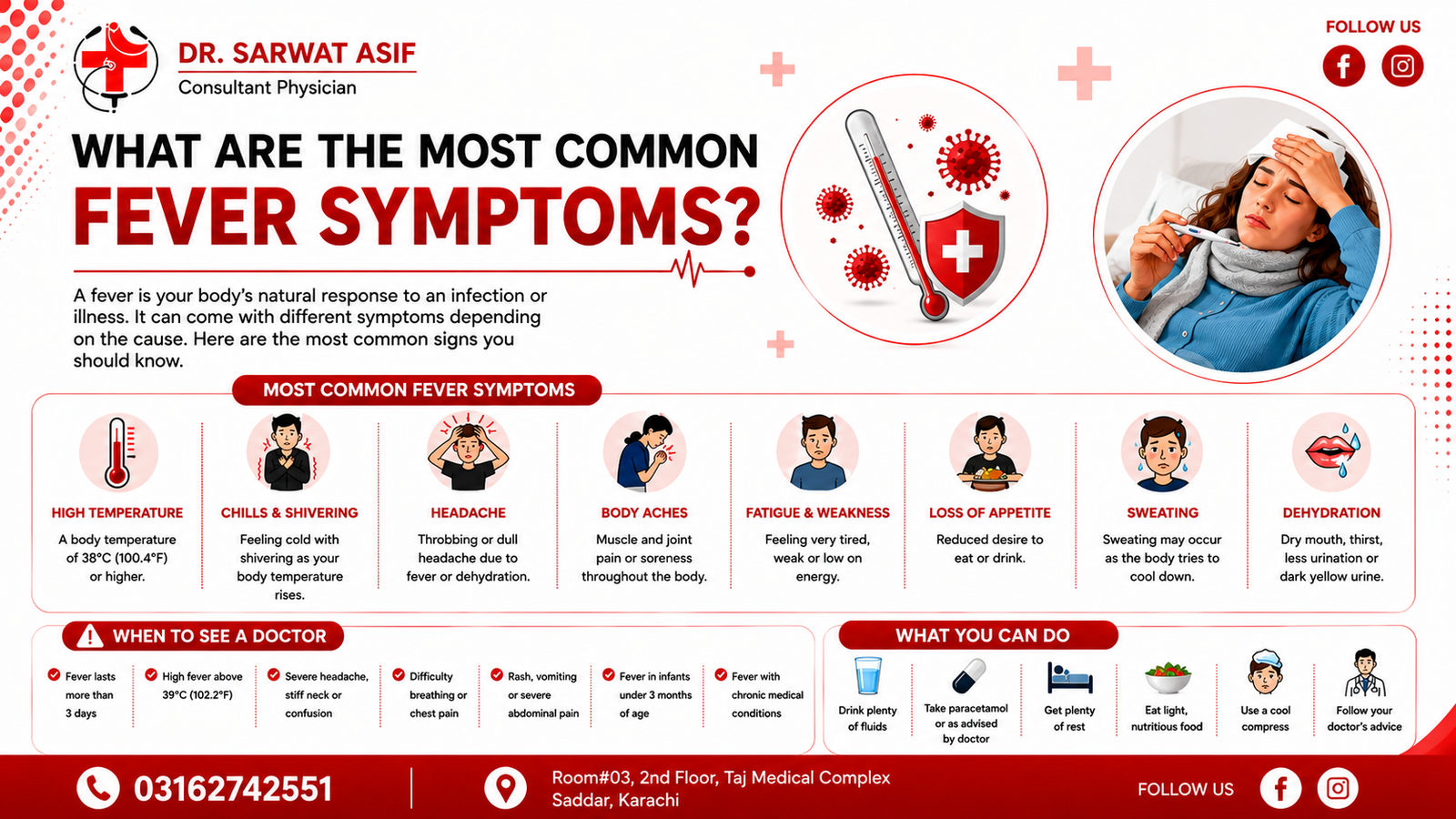
Common fever symptoms include feeling unusually warm or cold, chills, shivering, sweating, headache, muscle aches, fatigue, weakness, reduced appetite, and general discomfort.
Some people may also become dehydrated, especially when fever occurs with vomiting, diarrhea, heavy sweating, or reduced fluid intake.
The experience can vary considerably. One person may mainly notice chills and body aches, while another may feel exhausted and develop a headache.
Symptoms commonly associated with fever include:
- Temperature of around 38°C (100.4°F) or higher
- Chills, shivering or feeling unusually cold
- Sweating as the temperature changes
- Headache or body aches
- Weakness, fatigue and reduced activity
- Reduced appetite or thirst
- Warm or flushed skin
- Signs of dehydration, such as dry mouth or reduced urination
Fever can also occur alongside symptoms related to the underlying illness. Cough, runny nose, sore throat, abdominal discomfort, vomiting, diarrhea, urinary symptoms, rash, joint pain, or other complaints can provide useful clues about the cause.
Fever vs High Fever: What Is the Difference?
Temperature ranges can help describe a fever, but they should not be used alone to judge the seriousness of an illness.
Factor | Mild to Moderate Fever | Higher Fever |
Temperature | Above the normal range, often beginning around 38°C | A substantially elevated temperature, often around 39–40°C or above |
Possible symptoms | Tiredness, mild chills, headache, aches | Stronger chills, sweating, weakness, discomfort |
Main concern | Underlying cause and accompanying symptoms | Cause, duration, hydration and warning signs become increasingly important |
Home monitoring | May be reasonable in an otherwise well adult | Closer monitoring and medical advice may be appropriate |
Medical assessment | Depends on symptoms, duration and health status | More important if persistent or accompanied by concerning symptoms |
These ranges are only general guidance. Age, pregnancy, immune status, chronic illnesses, medications, duration of fever, and associated symptoms all affect how urgently a person should be assessed.
A person’s overall condition is especially important. Confusion, breathing difficulty or severe dehydration deserves more attention than the temperature number alone.
What Causes Fever?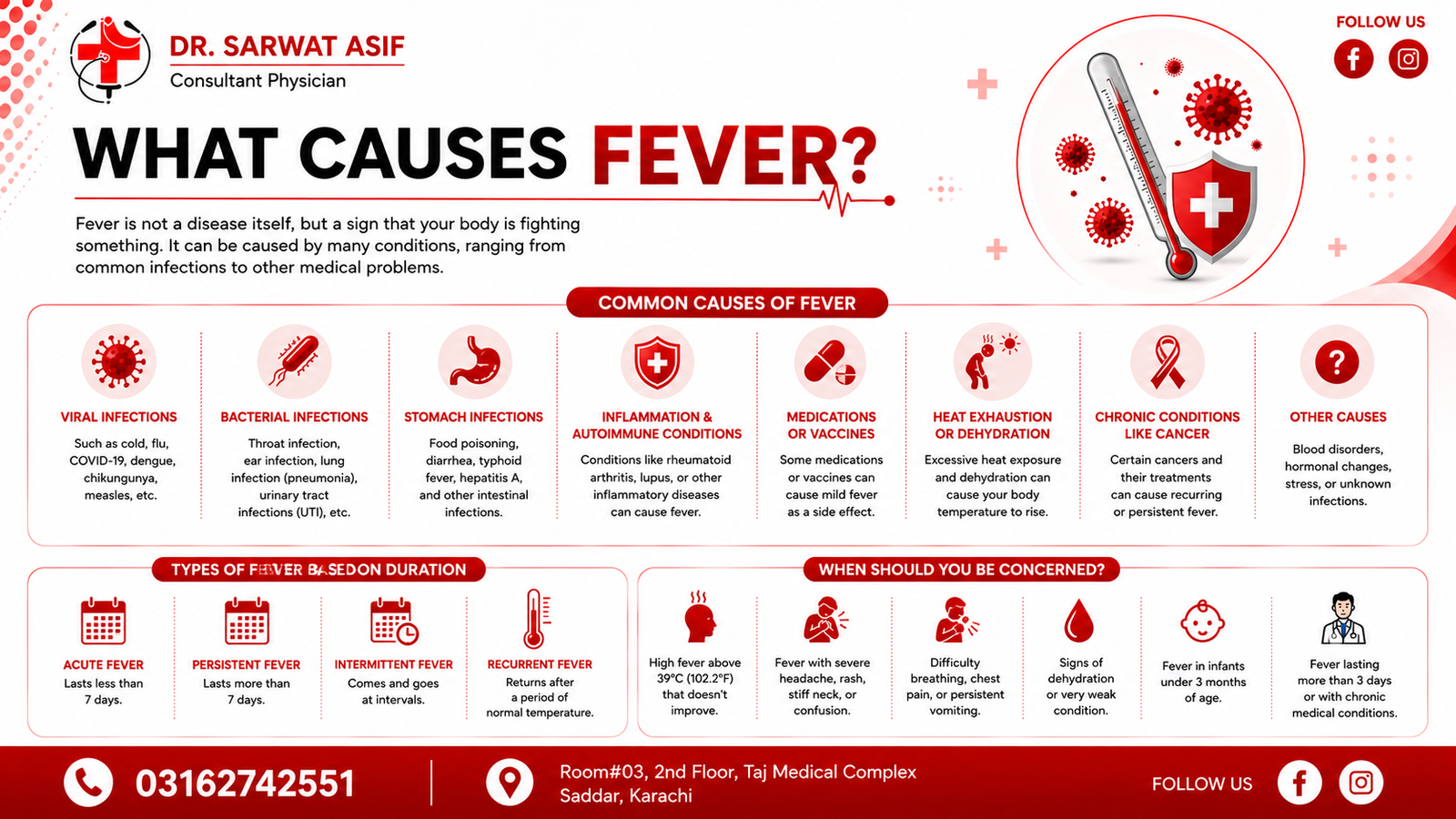
Fever can result from many conditions, but infections are among the most common causes.
Viral and bacterial infections can both produce fever. Less commonly, inflammatory conditions, medication reactions, heat-related illness and certain other medical problems may be associated with an elevated temperature.
Respiratory infections are a frequent example. Influenza, COVID-19 and other viral respiratory illnesses may cause fever along with cough, sore throat, headache, fatigue or body aches.
Bacterial infections can also produce fever. Depending on the affected area, a person may experience symptoms involving the throat, lungs, urinary tract, skin, gastrointestinal system or another part of the body.
In Karachi and other parts of Pakistan, clinicians may also consider illnesses such as dengue, malaria and typhoid fever when symptoms, exposure history, travel, season and examination findings make them relevant. Fever alone cannot distinguish between these conditions.
Not every elevated temperature is caused by an infection. Some inflammatory or autoimmune conditions and medication reactions may produce fever.
This is one reason persistent or unexplained fever should not simply be assumed to be a seasonal infection.
What Symptoms Along With Fever Can Suggest the Cause?
Symptoms occurring alongside fever often provide more useful information than the temperature alone.
Cough and sore throat may suggest a respiratory illness, urinary pain may indicate a urinary problem, and vomiting or diarrhea may point toward gastrointestinal illness. However, overlapping symptoms mean diagnosis cannot reliably be made from symptoms alone.
Fever With Cough or Sore Throat
A fever accompanied by cough, nasal congestion, sore throat or body aches may occur with influenza, COVID-19 or another respiratory infection.
Chest pain, significant shortness of breath, worsening breathing or severe weakness should not be ignored.
Fever With Headache and Body Aches
Headache and muscle or joint pain frequently accompany viral infections. In areas where dengue occurs, fever with significant headache, body aches, nausea, rash or other compatible symptoms may lead a healthcare professional to consider dengue among several possible causes.
Severe headache combined with neck stiffness, confusion, unusual drowsiness or neurological symptoms requires urgent assessment.
Fever With Vomiting or Diarrhea
Gastrointestinal infections can cause fever together with nausea, vomiting, abdominal cramps or diarrhea.
The major practical concern is often dehydration. Repeated vomiting, frequent watery stools or an inability to drink enough fluids can cause significant fluid loss.
Fever With Urinary Symptoms
Fever combined with burning during urination, frequent urination, lower abdominal discomfort or pain in the side or back may occur with a urinary tract or kidney infection.
Medical evaluation is particularly important when fever accompanies significant back or flank pain, vomiting or worsening illness.
Fever With Rash
A rash appearing during a febrile illness has many possible explanations, including viral illnesses, medication reactions and other medical conditions.
Because some fever-and-rash combinations can be serious, a new widespread or rapidly progressing rash should be medically assessed, particularly when accompanied by severe illness, breathing difficulty, unusual bleeding or confusion.
How Long Does a Fever Usually Last?
The duration of a fever depends on its underlying cause. Some uncomplicated viral illnesses produce fever for only a few days, while bacterial infections, mosquito-borne diseases and other conditions may follow different patterns.
Persistent, recurrent or unexplained fever should be evaluated rather than repeatedly treated without identifying the cause.
Keep track of when the fever started, the highest measured temperature and how the reading was taken. It can also help to note associated symptoms and whether they are improving or becoming worse.
A fever that disappears and then repeatedly returns may also deserve assessment, especially when accompanied by weight loss, persistent weakness, night sweats or other unexplained symptoms.
How Should You Measure a Fever?
An accurate measurement is more useful than deciding whether someone has a fever by touching their forehead.
Digital thermometers can measure temperature orally, under the arm, rectally, or at other approved sites depending on the device. Ear and forehead thermometers are also available.
Different measurement sites can produce somewhat different readings, so follow the thermometer manufacturer’s instructions. If monitoring an illness over several days, using the same device and method can make changes easier to interpret.
For children, the appropriate measurement technique depends on age and the thermometer being used. Parents who are uncertain should ask a healthcare professional which method is appropriate.
How Is the Cause of Fever Diagnosed?
Doctors diagnose the cause of fever by combining the temperature pattern with symptoms, medical history, physical examination and, when necessary, laboratory or imaging tests. There is no single test that identifies every cause of fever, so investigations should be selected according to the patient’s clinical presentation and possible exposures.
During an evaluation, a doctor may ask when the fever began, how high it has been, and whether symptoms such as cough, vomiting, diarrhea, urinary problems, rash, headache, abdominal pain or breathing difficulty are present.
Recent travel, mosquito exposure, contact with sick people, medications and existing medical conditions may also be relevant.
Depending on the findings, investigations could include blood tests, urine testing, infection-specific testing or imaging. Not every fever requires extensive testing.
For example, testing for dengue, malaria or typhoid should be guided by clinical assessment rather than automatically ordering every available test for anyone with fever.
How Can Fever Be Managed at Home?
For an otherwise stable person with a mild febrile illness, supportive care generally focuses on adequate fluids, rest, comfortable clothing and monitoring for worsening symptoms. Treatment should address the underlying illness when specific treatment is needed rather than simply trying to reduce the temperature number.
Drink enough fluids to replace losses from sweating, vomiting or diarrhea. Water and other appropriate fluids can help maintain hydration, while oral rehydration solution may be useful when significant fluid loss is occurring.
Rest is also useful while the body recovers. Avoid heavy exercise when you are febrile or significantly unwell.
Fever-reducing medicines may sometimes be used for comfort, but suitability and dosing depend on factors such as age, medical history and other medications. Children should not be given medicines simply by using an adult dose estimate.
Antibiotics should not be taken simply because a person has a fever. They treat particular bacterial infections and do not treat ordinary viral infections. Unnecessary antibiotic use can cause side effects and contributes to antimicrobial resistance.
What Should You Avoid When You Have a Fever?
One common mistake is focusing entirely on making the thermometer display a normal number. The goal is not always to eliminate every mild temperature rise; comfort, hydration and identifying the underlying cause are often more important.
Avoid taking several cold, flu or fever medicines without checking their active ingredients. Different products can contain the same medication, creating a risk of accidental duplication.
Another mistake is self-starting antibiotics or antimalarial medicines based only on fever symptoms. Different infections can look similar in their early stages, and appropriate treatment depends on the actual diagnosis.
When Should You See a Doctor for Fever?
Medical evaluation should be considered when fever is persistent, unexplained, worsening or accompanied by significant symptoms. Prompt assessment is particularly important when a person has breathing problems, severe dehydration, persistent vomiting, severe pain, unusual bleeding, confusion, extreme weakness, or a serious underlying health condition.
Seek urgent medical care for warning signs such as:
- Difficulty breathing, severe chest pain or blue/grey discoloration
- Confusion, fainting, seizure, unusual drowsiness or difficulty waking
- Severe headache with neck stiffness
- Persistent vomiting or inability to keep fluids down
- Signs of significant dehydration, including very little urination
- Severe abdominal pain
- Unusual bleeding, blood in vomit or stool, or concerning bruising
- A rapidly spreading or concerning rash
- Very high or rapidly worsening temperature with severe illness
- Fever in a very young infant
Pregnant people, older adults, people with weakened immune systems and those with significant chronic diseases may need earlier medical advice because their risks can differ.
Fever Symptoms in Babies and Children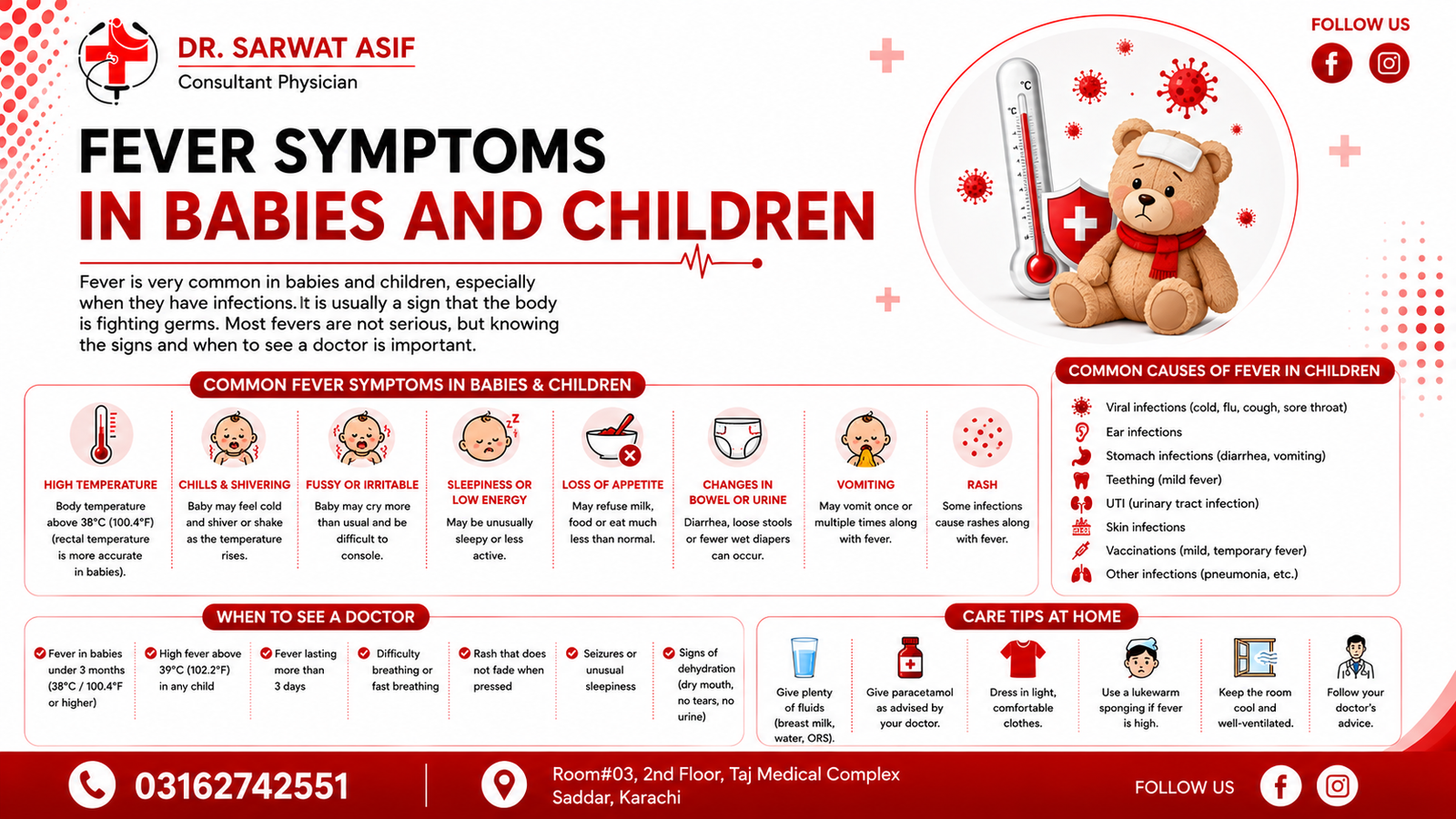
Children commonly develop fever with infections, but age matters when deciding how urgently they need assessment.
A rectal temperature of 38°C (100.4°F) or higher in a baby younger than 3 months requires prompt medical evaluation. Young infants can become seriously ill without displaying the same obvious symptoms seen in older children or adults.
In older babies and children, look beyond the temperature. A child who is difficult to wake, struggling to breathe, not drinking, producing very little urine, having a seizure or behaving very unusually needs urgent medical attention.
Parents should also seek professional advice if they are concerned about a child’s condition even when the thermometer reading does not appear extremely high.
Could Fever Symptoms Be Dengue in Karachi?
Dengue is one possible cause of fever in Karachi, but fever symptoms alone cannot confirm dengue.
Dengue may cause sudden fever, headache, pain behind the eyes, muscle or joint pain, nausea, vomiting, or rash. Laboratory testing and clinical evaluation may be needed when dengue is suspected.
An important point is that complications can sometimes develop around the time the fever begins to improve.
Severe abdominal pain, persistent vomiting, bleeding, marked weakness, breathing difficulty or other signs of deterioration require urgent medical attention.
Because dengue can affect blood clotting and platelet levels, medication choices during a suspected dengue illness should be discussed with an appropriate healthcare professional rather than self-treating indiscriminately.
Could It Be Malaria or Typhoid Fever?
Malaria and typhoid are additional causes that may be considered in a person with persistent fever depending on symptoms and exposure history.
Malaria can produce fever, chills, sweating, headache, body aches, and fatigue, although the pattern is not always classic. Diagnosis generally requires appropriate malaria testing.
Typhoid fever may cause prolonged fever and can be associated with headache, weakness, abdominal symptoms, changes in bowel habits and reduced appetite.
Because these symptoms overlap with many illnesses, laboratory and clinical assessment are important.
A doctor should interpret test results alongside the patient’s symptoms and examination rather than relying on one symptom to identify the disease.
Fever Care in Karachi: When to Arrange Medical Evaluation
Karachi patients can encounter fever from common viral respiratory infections, gastrointestinal infections and other illnesses, as well as locally relevant infections such as dengue, malaria and typhoid.
The appropriate response depends on the whole clinical picture. Mild symptoms that are clearly improving may only require supportive care and monitoring, whereas persistent fever or concerning accompanying symptoms warrant assessment.
Patients looking for medical evaluation in Karachi may consult a qualified physician such as Dr. Sarwat Asif for an assessment of fever and associated symptoms.
The purpose of consultation is to evaluate the possible cause and determine whether testing or specific treatment is appropriate; no single treatment plan applies to every person with fever.
Frequently Asked Questions
What are usually the first symptoms of a fever?
Early symptoms may include chills, feeling unusually cold or warm, headache, tiredness, and body aches. A thermometer is more reliable than symptoms alone for confirming an elevated temperature.
Is 38°C considered a fever?
Yes. A temperature of 38°C (100.4°F) or higher is commonly considered a fever, although readings vary somewhat according to where and how temperature is measured.
Can fever occur without other symptoms?
Yes. Fever can sometimes appear before other symptoms become noticeable. Persistent or unexplained fever should be evaluated if the cause remains unclear.
Does fever always mean an infection?
No. Infection is a common cause, but inflammatory conditions, medication reactions and other medical problems can also cause fever.
How do I know whether fever is dengue?
Symptoms alone cannot reliably confirm dengue because they overlap with many infections. A healthcare professional may recommend clinical assessment and appropriate blood testing when dengue is suspected.
should I take antibiotics for fever?
Not automatically. Antibiotics treat specific bacterial infections and do not treat viral illnesses. A healthcare professional should determine whether antibiotics are appropriate.
When is fever dangerous in children?
A baby younger than three months with a temperature of 38°C (100.4°F) or higher requires prompt medical evaluation. Any child with breathing difficulty, seizures, severe dehydration or unusual drowsiness also needs urgent care.
When should persistent fever be checked?
Seek medical advice when fever persists, repeatedly returns, worsens or occurs with significant symptoms. The appropriate timing depends on age, underlying health conditions and how unwell the person appears.
Conclusion
Fever symptoms can include elevated temperature, chills, sweating, headache, body aches, weakness and reduced appetite, but accompanying symptoms often provide the most useful clues about what is causing the illness.
Many uncomplicated infections improve with rest, fluids and appropriate supportive care. Persistent fever, significant dehydration, breathing problems, confusion, unusual bleeding, severe pain or other warning signs should not be ignored.
In Karachi, conditions such as common respiratory and gastrointestinal infections, dengue, malaria and typhoid may all enter the clinical picture depending on symptoms and exposure. Rather than trying to identify the illness from fever alone, patients with persistent or concerning symptoms can arrange an evaluation with a qualified healthcare professional, including Dr. Sarwat Asif, to determine the appropriate next steps.