


What Is Asthma?
Asthma is a long-term condition of the airways in the lungs. The airways can become inflamed, swollen, and constricted, making it difficult for air to flow to the lungs.
Symptoms may fluctuate and be exacerbated by exposure to some triggers, like allergens, infections, smoke, exercise, or cold air.
Asthma does not manifest itself in the same way in all patients. Frequent symptoms or asthma attacks may require more careful medical management, or some people may have occasional symptoms.
Before an asthma diagnosis, a doctor might take objective measurements of breathing and the pattern of symptoms into account.
What Are the Common Symptoms of Asthma?
Asthma symptoms can be mild or severe and may go away for periods of time. Symptoms may occur more frequently at night, in the early morning, while exercising, or following exposure to a specific trigger.
Common symptoms include:
- A whistling sound or wheezing breath.
- Shortness of breath
- Chest tightness or pressure
- Persistent cough (particularly at night or in early morning)
- Shortness of breath when exercising
- Symptoms that worsen when there is a respiratory infection.
- Periods of sudden increased difficulty of breathing.
Having a cough doesn’t necessarily mean a person has asthma. There are other respiratory diseases that can cause similar symptoms, making it important to have a proper assessment.
What Can Trigger Asthma Symptoms?
Triggers are different for each person with asthma. When looking for patterns, the patient and the healthcare professional can come up with a more suitable management plan.
Cigarette smoking, air pollution, dust, pollen, animal allergens, respiratory infections, exercise, cold air, and strong odors are some of the common triggers.
Symptoms may also be worsened by stress and some occupational exposures in a few individuals.
People living in the city of Karachi are exposed to traffic pollution, dust, smoke, and seasonal variations.
But it is important to remember that the symptoms in patients are not necessarily caused by one environmental factor. A healthcare professional will be able to help determine potential causes when examining the history of the patient.
When Should You See an Asthma Specialist in Karachi?
Specialist assessment can be useful if breathing is recurring and/or hard to control or is interfering with normal activities.
It can be especially helpful to have a specialist assessment when there is a doubt about the diagnosis, symptoms persist after treatment, asthma attacks occur frequently or when urgent medical care is used a lot.
Individuals with symptoms that could be from another condition may require additional evaluation.
There are several respiratory and non-respiratory diseases that can cause breathlessness, cough, and wheezing, so it is important to make an accurate diagnosis before making treatment decisions for the longer term.
How Is Asthma Diagnosed?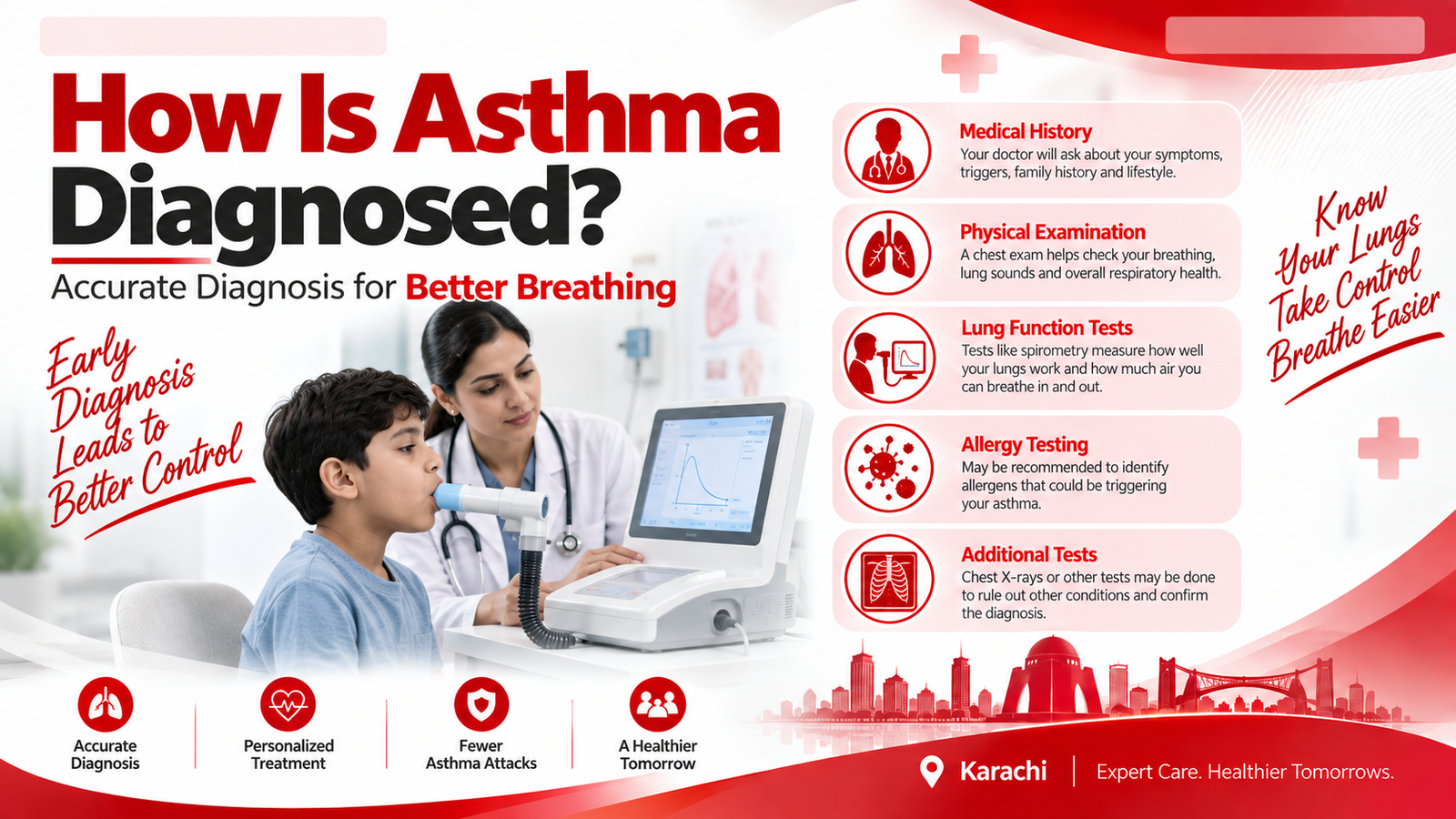
A thorough medical history, physical examination, and lung function testing are usually sufficient to make an asthma diagnosis. Physicians seek to identify a set of breathing symptoms and evidence that airflow to and from the lungs fluctuates.
Which Tests can be taken for Asthma?
One of the primary tests to assess lung function is called a spirometry test. It assesses a person’s ability to breathe out and how fast they can breathe out.
A physician might compare breathing rates before and after using a bronchodilator to see if there are any changes in airflow.
Depending on the patient’s symptoms and initial results, other tests might also be used.
This can include peak expiratory flow monitoring, bronchial challenge testing, allergy testing or fractional exhaled nitric oxide testing (in appropriate settings).
Not all these tests are applicable to all patients. The type of assessment needed will depend on the symptoms, medical history, previous treatment, and the clinical situation of the patient, as well as their age.
What Does an Asthma Specialist Check During an Appointment?
A consultation with the asthma team isn’t just about listening to the lungs.
A doctor might want to know when symptoms occur, how often they occur, what makes them worse, and how they are affecting sleep, exercise, work, or other activities.
The doctor may also want to know if the asthma has ever happened before, if there are any allergies, if you have ever smoked or been exposed to secondhand smoke, if you have ever had a respiratory infection, if you have been exposed to any work hazards, if there is a family history of asthma, or if you are taking any medications.
If you are currently taking an inhaler, you may want to bring your inhaler to the appointment. This helps the health care professional to read the medicine and if needed, to see if the inhaler is being used properly.
Asthma Treatment: What Does It Usually Involve?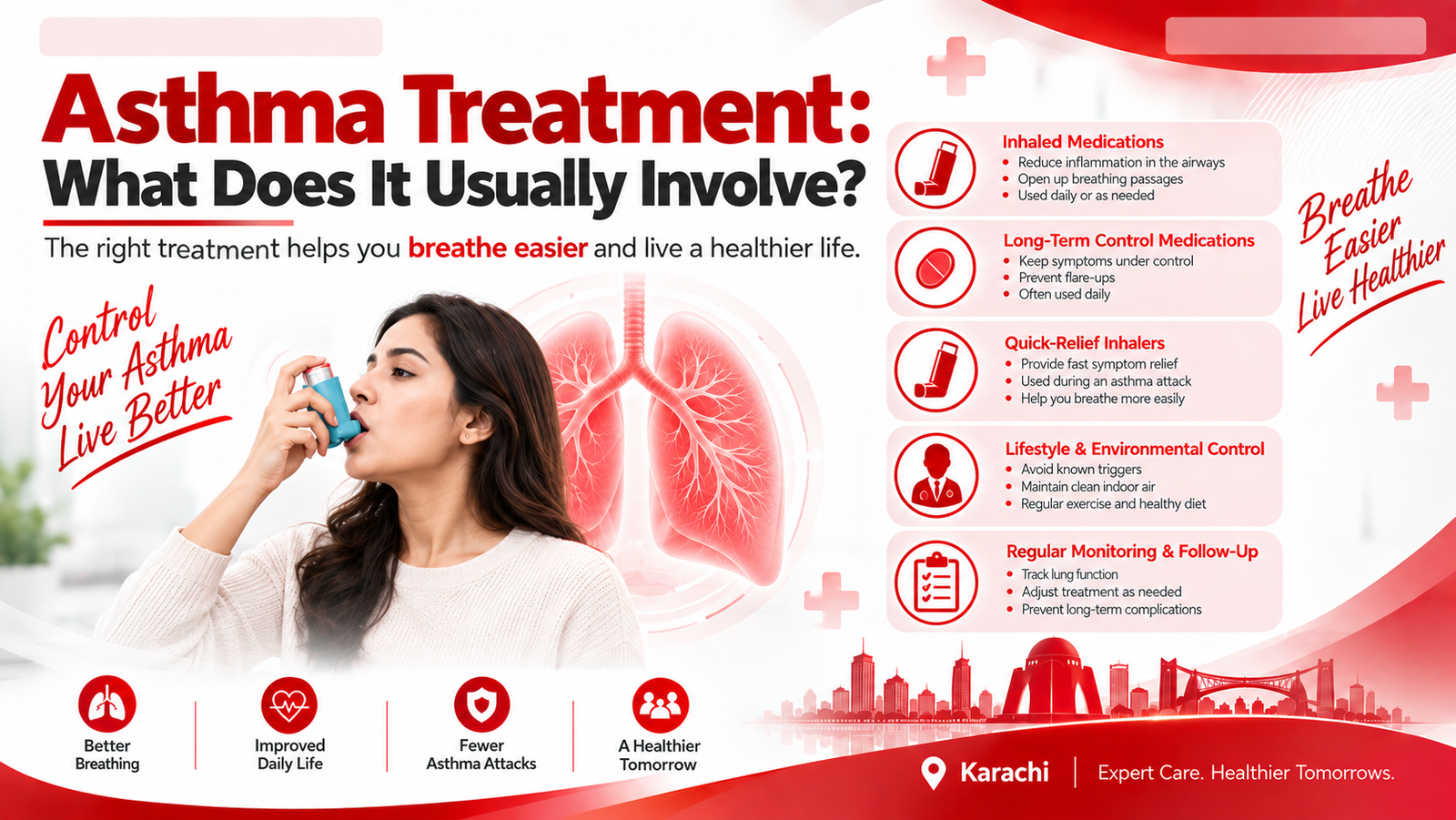
Asthma treatment is tailored to the individual. Treatment aims are usually to manage symptoms, limit the risk of attacks, keep people active, and prevent treatment side effects.
Medicines used for managing modern asthma include medicines to reduce inflammation in the airways and medicines to relieve symptoms, depending on the patient’s age, asthma pattern, severity, and treatment needs.
Controller and Reliever Approaches
Certain asthma medications can be used to prevent airway inflammation and help to decrease the chance of symptoms and attacks from happening again. Other medications offer more rapid relief from symptoms of breathing problems.
Treatment and the most suitable inhaler type and frequency of use should be prescribed by a health care professional. Patients must not commence, discontinue, or modify their prescription asthma medication without a doctor’s guidance.
Also, inhaler technique is important. If the device is not used properly, a medicine may not work as it should. If there is a need to show them how, patients should be encouraged to ask their health care professional to do so.
Asthma Management Is More Than Medication
Well-controlled asthma can sometimes include watching for symptoms, recognising triggers, taking asthma medication properly and regularly reviewing asthma treatment.
An asthma action plan can guide patients in knowing what to do when their symptoms are under control, when symptoms are getting worse, and when they need emergency medical care.
Other factors that can impact asthma control should also be discussed with patients regarding exercise, allergies, smoking exposure, occupational triggers, and other factors.
When symptoms occur repeatedly and are interfering with sleep, physical activity, school, work, or daily functioning, it may be an indicator that the approach being used to manage the symptoms needs to be reviewed.
Asthma Specialist vs General Doctor: Which Should You Choose?
A general physician or primary care doctor may be able to evaluate and manage many asthma cases.
A respiratory or asthma-focused specialist can be particularly useful when the diagnosis is uncertain, symptoms are difficult to control, or the condition appears more complicated.
Situation | General Medical Care | Specialist Evaluation |
Occasional mild respiratory symptoms | May be appropriate for initial assessment | May be considered if symptoms continue |
Suspected asthma | Can begin evaluation | Useful when diagnosis remains uncertain |
Repeated asthma attacks | Medical review is important | Specialist assessment may be appropriate |
Symptoms despite treatment | Treatment review is needed | Specialist evaluation can help identify contributing factors |
Possible severe or difficult to treat asthma | May require referral | Specialist care may be needed |
Possible alternative respiratory condition | Initial assessment can help | Specialist testing may be appropriate |
The best choice depends on the individual situation. A patient should not assume that every episode of coughing or breathlessness is asthma.
How to Choose an Asthma Specialist in Karachi?
Don’t rely on a search result or advert for a clinic to find doctors in Karachi. The best is one that is consistent with your medical requirements and has a proven evaluation and monitoring scheme.
Consider these factors:
- Appropriate medical care related to the respiratory/asthma condition
- A clear strategy for diagnosis (as opposed to treating symptoms without evaluation)
- Access to appropriate lung function testing or referral as appropriate
- A good explanation of treatment options and inhaler usage
- Appropriate ongoing symptom and treatment assessment and management
- Facilities that are easy to get to and have available appointments.
- A clear plan for escalation of symptoms or emergencies.
- Alternatively, you can write a list of questions that will be helpful for your appointment.
Educate about the potential causes of symptoms, the need for lung function testing, monitoring symptoms, what to look for as triggers, and when to come back for follow-up.
What Should You Take to an Asthma Appointment?
Going to the appointment prepared will enable the consultation to be more helpful. Bring medical records, test results, prescriptions, and/or information about past emergency visits, if available.
Record the times when your symptoms occur and whether or not they are related to exercise, sleep, dust/smoke, changes in weather, infections, workplace contact, or other activities.
For medicines you use for breathing, have the medicines or pictures of the labels with you. When talking about the treatment you’re currently receiving, don’t just use your head.
When Is Asthma an Emergency?
When breathing becomes difficult, it’s not something that can be addressed from an article online or a routine appointment.
If breathing is becoming very difficult, symptoms are rapidly getting worse, you find it difficult to speak as a result of breathlessness, if the usual emergency treatment is not helping to relieve symptoms, or if you feel that the condition is going to become life-threatening, seek urgent medical attention.
If a patient has developed an asthma action plan, they should have instructions in case of an asthma attack and should follow these.
Can Asthma Be Prevented?
While prevention of asthma is not always possible, many patients can improve their symptoms by a combination of recognizing and managing their asthma triggers and adhering to the proper treatment plan.
Some people may benefit from avoiding cigarette smoke and limiting their exposure to known allergy and irritant triggers.
Long-term asthma management might include treatment for respiratory infections and adherence to treatment guidelines.
Avoidance should be realistic, not extreme. Before significantly changing lifestyle, a patient with suspected triggers should consult a health care professional for possible advice.
What About Asthma Care in Karachi?
Medications for asthma can be of various types, and the type of medication that is right for the patient will depend on the symptoms and what the individual requires.
Individuals who experience attacks occasionally may start with a general medical evaluation, while those who experience attacks repeatedly, do not know what is causing them, or cannot control them may benefit from specialist evaluation.
Symptoms may also be relevant to local environmental factors like dust, smoke, and air pollution, which may be relevant when talking to a doctor.
Maintaining a symptom diary can help to spot patterns, which might not be otherwise apparent.
Dr Sarwat Asif is also likely to be found by patients seeking advice on respiratory care in Karachi. Patients should check the current clinic information with the doctor, the particular area of the doctor’s practice, their appointment availability, and whether or not the service is appropriate for their particular respiratory concern before arranging an appointment.
Questions to Ask an Asthma Doctor
Patients should have questions prepared for a consultation to make it more communicative. Useful questions include:
- Are my symptoms due to asthma or any other condition?
- Should I have a lung function test (spirometry) or any other test?
- What may be causing my symptoms?
- What is the correct way to use your inhaler?
- If symptoms suddenly get worse, what do I do?
- When is the best time to come back for follow up?
- Should I have an asthma action plan?
- Is there anything else that might be causing my breathing to be affected by the allergy or reflux?
These questions are not intended to supersede the medical assessment, but they can enable patients to be more involved in their own care.