

What Does an Allergy and Asthma Specialist Do?
An allergy and asthma specialist checks problems linked to allergies and breathing. The doctor may ask about your symptoms, medical history, medicines, and daily routine.
During the visit, the doctor may also perform a physical exam. Breathing tests may be needed if asthma is suspected. Allergy tests may also be suggested when a certain allergen may be causing symptoms.
Allergies and asthma can occur together. For example, dust mites, pollen, mold, and pet dander may cause allergy symptoms. These triggers can also cause asthma symptoms in some people.
However, not everyone with asthma has allergies. This is why finding the cause of the symptoms is important.
What Symptoms May Need Medical Attention?
Allergy symptoms can affect the nose, eyes, skin, and breathing system. Asthma mainly affects the airways. Its symptoms may come and go.
Common asthma symptoms include:
- Wheezing or a whistling sound while breathing
- Shortness of breath
- Chest tightness
- Repeated coughing
- Coughing at night
- Breathing problems during exercise
- Symptoms that get worse after exposure to smoke, dust, cold air, or allergens
Allergy symptoms may include sneezing, a blocked or runny nose, itchy eyes, and skin reactions.
Some people have mild symptoms from time to time. Others may have symptoms that disturb sleep or make normal activities harder.
If symptoms keep coming back, it is a good idea to discuss them with a doctor.
How Are Allergies and Asthma Connected?
Allergies can trigger asthma in people who have allergic asthma. When the body reacts to an allergen, it can also affect the airways.
This may lead to coughing, wheezing, chest tightness, or trouble breathing.
Common allergens include dust mites, pollen, mold, and pet dander. But allergies are not the only asthma triggers.
Other triggers can include smoke, cold air, exercise, infections, air pollution, and some workplace irritants.
Because triggers are different for each person, it is useful to notice when symptoms start. This can help the doctor understand what may be causing the problem.
What Can Trigger Asthma Symptoms?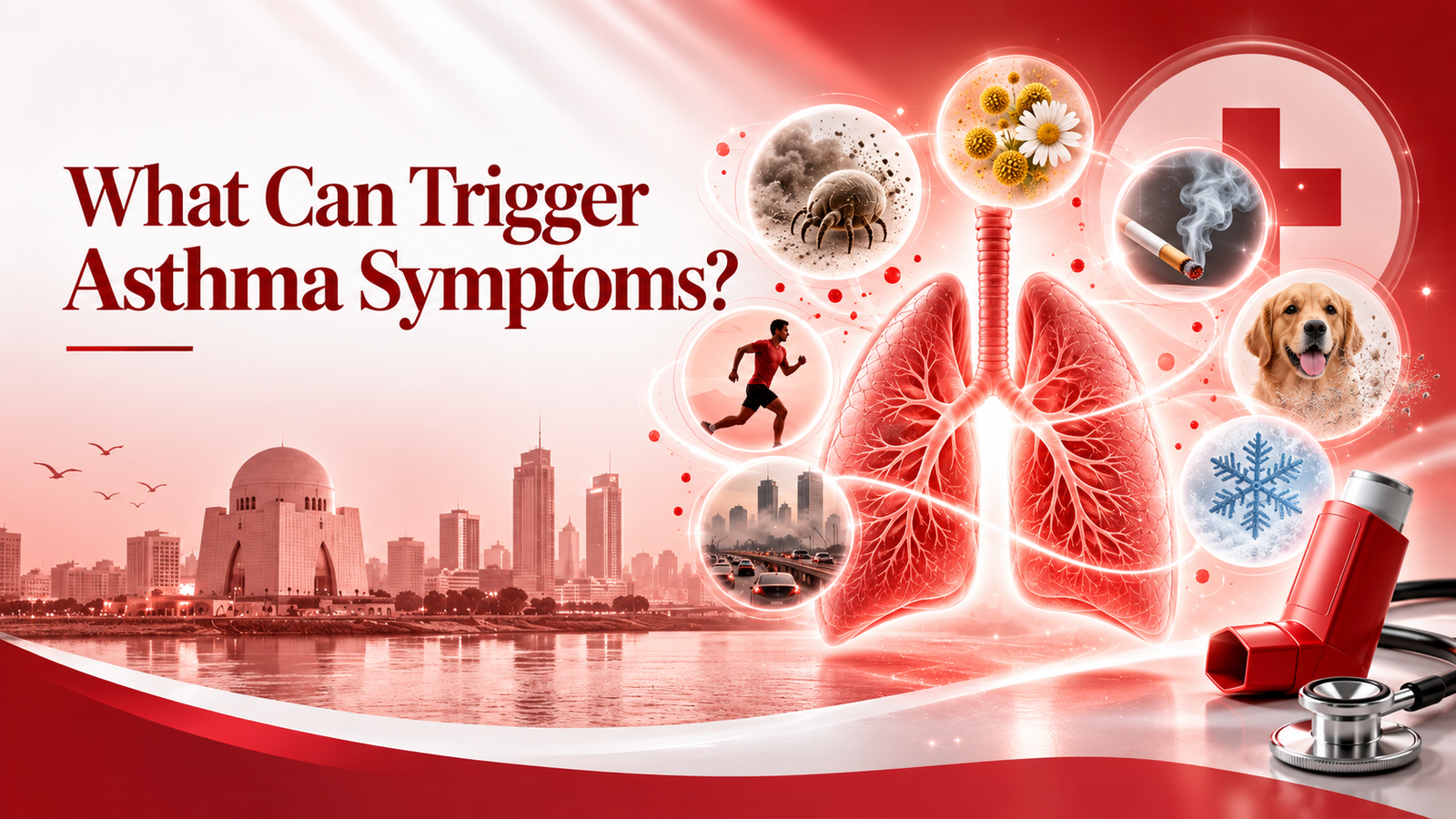
Asthma triggers can be different from one person to another. Some people react to dust, while others may have problems after exercise or exposure to smoke.
Dust can be a common problem. Symptoms may appear while cleaning a room, changing bedding, or working in a dusty area.
Other possible triggers include mold, pollen, animal dander, cold air, infections, smoke, and air pollution.
People living in Karachi may also notice changes in symptoms because of dust, traffic pollution, weather, or workplace conditions. Keeping a simple record of symptoms can help identify possible triggers.
How Is Asthma Diagnosed?
Asthma is usually diagnosed by looking at the patient’s symptoms and medical history. The doctor may ask when the symptoms start and what makes them better or worse.
The doctor may also ask if symptoms happen during exercise or at night.
A physical examination may be done. Breathing tests can also help check how well the lungs are working.
One common test is spirometry. A doctor may also suggest peak flow monitoring or other tests based on the patient’s symptoms.
There is no single test that explains every asthma case. Symptoms can change over time, so the doctor may look at the full pattern before making a diagnosis.
What Allergy Tests Are Available?
Allergy testing can help find sensitivity to certain allergens. The doctor may suggest a skin test or a blood test.
The right test depends on the patient’s symptoms and medical history.
It is important to remember that a positive allergy test does not always mean that the allergen is causing every symptom. The test result needs to be looked at along with the patient’s symptoms.
Before your appointment, write down when your symptoms happen. Also note what you were doing or what you were exposed to before the symptoms started. This information can help the doctor decide if allergy testing is needed.
How Are Allergies and Asthma Treated?
Treatment depends on the person’s symptoms, triggers, age, medical history, and overall condition.
Asthma treatment may include medicines that help control symptoms. Some patients may also need quick relief medicine for sudden symptoms. Doctors may also create an asthma action plan.
For allergies, treatment may include avoiding known triggers and using suitable allergy medicines.
Some patients with allergy related asthma may also be considered for allergen immunotherapy. People with severe asthma may need other types of treatment.
Do not start, stop, or change asthma medicine without speaking with your doctor first.
Allergy and Asthma Treatment: What Is the Difference?
Allergy Care | Asthma Care |
Focuses on allergy symptoms | Focuses on breathing and airway symptoms |
May include sneezing and itchy eyes | May include wheezing and chest tightness |
May involve allergy testing | May involve breathing tests |
May require avoiding allergens | May require avoiding asthma triggers |
Treatment depends on the allergy | Treatment depends on asthma symptoms and severity |
Allergies and asthma can occur together. Because of this, some patients may need both conditions to be checked during the same medical assessment.
When Should You See a Specialist?
You should consider medical advice if coughing, wheezing, breathing problems, or allergy symptoms keep coming back.
A checkup may also be useful if symptoms start after exposure to dust, mold, pollen, animals, smoke, or other possible triggers.
People who already have asthma may need a treatment review when their symptoms become more frequent. Nighttime symptoms or a greater need for quick relief medicine can also be a reason to speak with a doctor.
A medical review is especially useful when the cause of repeated breathing problems is not clear or current treatment is not controlling the symptoms well.
What Should You Take to Your Appointment?
Preparing before your appointment can make the visit easier. Take your previous medical reports and a list of your current medicines.
You can also write down when your symptoms started and what seems to make them worse.
Useful information includes:
- When the symptoms started and how often they happen
- Whether symptoms get worse at night
- Possible triggers such as dust, smoke, or pollen
- Previous allergy or breathing test results
- Current and previous medicines
- Previous asthma attacks or emergency visits
- Questions about inhalers or symptom control
A simple symptom diary can also be helpful. For example, if you start coughing after cleaning a room, write it down. The same can be done for symptoms after dust, smoke, exercise, or other possible triggers.
How to Choose an Allergy and Asthma Doctor in Karachi
When choosing a doctor, focus on your medical needs. Check the doctor’s area of practice and the type of care you need.
You can also check the clinic location, appointment times, and available tests.
If you have asthma, ask whether the doctor can review your symptoms and treatment plan. If you think allergies may be causing your symptoms, ask if allergy testing or allergy evaluation is available.
Taking your old reports and medicine details to the appointment can also help the doctor review your condition.
Dr. Sarwat Asif and Asthma Care in Karachi
Dr. Sarwat Asif’s official website identifies her as a Consultant Physician in Karachi and lists asthma among the conditions she manages.
Her website states that asthma care may include symptom evaluation, lung function testing when needed, and treatment based on the patient’s condition. Treatment may include inhalers or other medicines when medically suitable.
Her listed clinic is at Taj Medical Complex, Saddar, Karachi. The website lists consultation hours from Monday to Friday, 6:00 PM to 8:00 PM.
Patients should confirm the current clinic schedule and appointment details before visiting.
If you need both allergy and asthma care, ask the clinic whether allergy testing or allergy focused assessment is available for your symptoms.
How Can You Reduce Asthma Triggers?
Finding your personal triggers can help you manage asthma. Triggers are not the same for everyone.
If dust makes your symptoms worse, try to reduce dust around you. If smoke causes problems, avoid smoking areas and secondhand smoke.
Other useful steps may include keeping indoor areas clean, dealing with visible mold, and following the treatment plan given by your doctor.
Do not stop your prescribed asthma medicine just because you feel better. Your doctor can tell you when treatment should be changed or reviewed.
When Is Asthma an Emergency?
A serious asthma attack can become dangerous. Severe breathing difficulty, fast worsening symptoms, or severe wheezing may need urgent medical care.
If your prescribed quick relief inhaler is not helping, do not wait for a normal appointment.
Seek emergency care if you have severe trouble breathing or cannot control your symptoms according to your asthma action plan.