

What Is Cirrhosis?
Cirrhosis is the scarring of the liver, which can disrupt liver function and blood flow through the liver, and is permanent.
It typically occurs following chronic liver damage, not acute. How the condition is managed depends on the underlying cause and the degree of scarring.
A few individuals with early cirrhosis may have no noticeable signs or symptoms. With progressive impairment of liver function, symptoms and complications may occur.
One of the reasons why continuous medical evaluation is important in someone with an existing chronic liver disease is that their condition can deteriorate.
Continuous medical evaluation is important because the condition can worsen when someone has an existing chronic liver disorder.
There is no one single cause of cirrhosis. It may be possible to slow further damage to the liver and decrease the chance of complications if the condition causing the liver damage can be treated.
What Causes Cirrhosis?
Cirrhosis can happen because of several diseases or chronic health issues. In some cases, liver damage can be due to a single cause or more than one cause.
This is often due to chronic hepatitis B, chronic hepatitis C, fatty liver disease, or alcohol associated liver disease.
Other causes include autoimmune hepatitis, liver diseases that affect the bile ducts, inherited diseases like Wilson disease and hemochromatosis, and some medications.
Hepatitis B and C are a major concern regarding liver health in Karachi and throughout Pakistan – so it is significant to be tested and monitored appropriately, especially if someone has risk factors or abnormal liver results.
What Are the Symptoms of Cirrhosis?
In the early stages of cirrhosis, there might be no obvious symptoms. Individual symptoms may be present when they do occur, depending on the severity of liver damage and the presence of complications.
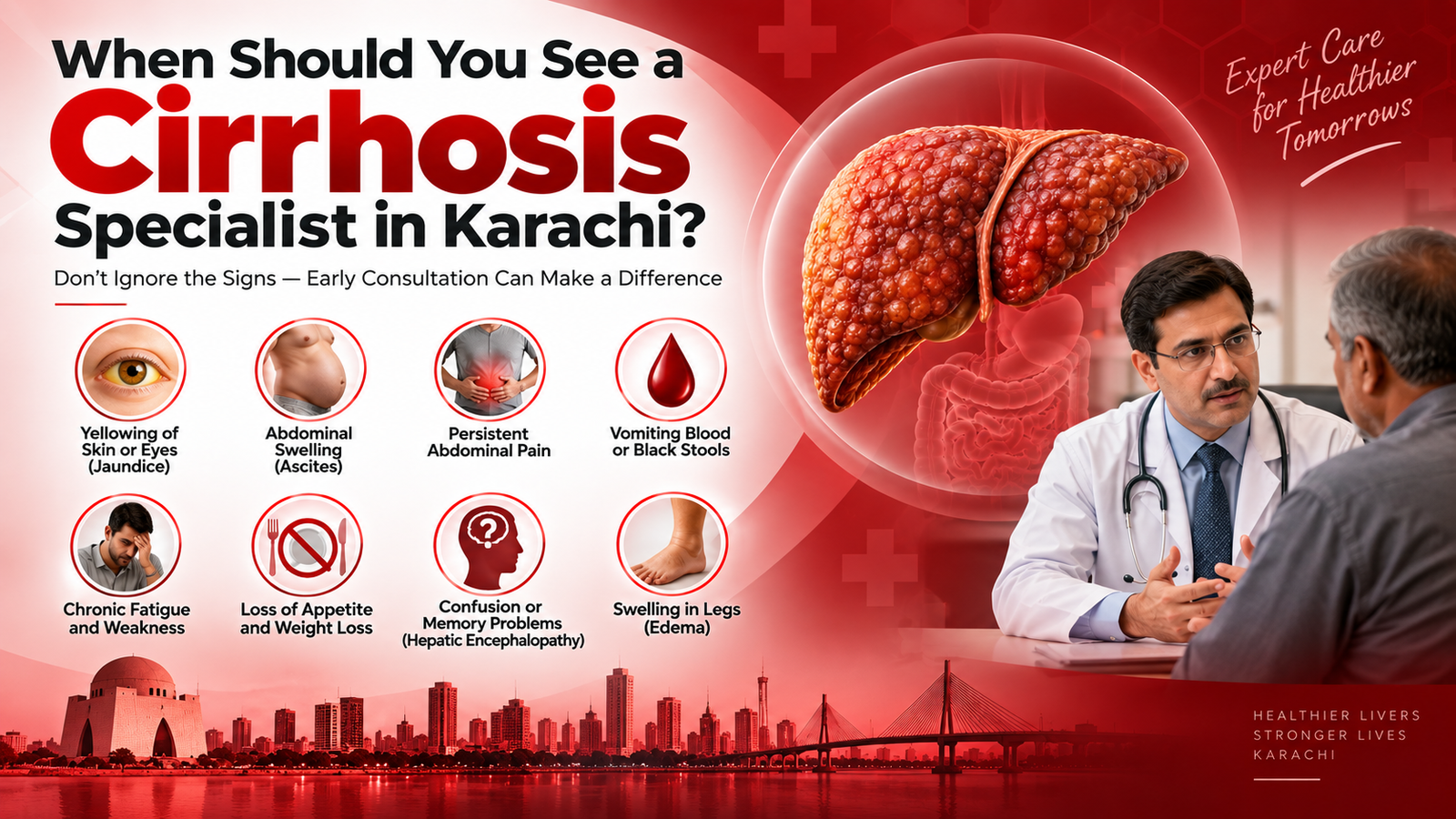
Symptoms can be less specific and may include tiredness, a decreased appetite, loss of weight without a reason, nausea, itching, muscle weakness, muscle cramps, or upper right side abdominal discomfort.
In more advanced liver disease, a person might have jaundice, an enlarged abdomen or legs, bruising or bleeding easily, sleep problems, confusion and/or memory loss.
Common symptoms or signs can be:
- Fatigue/weakness that doesn’t go away
- Loss of appetite or loss of weight for no known cause
- Nausea or vomiting
- Itchy skin
- Jaundice (yellowing of the skin or eyes)
- Abdominal, leg, ankle, or foot swelling:
- Bruises or bleeding easily
- Dark urine
- Trouble or confusion with thinking.
- Loss or weakness in muscle tissue (muscle atrophy)
These symptoms do not occur in all people with cirrhosis.
Certain symptoms may also be present with other medical conditions, and should not be used to make a diagnosis of cirrhosis.
 When Should You See a Cirrhosis Specialist in Karachi?
Medical evaluation may be required for individuals who have been diagnosed with hepatitis, fatty liver disease, abnormal liver tests, unexplained jaundice, persistent abdominal swelling, or any other condition which can impact the liver.
If a person with liver disease has new symptoms, or if earlier tests indicate liver damage is getting worse, a specialist evaluation may also be needed.
Patients should not delay seeking a qualified health care professional when chronic liver issues are present or suspected if symptoms are not that dire.
Early evaluation may help to identify the cause and appropriate monitoring and/or treatment.
How Is Cirrhosis Diagnosed?
No single symptom or blood test can make the diagnosis of cirrhosis.
Generally, doctors take into account the patient’s medical history, physical examination, laboratory test results, and imaging tests.
Liver enzyme and bilirubin levels, albumin, blood counts, clotting tests, and other measurements are part of the blood tests.
Other tests, such as those for hepatitis B or C infection or liver autoimmune or inherited disorders, may also be warranted as needed.
Imaging can give information about the structure of the liver, and about advanced liver disease. A doctor may order an ultrasound test, computed tomography scan, magnetic resonance imaging or elastography to measure the stiffness of the liver in some cases.
Not all patients will need a liver biopsy. It can be used if there is not enough information from other investigations, or if liver damage is only just becoming apparent but needs further investigation for cause and degree.
Which tests may a doctor ask for?
The specific tests vary based on the patient’s symptoms, history, and previous test results.
A medical examination might involve:
- Liver function and blood tests are required.
- Hepatitis B and C tests
- Abdominal ultrasound
- Assessment of liver stiffness (elastography or other test)
- CT/MRI, if clinically indicated.
- Blood tests to check for liver disease that may be autoimmune or inherited
- Further testing to check for complications if suspected.
Liver tests are not just for confirmation of liver scarring.
It is also important for doctors to know what is causing liver damage and if there are any complications.
What Is the Difference Between Compensated and Decompensated Cirrhosis?
Cirrhosis is often discussed in terms of compensated and decompensated disease.
Feature | Compensated Cirrhosis | Decompensated Cirrhosis |
Liver function | May remain relatively preserved | More significant impairment may occur |
Symptoms | May be mild or absent | Complications are more likely |
Ascites | May be absent | Can develop |
Hepatic encephalopathy | Usually absent | Can occur |
Variceal bleeding | Risk may exist | May occur as a serious complication |
Medical follow-up | Regular monitoring is important | Closer specialist management is often needed |
The distinction is clinically important because complications such as ascites, hepatic encephalopathy, or gastrointestinal bleeding can indicate decompensation and may require more intensive medical care.
How Is Cirrhosis Treated?
One treatment does not fit all those who have cirrhosis.
The treatment of liver damage depends on the cause of damage, the stage of the disease, symptoms, complications, and the overall health of the patient.
Treatment usually aims to: treat the underlying cause, prevent further liver damage, control complications, support nutrition and overall health, and monitor for complications of advanced liver disease.
Antiviral therapy is, for instance, indicated in some cases of viral hepatitis infections. Some patients with fatty liver disease may be cared for for weight management. Other causes involve other medications or special treatment.
Patients should not begin or end any prescription medications, pain medications, supplements, or herbal remedies without consulting with their healthcare professional. Certain drugs may be dangerous for people who have chronic liver disease.
How Are Cirrhosis Complications Managed?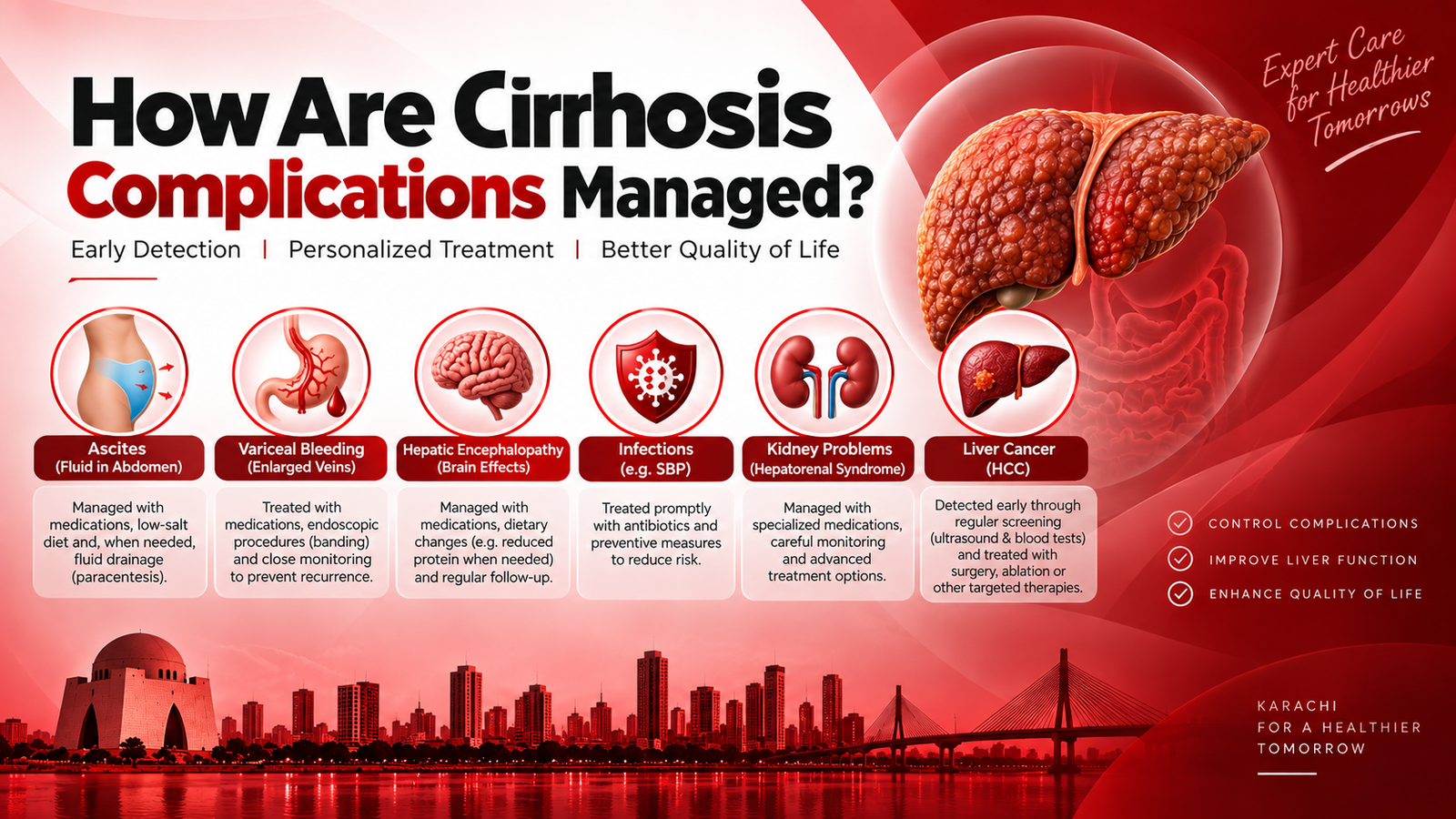
In the advanced stages of cirrhosis, it can cause damage to multiple organs. Management therefore frequently involves monitoring for complications on a regular basis.
Ascites and swelling of legs.
Ascites is a collection of fluid in the abdomen. Can lead to enlargement of the abdomen, discomfort, and difficulty breathing in severe cases. There may also be swelling in the legs and ankles.
Depending on the severity and cause, doctors might suggest a change in diet, medication, or procedures. Medical evaluation is needed, not self-treatment, for significant or uncontrollable ascites.
Varices and Internal or Bowel Bleeding.
Enlarged veins (varices) in the esophagus or stomach are a possible consequence of portal hypertension. If these veins rupture, it can become life-threatening.
If a person with cirrhosis vomits blood or passes black, tarry stools, their medical condition is a medical emergency.
Hepatic Encephalopathy
Hepatic encephalopathy is caused by liver failure, causing changes in brain function. Confusion, trouble concentrating, odd sleeping patterns, memory loss, or behavior changes may be symptoms.
If there is new confusion in a person with cirrhosis, it is important to evaluate it promptly to see if a treatment is needed for any of the possible causes or complications of the confusion.
Liver Cancer Monitoring
Hepatocellular carcinoma is the major type of liver cancer that is more likely to develop in cirrhosis. For this reason, some people with cirrhosis might require periodic monitoring as per their medical plan.
Your doctor will decide what tests and imaging you need, and how often you need them.
What Can Patients Do to Protect Liver Health?
Medical treatment is just one component in long-term cirrhosis management. There are many day-to-day habits and medicines that might impact a patient’s liver that they should be aware of.
In general, cirrhosis patients are advised against drinking alcohol. In addition, the patient should always inform his/her health care professional about any prescription medications, over-the-counter pain medications, sleep products, vitamins, herbal remedies, or supplements prior to their use.
Nutrition also matters. Nutritional needs of cirrhosis patients may vary based on the severity of the disease, the amount and type of weight loss, appetite, muscle mass, and complications. An individual’s advice can come from a doctor or registered dietitian.
Depending on the patient’s past medical history, vaccination and infection prevention may also be applicable.
How Can You Choose a Cirrhosis Specialist in Karachi?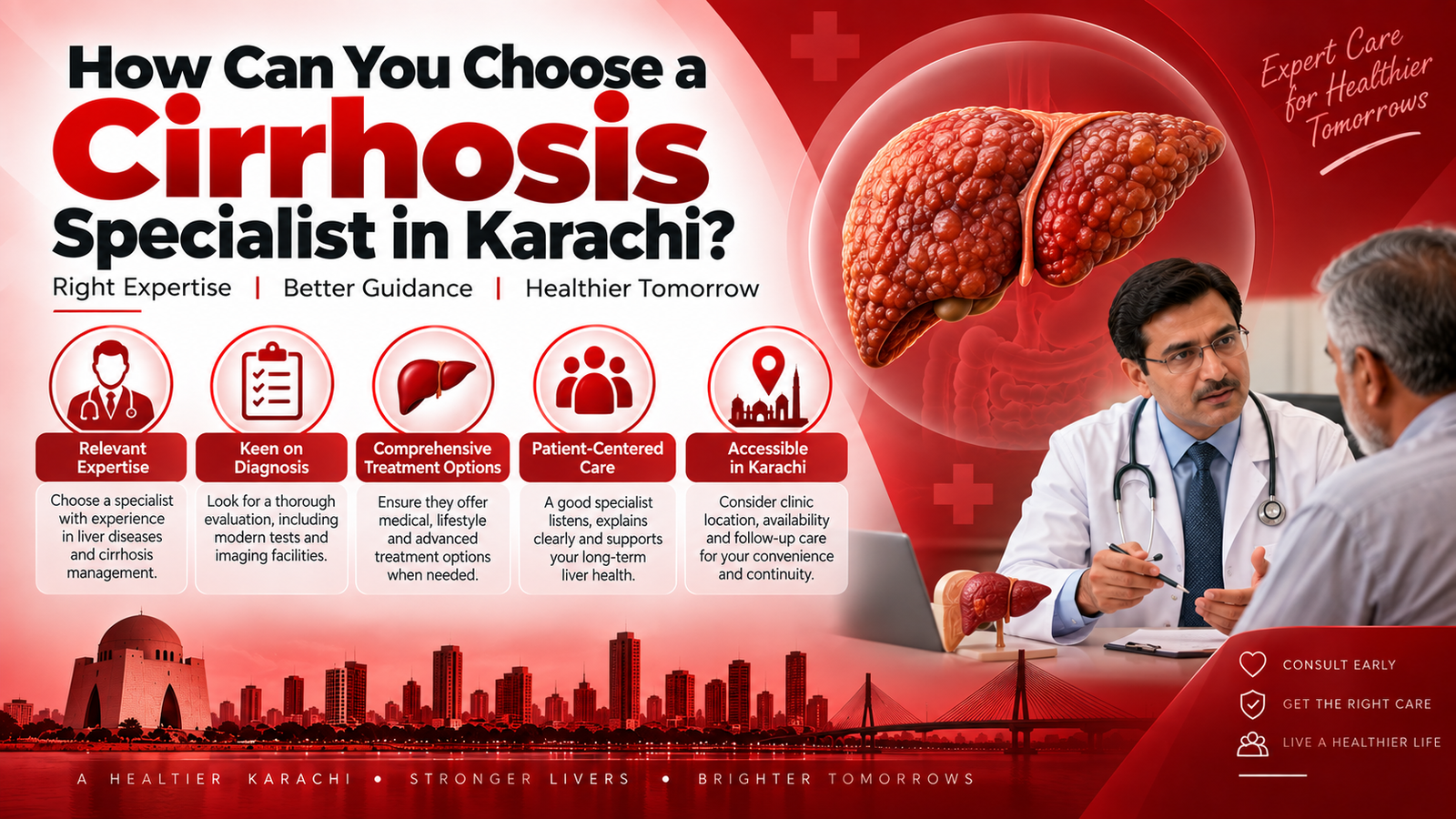
There is more to selecting a doctor for chronic liver disease than looking for a title. The patient should ask if the physician reviews liver disease, interprets test results, discusses the underlying disease, and outlines a follow-up plan.
Bringing prior laboratory reports, ultrasound or imaging findings, medication lists, and records of hepatitis testing to the appointment is also helpful. This will help the doctor get a better history of the patient.
The points to take into account while choosing liver care in Karachi are:
- The physician’s expertise in liver and gastrointestinal diseases.
- If medical consultation is to be performed, whether the underlying cause is evaluated
- Ability to access suitable laboratory and imaging investigations.
- The approach of the doctor towards long term monitoring.
- A clear communication of treatment and follow-up.
- Referral to further specialists if needed when the disease is advanced.
The patient should also be able to ask “why” this test is being performed, what the results will provide, and what symptoms are treated promptly.
Dr Sarwat Asif and Liver Care in Karachi
According to Dr Sarwat Asif’s official website, she is a Consultant Physician in Karachi and treats patients for liver diseases like hepatitis, fatty liver, and liver function disorders, and gastrointestinal disorders. She is listed to practice at Taj Medical Complex, and her office hours are Monday-Friday from 6:00 pm to 8:00 pm.
A first visit to a doctor with experience in the treatment of liver disease will help identify if the patient needs more liver tests, hepatology specialist advice, or management of a liver disease diagnosis.
Patients should come with their previous reports and a list of all medicines and supplements they are taking to help the doctor understand the situation better.
When Is Cirrhosis an Emergency?
Complications of cirrhosis may need urgent medical attention. If a person with known or suspected advanced liver disease has serious warning signs, do not delay for a routine appointment.
If you have any of these symptoms, go to the emergency room:
- Vomiting blood
- Black or bloody stools
- Rapid or marked confusion
- Significant changes in consciousness
- Very bad abdominal pain, especially when there is fever or increasing swelling
- Marked difficulty breathing from abdominal fluid or swelling
For those who have cirrhosis, blood vomiting and black stools or sudden confusion may signify serious complications and demand immediate evaluation.