

What Is Food Poisoning?
Food poisoning is an illness caused by eating or drinking something contaminated with harmful microorganisms, toxins, or chemicals.
Viruses, bacteria, and parasites cause many cases, while certain harmful chemicals can also cause foodborne illness.
Contamination can occur at different points, including food production, transportation, storage, preparation, or serving.
Poor hand hygiene, unsafe water, undercooked foods, improper refrigeration, and cross-contamination can all increase the risk.
Food poisoning is usually an acute illness, meaning it develops suddenly and often resolves within a relatively short period.
However, some infections can last longer or cause complications such as dehydration.
What Are the Common Food Poisoning Symptoms?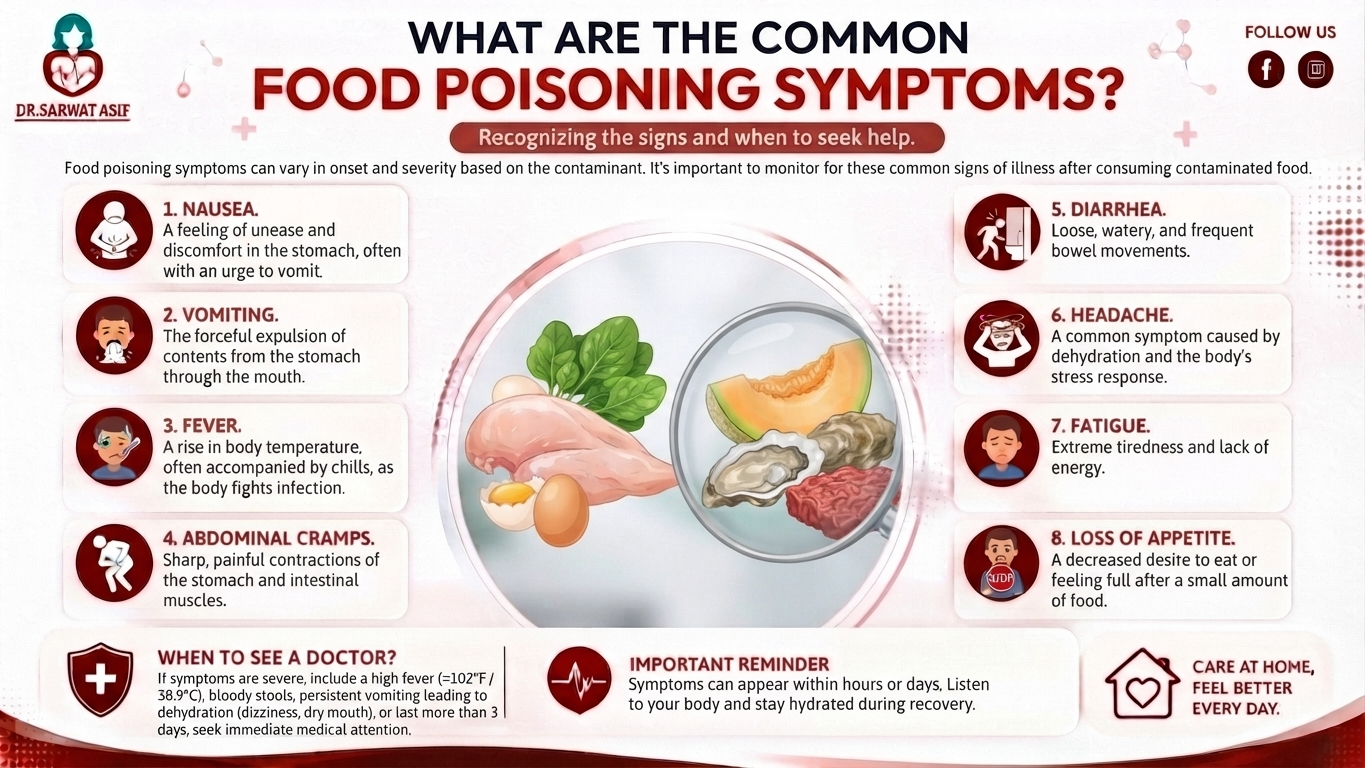
The most common signs include diarrhea, vomiting, abdominal pain, fever, and headache. Some people may also experience nausea, weakness, loss of appetite, and general discomfort.
The severity and duration depend on what caused the illness and the person’s overall health.
Diarrhea
Diarrhea is one of the most frequent symptoms. Stools may become loose or watery and may occur several times during the day.
Blood or pus in the stool is not typical of a simple mild stomach upset and can indicate a more serious infection.
Anyone with bloody diarrhea should seek medical advice rather than simply treating the symptom at home.
Vomiting and Nausea
Food poisoning can cause nausea and repeated vomiting. Vomiting may make it difficult to keep food or fluids down, increasing the risk of dehydration.
If you are vomiting, taking small, frequent sips of fluid may be easier than drinking a large amount at once.
Persistent vomiting that prevents you from drinking enough fluid is a reason to contact a healthcare professional.
Stomach Pain and Cramps
Abdominal discomfort, pain, or cramping can occur with foodborne illness. Mild cramps may accompany diarrhea, while severe or persistent abdominal pain should be evaluated because it can also occur with conditions other than food poisoning.
Fever
Some types of foodborne infection can cause fever. A high fever, particularly when combined with frequent diarrhea, vomiting, severe pain, or weakness, warrants medical evaluation.
Headache and Weakness
Headache may occur along with other food poisoning symptoms. Weakness can also develop when vomiting and diarrhea cause the body to lose fluids and electrolytes.
How Quickly Do Food Poisoning Symptoms Start?
Food poisoning does not always begin immediately after a meal. The timing depends on the specific organism or toxin responsible.
A person may therefore become sick several hours after eating contaminated food, or symptoms may appear later. The food that caused the illness is not necessarily the last meal you ate.
If you become ill, consider what you ate and drank during the previous several days, particularly if other people who ate the same food also developed similar symptoms.
A doctor may ask about recent meals, travel, other sick people, medications, and existing health conditions when evaluating food poisoning.
What Causes Food Poisoning?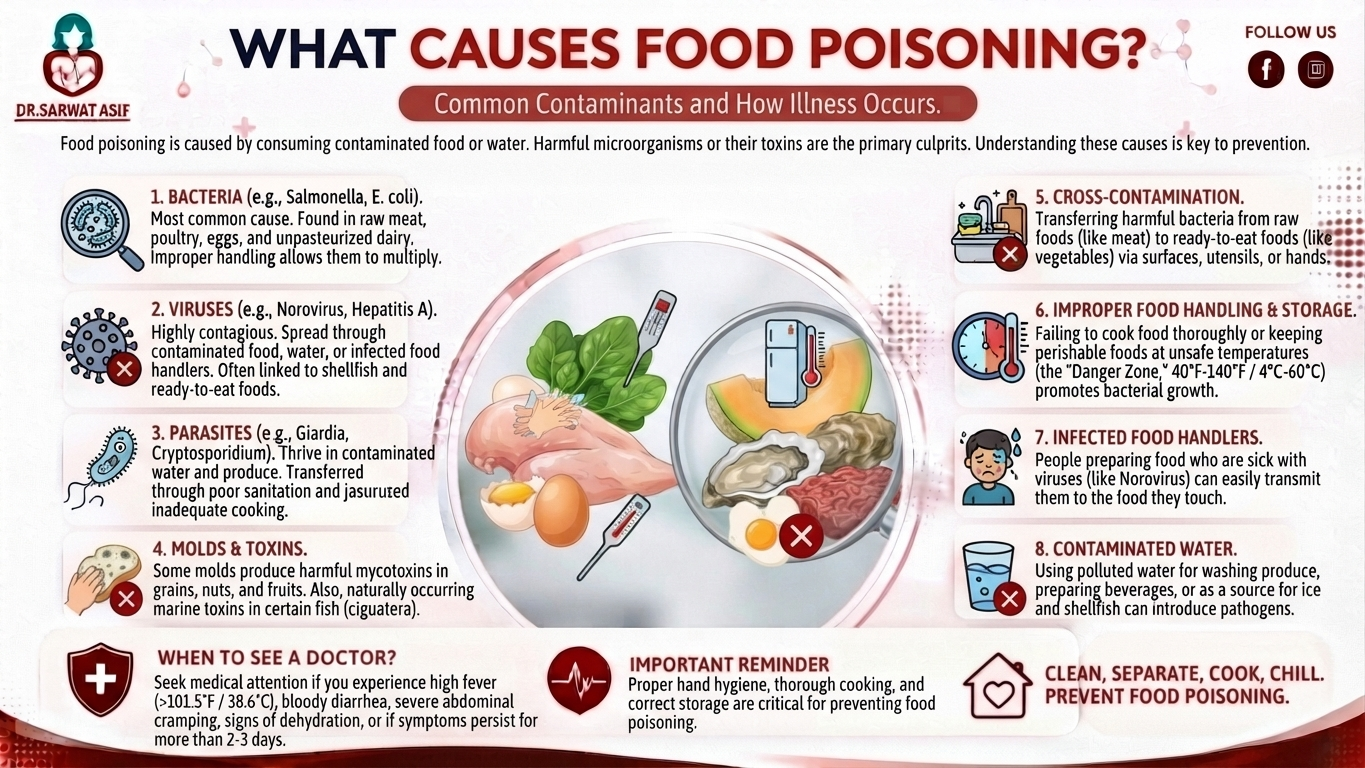
Food poisoning can result from viruses, bacteria, parasites, or harmful chemicals.
Common foodborne organisms include Salmonella, Campylobacter, certain strains of E. coli, norovirus, and other microorganisms.
Contamination can happen when food is:
- Undercooked or not heated properly
- Stored at an unsafe temperature
- Handled by someone with poor hand hygiene
- Exposed to contaminated water
- Cross-contaminated with raw meat, poultry, seafood, or eggs
- Prepared using contaminated utensils or surfaces
Foods associated with foodborne illness can include raw or undercooked meat, poultry, eggs, seafood, unpasteurized dairy products, certain fresh produce, and ready-to-eat foods.
In Karachi and other urban areas, food safety can be particularly relevant when eating outside the home.
Pay attention to food that has been sitting at room temperature, questionable water or ice, improperly stored dairy products, and foods that are not served adequately hot.
Food Poisoning vs Stomach Flu
Food poisoning and viral gastroenteritis can look very similar, so symptoms alone do not always reveal the cause.
Feature | Food Poisoning | Viral Gastroenteritis |
Main cause | Contaminated food or drink, including infections or toxins | Viral infection affecting the digestive tract |
Common symptoms | Diarrhea, vomiting, abdominal pain, fever | Watery diarrhea, vomiting, abdominal cramps, sometimes fever |
How it spreads | Contaminated food or drinks; some organisms can also spread between people | Often spreads from person to person |
Treatment | Usually focuses on fluids and electrolytes; specific treatment depends on cause | Usually focuses on fluids and symptom support |
Medical evaluation | Needed for severe symptoms or dehydration | Needed for severe symptoms or dehydration |
The term “stomach flu” can be misleading because influenza viruses do not cause viral gastroenteritis.
Both conditions can produce similar digestive symptoms, so persistent or severe illness may need professional evaluation.
What Are the Signs of Dehydration?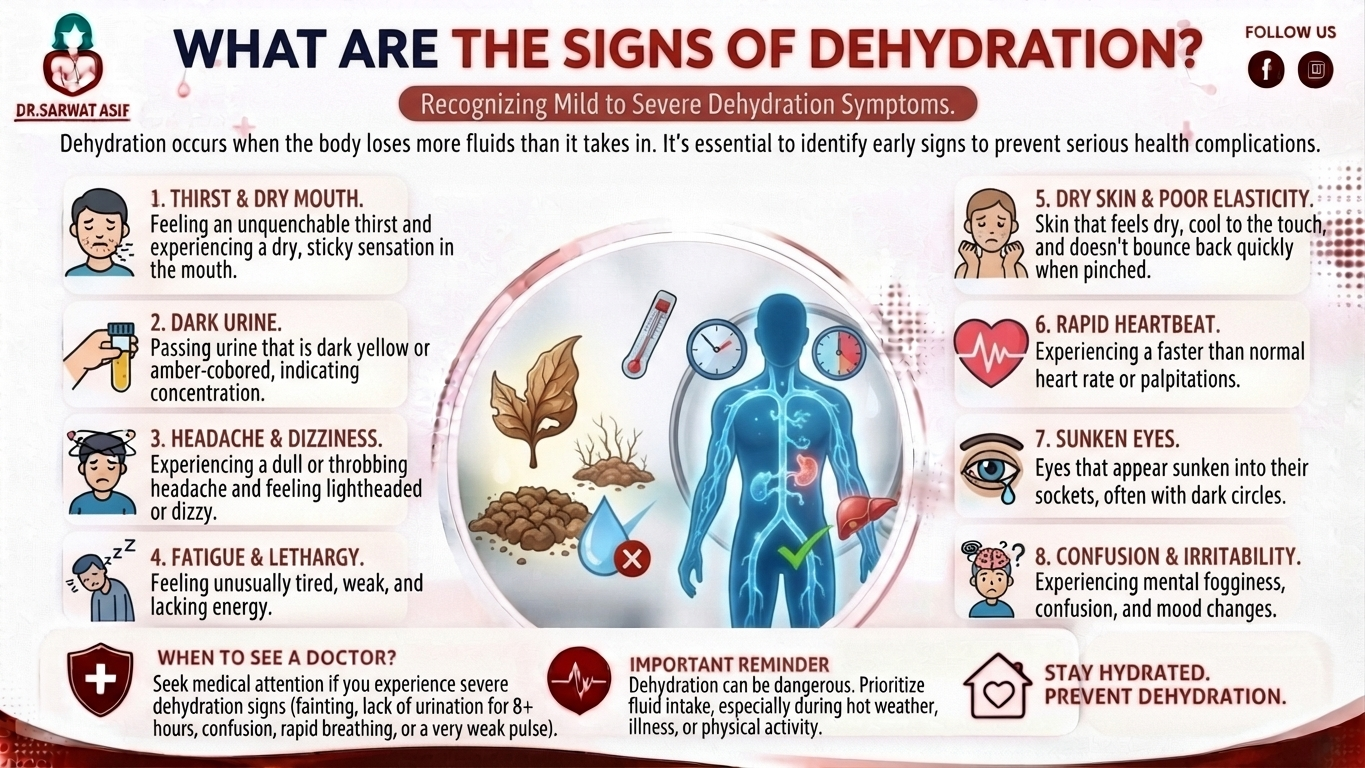
Dehydration is one of the most important complications to watch for because vomiting and diarrhea can cause substantial fluid and electrolyte loss.
In adults, possible warning signs include:
- Very strong thirst or a dry mouth
- Urinating less often than usual
- Dark colored urine
- Dizziness or lightheadedness
- Fainting
- Unusual tiredness
- Sunken eyes or cheeks
Anyone showing significant signs of dehydration should receive medical attention. Severe dehydration may require hospital treatment.
Children, older adults, pregnant women, and people with weakened immune systems can be at greater risk of serious complications and should receive medical advice sooner when significant symptoms develop.
What Should You Do If You Have Food Poisoning?
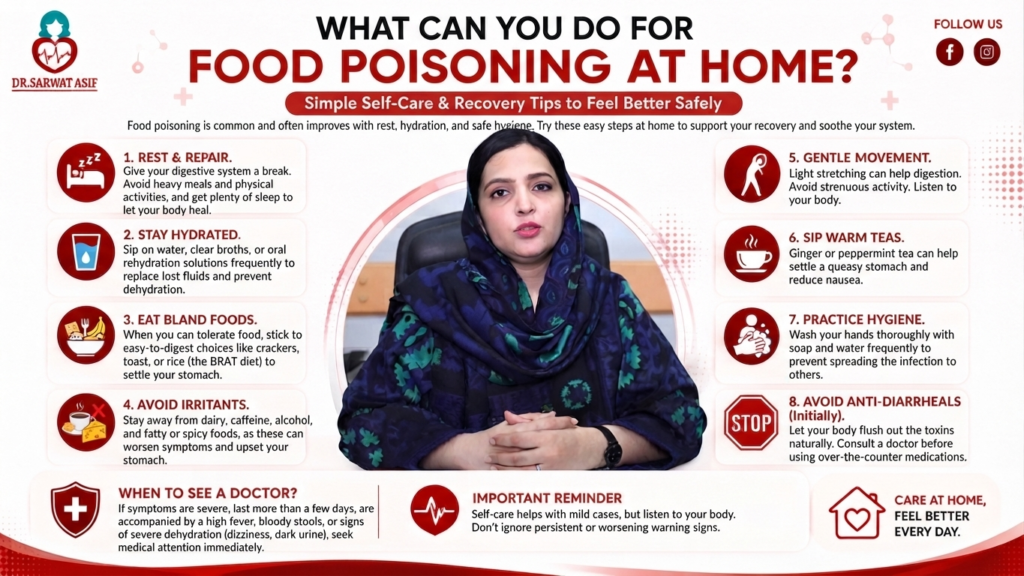
For many mild cases, the main goal is to replace the fluids and electrolytes lost through diarrhea and vomiting.
Drink fluids regularly. If vomiting makes drinking difficult, try taking small sips rather than consuming a large quantity at once.
Oral rehydration solutions can be particularly useful when there is significant fluid loss or a risk of dehydration.
You do not usually need to completely stop eating. Once your appetite returns, you can generally begin eating again according to what you tolerate. Restrictive diets or prolonged fasting are not generally recommended simply because you have diarrhea.
Some people find that caffeine, very fatty foods, large amounts of simple sugars, or dairy products temporarily make digestive symptoms worse.
Your food choices can therefore be adjusted according to how your body responds while recovering.
Should You Take Medicine for Food Poisoning?
Treatment depends on the cause and severity of the illness. Some adults may use over-the-counter medicines for diarrhea in certain circumstances, but these are not appropriate for everyone.
For example, people with bloody diarrhea or fever should not simply use anti-diarrhea medication without medical advice because these symptoms can indicate an infection that needs evaluation.
Antibiotics are not automatically required for food poisoning; a healthcare professional decides whether they are appropriate based on the suspected cause and clinical situation.
When Should You See a Doctor for Food Poisoning?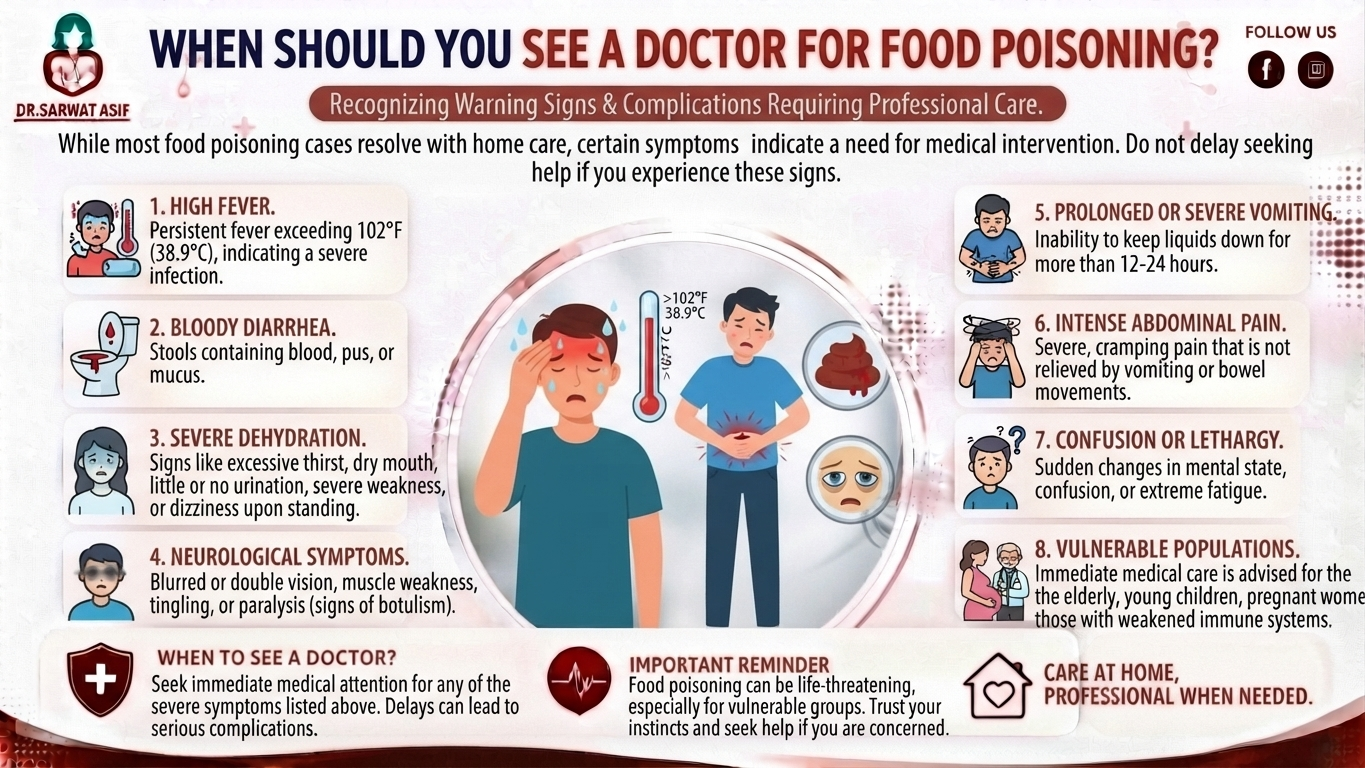
Mild symptoms that are improving may not require medical treatment.
However, professional assessment is important when symptoms are severe, persistent, or associated with warning signs.
Seek prompt medical care if you have:
- Bloody, black, or pus-containing stools
- Severe or persistent abdominal pain
- Frequent vomiting
- High fever
- Signs of significant dehydration
- Six or more loose stools in one day
- Diarrhea lasting more than three days
- Confusion, unusual weakness, or other nervous system symptoms
- Difficulty drinking enough fluid to stay hydrated
These symptoms can indicate severe food poisoning, dehydration, complications, or another medical condition that needs evaluation.
If you are pregnant, an older adult, have a weakened immune system, or have another significant health condition, seek medical advice promptly when food poisoning symptoms appear.
If symptoms are concerning or not improving, patients in Karachi can discuss their symptoms with a qualified healthcare professional, including Dr Sarwat Asif, for appropriate evaluation.
How Is Food Poisoning Diagnosed?
Doctors often diagnose food poisoning from the symptoms, medical history, and physical examination. Mild cases that last only a short time may not require laboratory testing.
When testing is necessary, a healthcare professional may request a stool test or blood test. These tests can help identify certain infections or check for complications.
The doctor may also ask what foods and drinks you recently consumed, when symptoms started, whether anyone else became sick, and whether you have recently traveled.
The goal is not simply to label the illness but to determine whether another condition could be causing similar symptoms and whether specific treatment is needed.
How Can You Prevent Food Poisoning?
Many foodborne illnesses can be reduced through safer food handling. Keep raw meat, poultry, seafood, and eggs separate from foods that are ready to eat.
Wash your hands, utensils, cutting boards, and food preparation surfaces properly, and refrigerate foods that can spoil without unnecessary delay.
When eating outside, choose food that is freshly prepared and served hot when appropriate. Be cautious with untreated water, ice from uncertain sources, raw or undercooked foods, and foods that appear to have been stored improperly.
In a warm climate such as Karachi, proper refrigeration and timely food storage are especially practical precautions.
Food should not be left at room temperature for extended periods, particularly in hot conditions.
Common Mistakes to Avoid During Food Poisoning
One common mistake is ignoring fluid loss because the illness initially seems mild. Repeated diarrhea and vomiting can quickly reduce hydration, so fluid replacement should be a priority.
Another mistake is taking antibiotics without medical advice. Food poisoning has several possible causes, and antibiotics are not useful for every type.
Similarly, taking anti-diarrhea medicines when there is fever or bloody diarrhea may be inappropriate.
It is also easy to assume that the last meal you ate caused the illness. The timing varies by organism or toxin, so the contaminated food may have been consumed earlier.